

Greg Schiano is getting paid $6.75 million to run Rutgers football, but apparently, there’s room for the entire family on the payroll. All three of his sons hold positions on his coaching staff, collecting a combined $270,000 in 2026. Rutgers insists no nepotism rules were broken. But with the Scarlet Knights struggling to win games, critics have every reason to question whether Schiano is building a competitive football program or running a family business.
Watch What’s Trending Now!
Rutgers beat reporter Brian Fonseca brought the arrangement into focus with a post on X writing, “All three of Greg Schiano’s sons are a member of his Rutgers coaching staff. The head coach and the school say nepotism rules weren’t violated.”
The question isn’t whether the Schianos are allowed to work together, according to Rutgers. It’s whether a football program should look this much like a family operation, particularly when the results are going south.
His sons, Joseph, Matthew and Johnathan, occupy support roles within the football program. But the head coach isn’t pretending the criticism is new.
Speaking with NBC’s Yogi Roth this summer, Greg Schiano pushed back against the suggestion that his sons received their positions simply because of their last name.
“They bust their rear end,” he said.
He argued that his sons spent multiple years working without pay before landing full-time positions, putting in extraordinarily long days as they learned the coaching business.
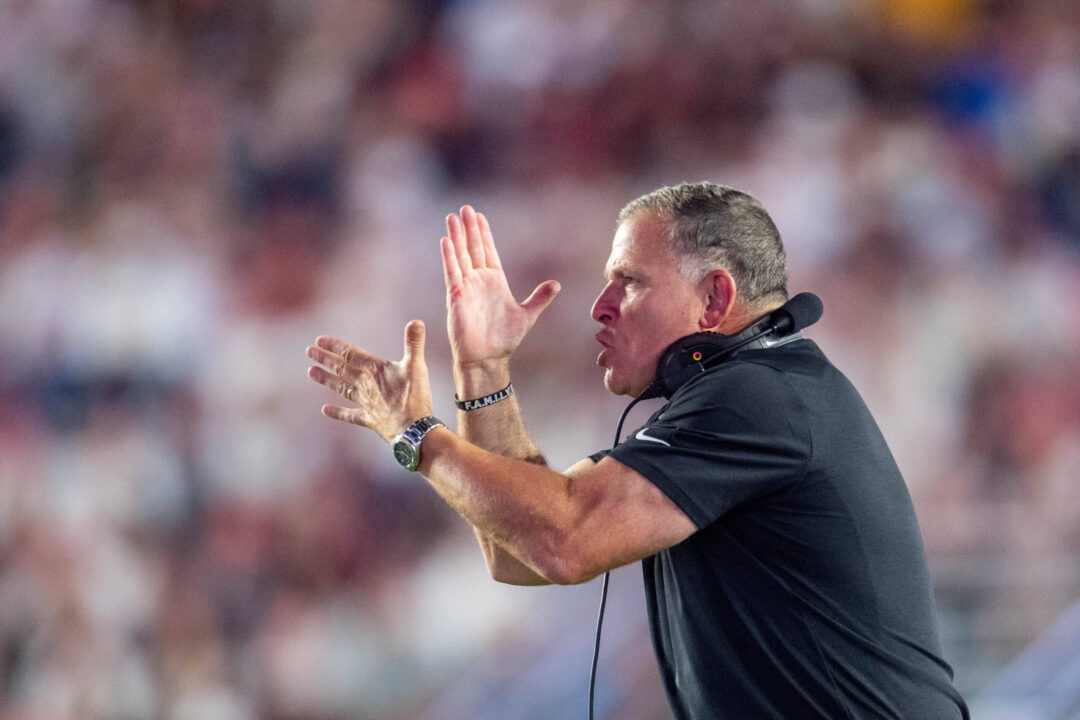
Imago
CHESTNUT HILL, MA – SEPTEMBER 11: Greg Schiano head coach of the Rutgers Scarlet Knights reacts during the college football game between the Rutgers Scarlet Knights and the Boston College Eagles on September 11, 2026, at Alumni Stadium in Chestnut Hill, MA. Photo by Erica Denhoff/Icon Sportswire COLLEGE FOOTBALL: SEP 11 Rutgers at Boston College EDITORIAL USE ONLY Icon26091153
“Sometimes you hear people say, ‘Oh, nepotism, blah blah blah,'” he continued. “These kids worked for free for three or four years, and now they’re busting their hump 18, 16, 17 hours a day. I sit there and say, ‘Oh, they’re learning the right way.’ And I try to stay out of it.”
All three joined Rutgers as volunteer assistants immediately after finishing their college football careers. Apart from a two-month internship at Ohio State for twins Matthew and Johnathan, neither they nor their older brother built coaching experience on another Division I staff before settling into the Rutgers operation.
Joseph, the eldest, joined the program in 2020 and is now in his third season as a paid staff member. He played DL at Bucknell, appearing in all 11 games during his final season in 2019. His resume included 25 tackles, 3.5 tackles for loss, two sacks, and two forced fumbles. Against Lehigh, he sealed a victory with a strip sack on the final drive. But playing college football and landing a coaching job on merit are two separate things.
NJ.com got the numbers through a public records request, and they tell their own story. Joseph serves as director of player personnel in 2026. His brothers, Matthew and Johnathan, work as assistant QBs and safeties coaches, respectively. The combined payroll increased from $255,000 in 2025, their first year all three held full-time jobs. But the school says the Schiano hires crossed no lines.
“Members of the same family or household may not be selected for faculty or staff positions if selection would create a supervisor/subordinate relationship between family and household members,” the rule stated.
Officials argue that isn’t happening here. Staff members related to coaches answer to sport administrators, not their own family.
The arrangement isn’t unique to football, either. Rutgers has other examples of relatives working within its athletic programs, including assistant coaches who are related to head coaches in women’s basketball and field hockey.
There is also a financial reality worth noting. The three Schianos’ combined salaries amount to less than 2% of the $14 million Rutgers spent on its extensive support staff in 2024, the latest year for which that figure was available. So this isn’t a case of three salaries swallowing an athletic department’s budget.
Greg Schiano’s team isn’t doing well on the football field
Perhaps, the controversy has gained more attention because of Rutgers’ dismal start to the season. Massachusetts handed the Scarlet Knights a 37-21 home defeat in the opener. By their bye week, they were sitting at 1-4 overall and 0-2 in Big Ten play, following a 47-15 loss to Indiana on Oct. 3. Their only victory came against Howard.
And college football has seen what happens when family hires come under scrutiny. Iowa’s Kirk Ferentz faced years of criticism for retaining his son Brian as offensive coordinator despite the Hawkeyes’ struggling offense. The school eventually announced in October 2023 that Brian would not return. At North Carolina, emails obtained by The Athletic revealed that Bill Belichick’s girlfriend, Jordon Hudson, urged university officials to highlight Steve Belichick’s coaching credentials to counter perceptions of nepotism.
But Schiano’s situation has a distinction. According to NJ.com, Rutgers is the only Power Four program with more than two relatives of its head coach on staff. Unlike Brian Ferentz and Steve Belichick, Schiano’s sons hold support roles rather than coordinator positions. That limits their direct responsibility for Rutgers’ results, but it doesn’t settle whether their family connection gave them an advantage in securing those jobs.
Meanwhile, Rutgers now faces Maryland, with both programs still searching for their first victory against a Power Four opponent this season. Saturday’s trip to College Park gives the 60-year-old Schiano an opportunity to ease some of the pressure. Another loss, however, would leave him defending both his team’s performance and the decisions behind his coaching staff.
The $270,000 payroll doesn’t prove wrongdoing. But a 1-4 record makes those staffing decisions harder to defend. Schiano may have followed the university’s rules, yet the question of whether his sons received opportunities unavailable to equally qualified outsiders remains unanswered.