
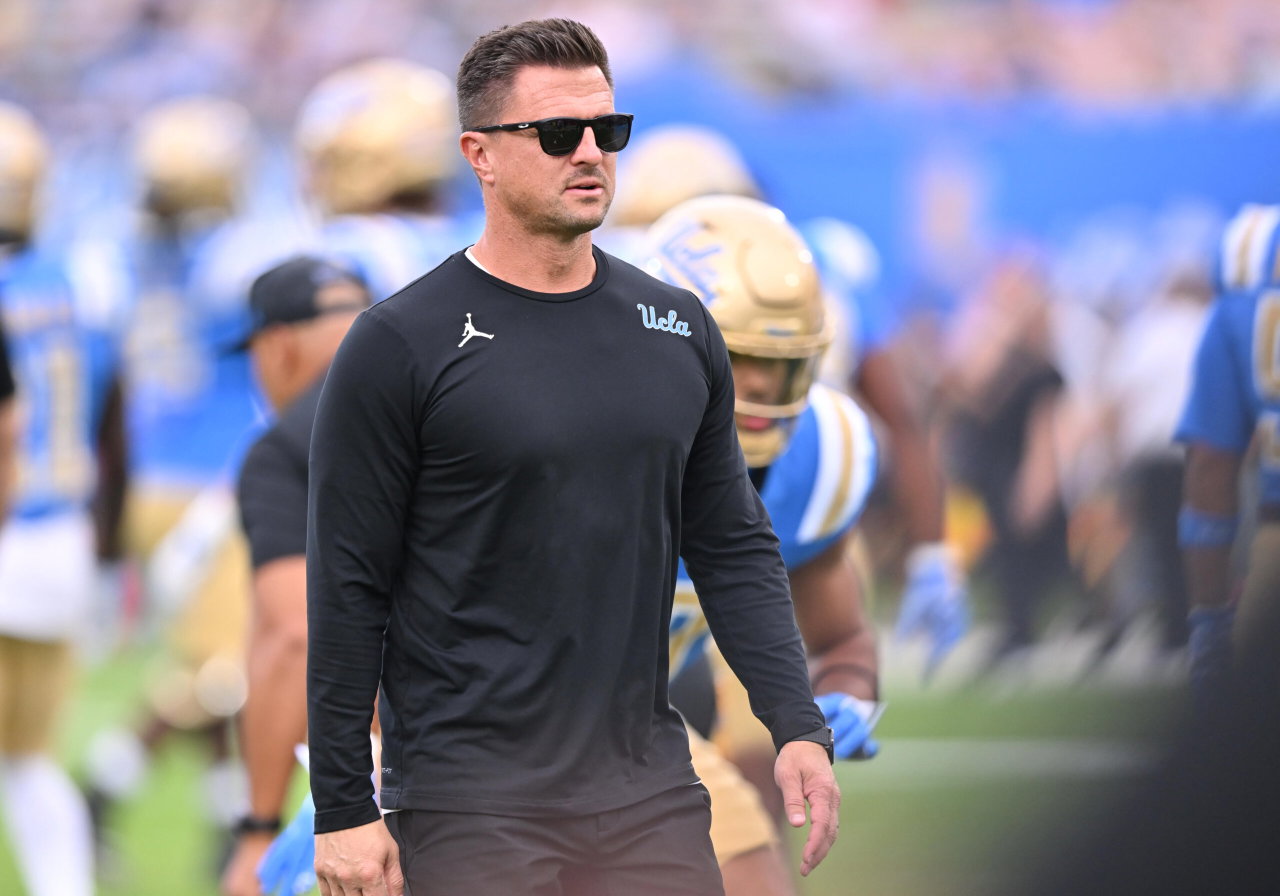
UCLA is winning everything except the battle to get fans into the Rose Bowl. Bob Chesney’s Bruins crushed Michigan State 28-10 on Saturday, October 24, improving to 7-0 overall and 5-0 in Big Ten play for their best start since 2005. They’re nationally ranked and playing their best football in decades. Yet, the biggest disappointment isn’t on the field.
Watch What’s Trending Now!
Matt Moreno of Team FB 7 posted a photo on X showing the sparse crowd at the Rose Bowl, questioning why the program’s success wasn’t translating into fan support.
“I know it’s LA and there’s a million things to do and it’s Michigan State, but UCLA is a top-10 team,” he wrote. “It’s a tired topic at this point, but there’s gotta be more people than this showing up at the Rose Bowl.”
Michigan State might not be the opponent that gets casual fans rearranging their weekends, but UCLA entered Saturday ranked No. 9, a position most programs would happily trade for.
Official attendance was 33,757, UCLA’s second-best home figure of the season. The stadium can hold 89,702 people, meaning the announced crowd amounted to less than 40% of its capacity.
The warning signs appeared in September when only 31,976 attended the home opener against San Diego State, according to the reported scan count.
Historical figures reveal how far UCLA has fallen. In 1998, the Bruins averaged 73,709 fans, even outdrawing USC. That number climbed to a school-record 76,650 in 2014 before dropping to 52,528 through five home games in 2018. Clearly, the program has attracted massive crowds before, but sustaining that interest has proved difficult.
The administration has tried several approaches to reverse the trend. Athletic director Tim Harris purchased tickets and gave them away earlier this season. In September, UCLA also introduced free student admission, although the Rooter Bus still costs $15 per game, leaving transportation as a potential hurdle for students traveling to Pasadena.
The promotional efforts continued during last Saturday’s 17-7 victory over Wisconsin, when UCLA distributed 1,000 “Chesney Train” conductor hats. Students responded enthusiastically, filling the lower half of one end zone, but the announced attendance reached only 36,045.
Following the Michigan State game, The Athletic’s Ira Gorawara joined the criticism.
“Bruins, gotta get that number up,” she posted. “Rose Bowl seats 89,702. No. 9 (subject to change tomorrow) team in the country and the only undefeated team in the Big Ten or SEC. Surely the Rose Bowl can get some more butts in seats.”
At this point, Chesney has given supporters every reason to believe in the program’s future. The question is whether Los Angeles college football has a deeper attendance problem, because Lincoln Riley’s USC is facing similar difficulties.
USC Has Been Fighting the Same Battle
The Trojans opened their season against San Jose State on August 29 with an announced attendance of 51,144, but Los Angeles Fire Department scan data put the actual crowd at 35,585. Temperatures reportedly reached 94 degrees, hardly ideal conditions for spending an afternoon watching football.
The following week, USC announced 53,014 against Fresno State, while 45,833 were recorded entering the stadium. Turnout improved, although noticeable gaps remained.
Los Angeles presents challenges that traditional college football markets don’t always face to the same extent. Traffic, uncomfortable weather, professional sports, beaches, concerts, and countless entertainment alternatives compete for people’s time and money.
But these aren’t struggling programs without national recognition. Both universities have rich football histories and access to some of the country’s strongest recruiting territory. Their attendance figures raise uncomfortable questions about how effectively they’re connecting with their fan bases.
For UCLA, the contrast is particularly striking. Chesney has transformed the results on the field, but rebuilding the game-day culture is proving to be an entirely different challenge.