
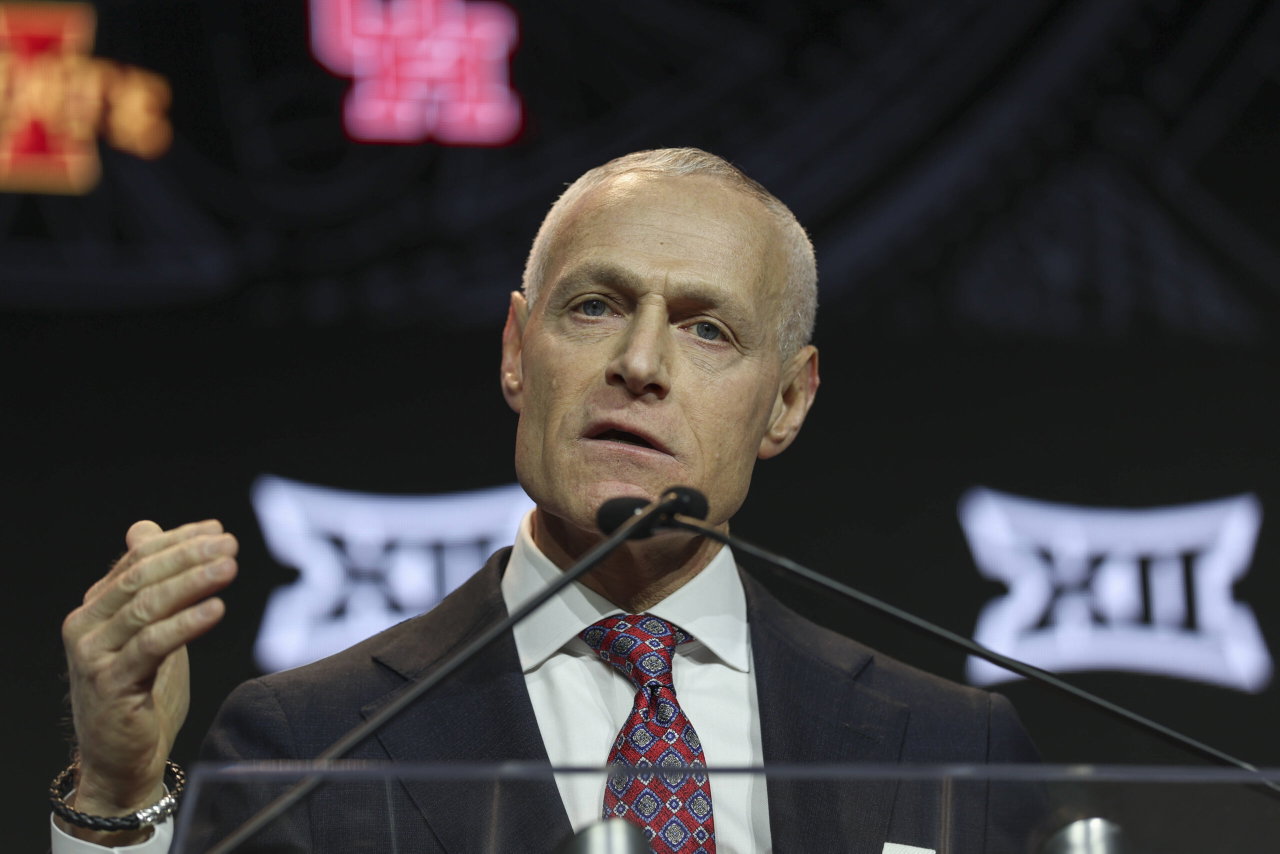
Brett Yormark’s time leading the Big 12 has come to an end, but he isn’t stepping away from the spotlight just yet. Days after announcing his departure as commissioner, he has already lined up his next career move, giving college sports another reason to keep an eye on his next chapter.
Watch What’s Trending Now!
Per Front Office Sports reporter Amanda Christovich, Yormark will become the CEO of Milan Sports & Entertainment, a newly formed company backed by RedBird Capital Partners.
“In connection with the formation of MSE, RedBird is building the leadership team for MSE and has announced the appointment of Brett Yormark as Chief Executive Officer,” RedBird’s official statement read, shared by Christovich on X. “Reporting to Gerry Cardinale, Yormark will lead the development and execution of MSE’s strategy, overseeing the platform’s current holdings and evaluating future investment opportunities.”
RedBird Capital Partners is an investment firm led by Gerry Cardinale. The new company will oversee RedBird’s sports, venue, and entertainment interests in Milan. Yormark will report directly to Cardinale. His responsibilities will include developing the company’s business strategy and identifying new investment opportunities.
Yormark took over the position of Big 12 commissioner in 2022, and after four years, he decided to step down of his own volition. He will remain with Big 12 until January 31, 2027, and will begin his new CEO role after that.
“When I accepted this job, my goal was to put this conference on an upward trajectory and truly believe that the future of the conference could not be in better shape,” Yormark said in a statement. “The next commissioner of this league will inherit a conference that is ‘16 Strong.’ There has never been a better time to be a member of the Big 12 than right now.”
The Big 12 hasn’t officially explained why Yormark is leaving at this particular time. However, a source familiar with his decisions told Front Office Sports that Yormark never planned to remain commissioner for the long term.
He joined shortly after a major wave of conference realignment back in 2022. At the time, the Big 12 was facing uncertainty because major universities were leaving. Texas and Oklahoma had announced plans to leave the Big 12 for the SEC.
The conference needed to protect its future membership and financial stability. Yormark entered during that uncertain period, despite being an outsider to the traditional college sports administration world.
His intention was reportedly to bring stability to the Big 12 and strengthen the conference’s position in college sports. He planned to leave once he felt he had put the league in a stable and successful position.
How Brett Yormark reshaped the Big 12
Television rights are a major source of revenue for college conferences. Yormark negotiated an extension with ESPN and Fox, helping secure the Big 12’s media revenue and broadcasting arrangements for the future. The Big 12 added four universities: Colorado, Arizona, Arizona State, and Utah.
The Big 12 signed a deal with RedBird Capital Partners, becoming the first major college conference to enter a conference-wide private equity partnership. The partnership was intended to help the Big 12 explore new commercial opportunities and strengthen its financial position.
Kansas president and Big 12 board chairman Douglas Girod said in a statement that the conference, and college sports as a business, stood at a turning point when Yormark came aboard. He pointed to “Brett’s vision, business acumen, and confidence” as the reasons the conference is in its current position.
Yormark also had to navigate disagreements and controversies involving other conferences and college sports organizations. One example was a dispute over quarterback Brendan Sorsby’s transfer to Texas Tech, including allegations about his eligibility and contractual obligations.
Yormark came from outside the traditional college sports administration system. Rather than simply following established practices, he was willing to pursue unconventional business partnerships, negotiate major deals, and make bold decisions to protect the conference.