
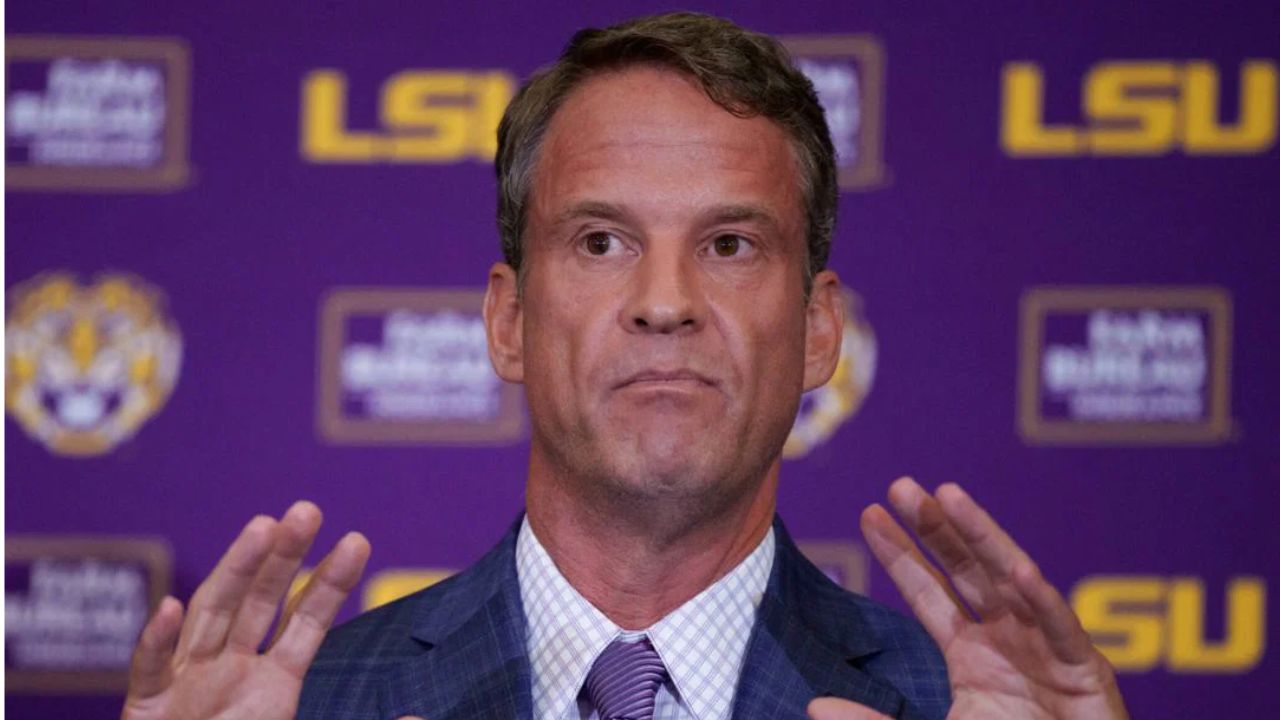
College football has officially entered uncharted waters where NFL players can jump right back into campus locker rooms. Cleveland Browns tight end Dae’Quan Wright hit the waiver wire this week, but he already has a landing spot waiting at LSU and his former Ole Miss coach, Lane Kiffin. Wright used a local court injunction in Louisiana to bypass NCAA eligibility limits after his NFL stint. Now, Kiffin is seizing the opening, pushing collegiate roster rules into completely untested territory.
Watch What’s Trending Now!
That possibility has sparked plenty of outrage around the SEC, with some already arguing LSU is pushing the conference rules too far. The loudest version of the argument came from the host of the Locked in Ole Miss Podcast Steven Willis.
“LSU is a rogue member, and it is time for the SEC Presidents to take this,” he posted on X. “If he plays a snap, LSU should be voted out of the SEC…Go get Tulane.”
It is not just podcasters debating the issue online. SEC leadership and rival administrators view LSU’s aggressive exploitation of court-ordered eligibility loopholes as a direct circumvention of conference transfer rules. Program insiders are increasingly frustrated by the tactic, with SEC Commissioner Greg Sankey issuing explicit warnings to schools moving ahead with these roster additions.
Critics argue that utilizing local temporary restraining orders to bypass the league’s established calendar completely undermines roster limits and fair competition across the conference.

Browns coach Todd Monken revealed that Lane Kiffin contacted him about Dae’Quan Wright roughly a week before the whole situation became public. Now he’s admitting this could be the reason. That little detail makes the LSU connection even more interesting.
Lane Kiffin coached Dae’Quan Wright at Ole Miss for two years after bringing him in from Virginia Tech. He recorded 1,000+ yards during that time. Now the two could reunite in Baton Rouge. The bigger fight, however, is about whether someone who has already crossed into professional football should be allowed to return to the college game.
Greg Sankey has argued that allowing former professionals back into college athletics creates an unfair situation for players who never left the college system.
“Permitting former professional athletes to return to competition creates a competitive disadvantage and fundamental unfairness for current student-athletes who have not pursued a professional sports career but instead have maintained their commitment to the collegiate athletics model,” he wrote in an affidavit connected to the case involving former St. John’s basketball star R.J. Luis.
That puts LSU in an awkward position. The SEC commissioner is warning about the consequences while a member school is preparing to take advantage of the court ruling. The conference also has restrictions on transfers between its own schools. So, is it possible for an Ole Miss player to transfer to LSU and play immediately? The Tigers’ willingness to test those boundaries could create another fight.
And that is where the “rogue member” criticism comes from. If Dae’Quan Wright actually gets onto the field for LSU, the SEC could face a much bigger question than whether one TE deserves another season. It could have to decide where the line is between following the rules and exploiting a legal opening.
For now, Dae’Quan Wright is waiting on waivers, and so is LSU. Meanwhile, the SEC is watching a situation that could become much bigger than one player.