
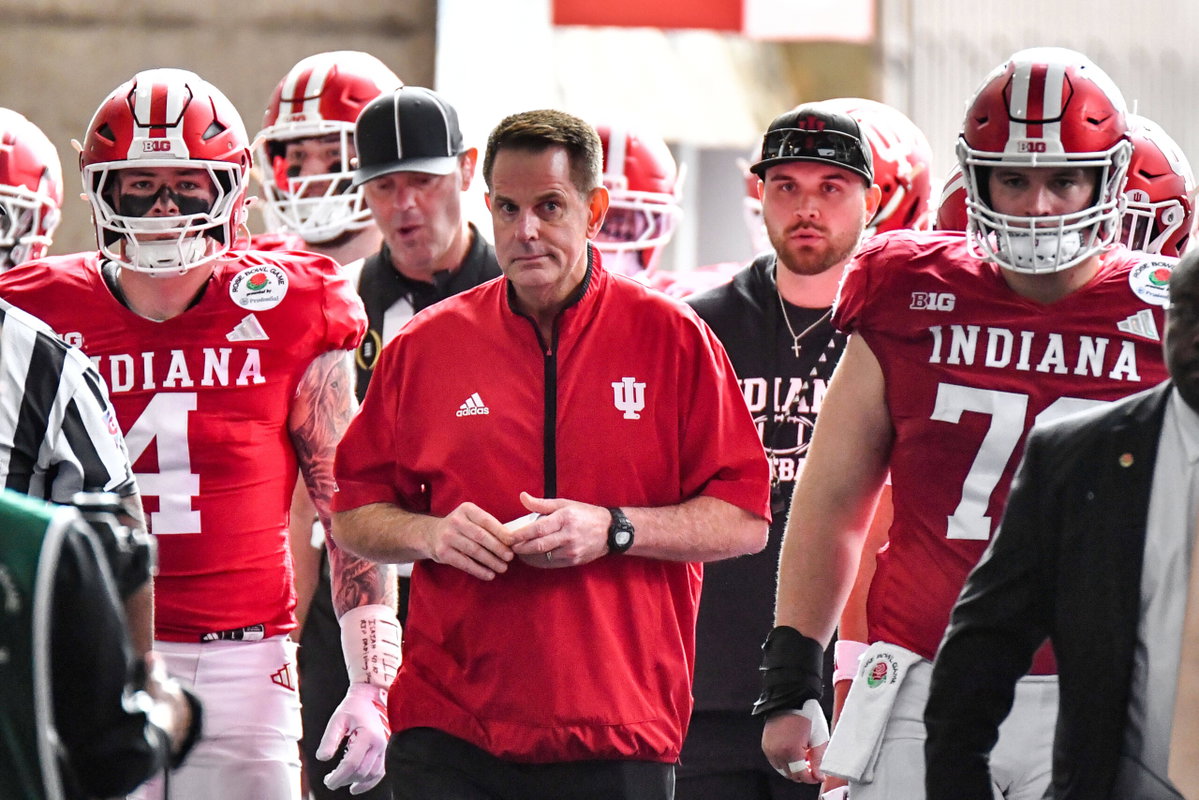
Fresh off a historic national championship run, Indiana seems to be drawing unexpected heat. Head coach Curt Cignetti is refocusing on the grueling Big Ten schedule, but a sudden shift in non-conference opponents has raised some serious red flags. Fans are now questioning whether the program is protecting its record at the expense of true competition.
Watch What’s Trending Now!
The spark hit when reports confirmed Indiana requested to cancel its upcoming series against Notre Dame, scheduled for 2030 and 2031. On3 reporter Brett McMurphy highlighted on X that the Hoosiers now have zero non-conference games booked against Power Four schools through 2032, leaving them with one of the nation’s weakest future schedules.
“This is inexcusable for Cignetti and Indiana. Most of these teams aren’t even G5; they’re FCS,” wrote one fan. The IU Nation has to wait more than a decade to see Indiana play against non-conference P4 opponents.
“It’s absolutely ridiculous,” wrote another fan, keeping it short but blunt. The backlash hurts even more because Cignetti recently boasted about Big Ten dominance at Media Days. For fans expecting a big-time college football powerhouse, watching their team avoid major non-conference matchups for a decade feels like a massive step backward.
“That might be the weakest non-con schedule I have ever seen. Holy s–t, that is cupcake city,” commented a disappointed fan.
This is not the first time Indiana has quietly erased tough opponents. Since Cignetti took charge, the school has also walked away from scheduled series against Louisville and Virginia. It reveals a deliberate plan: protect the record, dodge early-season landmines, and bank entirely on Big Ten conference play for respectability.
While USC and Notre Dame have announced the renewal of their historical rivalry with a four-game series on August 3, Indiana’s schedule change, shifting to lighter non-conference games, drew some humorous takes from fans as well.
“Looks like the Hoosiers just swapped a Notre Dame date for a pastry party, guess they’re serving up sweet wins instead of a tough bite,” wrote one fan.
September used to bring thrilling non-conference battles that tested a team’s true mettle. By taking a softer road, Indiana risks entering conference play completely untested. Fans feel shortchanged, arguing that while this strategy might protect a playoff spot, it robs loyal season ticket holders of the classic games they pay to see.
“Total joke. Out of conference games to start the season vs quality opponents unfortunately is no more. The fans are the one that get hurt.”
Indiana’s strategy to stay in the playoff conversation without any tough non-conference opponents in a broader picture is understandable, but reaching it without any tough test isn’t acceptable to fans. It’s simply because the concern is lowering the standard of Indiana taking such a decision.
Though Indiana isn’t the lone program in college football that changed its non-conference schedule. Texas head coach Steve Sarkisian also talked about their schedule change to help avoid being out of the playoffs. Many Longhorns fans feel that if they had not lost to Ohio State, they could have been part of the postseason. So scheduling a weaker opponent makes strategic sense. But stepping away from real early tests is something that puts any team into a never-ending debate.
Cignetti has defended light scheduling before, claiming Indiana simply adopted the SEC philosophy of loading up on manageable non-conference foes. Other top coaches share that pragmatic view.
Top-tier SEC programs had traditionally scheduled one FCS opponent, two lower-tier Group of Five opponents, and only one marquee Power-4 game. Because the Big Ten earlier forced teams to play nine conference games (compared to the SEC’s eight at the time), Cignetti argued that playing any non-conference Power-4 team created an unfair disadvantage.
By paying buyouts to cancel games against Power-4 teams like Virginia ($500,000 buyout) and Notre Dame, Indiana builds a buffer of guaranteed 3-0 regular season starts against programs like Austin Peay, Kennesaw State, and Eastern Michigan.
In the expanded 12-team CFP era, a team’s total losses matter more than non-conference strength of schedule. Indiana proved this philosophy works. Despite facing intense media criticism, the Hoosiers leveraged their manageable early schedule to keep players healthy, dominate the Big Ten, and ultimately capture a historic National Championship.
But as major conferences move toward tougher mandatory scheduling rules, hiding behind soft matchups could soon backfire, forcing Indiana to face public pressure or change course.