
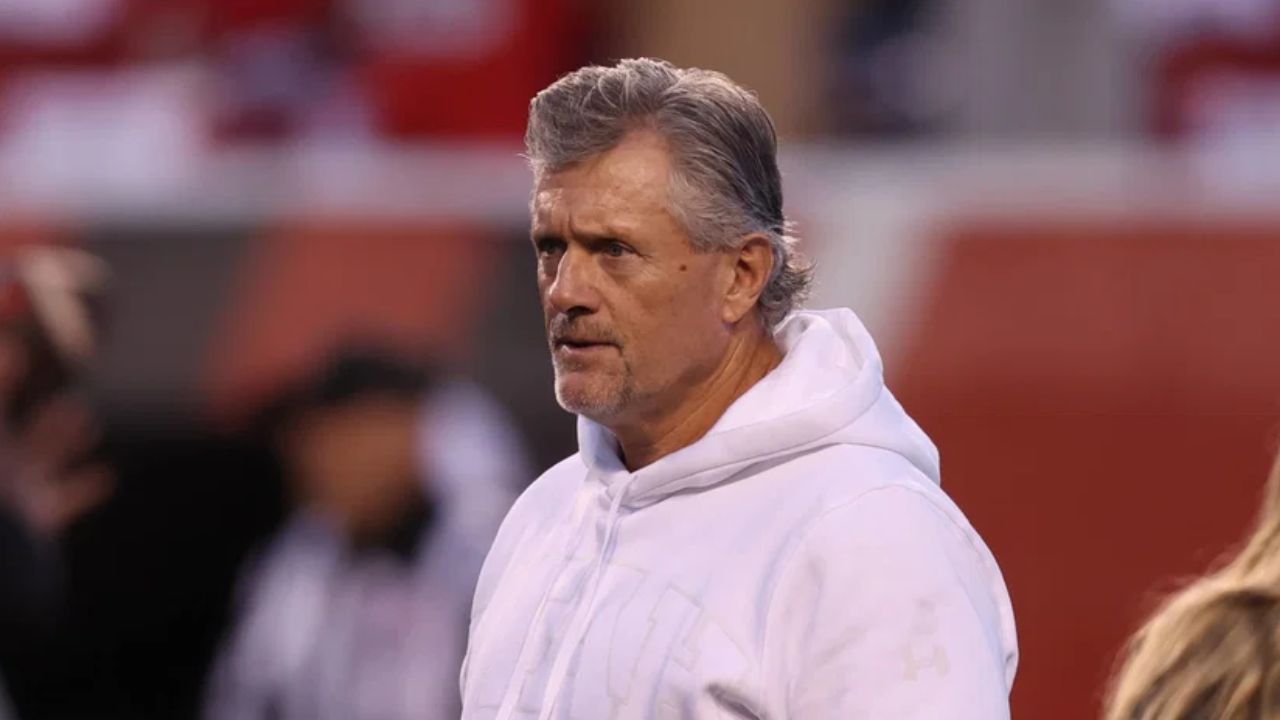
Michigan walked into its Week 2 matchup with Oklahoma carrying plenty of questions. The Wolverines had barely survived Western Michigan, winning 13-12 on a last-play Hail Mary. Bryce Underwood had struggled, the offense looked limited, and Kyle Whittingham had publicly said his QB needed to improve.
Watch What’s Trending Now!
A week later, the picture looked very different. Michigan beat No. 11 Oklahoma 17-10, and Underwood became a major part of the answer. Former OSU head coach Urban Meyer believes that created an uncomfortable question for Whittingham and his staff. Was Michigan simply too cautious with Underwood against Western Michigan?
“On Big 10 Network, we broke down Bryce Underwood. And I don’t know; you didn’t see that in the first game against Western Michigan,” Meyer said on his September 16 Triple Option podcast. “I can’t imagine that they didn’t have that in the game plan, but maybe they were saving it for Oklahoma, which, as you look back, was a mistake.”
One of Michigan’s biggest plays came from Bryce Underwood in the first quarter. Oklahoma brought pressure from the field, and Michigan called a loaded option right into it. Underwood kept the ball, found a lane, and raced 38 yards for a touchdown. Meyer pointed to what made the play work: Underwood had the size and speed to turn Oklahoma’s pressure against the Sooners.
“I would say that every ounce of investment you put into that freak, there’s a play, there’s two or three plays, but there’s one. They ran a loaded option into a field pressure,” Meyer said. “He ran for a touchdown. I think a 50-yard touchdown, whatever it was. And I paused the film…How many big, fast men can do that?”
The criticism becomes easier to understand when looking at Michigan’s opener. The Wolverines managed only 13 points against Western Michigan. Underwood completed 12 of 22 passes for 170 yards, one touchdown and one interception. He also lost a fumble. Michigan needed a controversial final-play sequence to escape with the victory.
In all, the offense did not consistently put Underwood in situations where his athleticism could change the game. That became particularly noticeable because Whittingham had already acknowledged that Underwood’s starting position was not permanently guaranteed.
“He’s our QB right now,” Whittingham said before the Oklahoma game. “It’s not something that’s infinite. We’ve got to turn a corner, and we’ve got to see improvement.”
Underwood later said he didn’t know Whittingham had questioned his job security. That made the Oklahoma game much more significant. Instead of asking Underwood to win primarily from the pocket, Michigan leaned into what he does naturally well.
Underwood carried the ball 18 times, twice his previous career high, and finished with 87 rushing yards. More importantly, many of those carries were designed runs rather than scrambles after a play broke down. Kyle Whittingham later confirmed that using Underwood this way was part of the plan.
The payoff came with 47 seconds left in the first quarter. Michigan faced a situation where Underwood could keep the ball on a designed run. He found space and raced 38 yards for the opening touchdown. It was the longest run of his Michigan career and gave the Wolverines a 7-0 lead. The same play Urban Meyer talked about.
Underwood also converted a crucial third down with a run in the second quarter. That drive eventually ended with Trey Butkowski’s 40-yard field goal, giving Michigan a 10-0 halftime lead. Underwood’s running threat also gave Michigan another way to move the chains without asking him to make difficult throws repeatedly. Not just that, his pocket play improved.
The numbers do not show a spectacular passing performance, but there were signs of progress. Underwood completed 7 of 13 passes for 96 yards in the first half. He looked more comfortable operating from the pocket and showed better command of the offense than he did against Western Michigan. That’s an important step because Michigan cannot rely on quarterback runs every week. Oklahoma eventually adjusted.
Underwood completed only 2 of 4 passes for 15 yards after halftime. Michigan also managed just 55 total yards across three drives after the Sooners tied the game at 10-10. The Wolverines’ eventual touchdown came after Hill’s interception gave the offense the ball at Oklahoma’s 6-yard line. The second half exposed Underwood’s next challenge: sustaining drives without the run game.
In all, Underwood needs to become more effective when defenses take away the designed quarterback runs. He also needs to improve his efficiency on third downs and his ability to sustain drives without relying on explosive runs. Michigan finished with only 263 total yards, while Oklahoma actually gained 289. The Wolverines won because their defense controlled key moments and created the turnover that produced the decisive touchdown. That will not always be enough.