
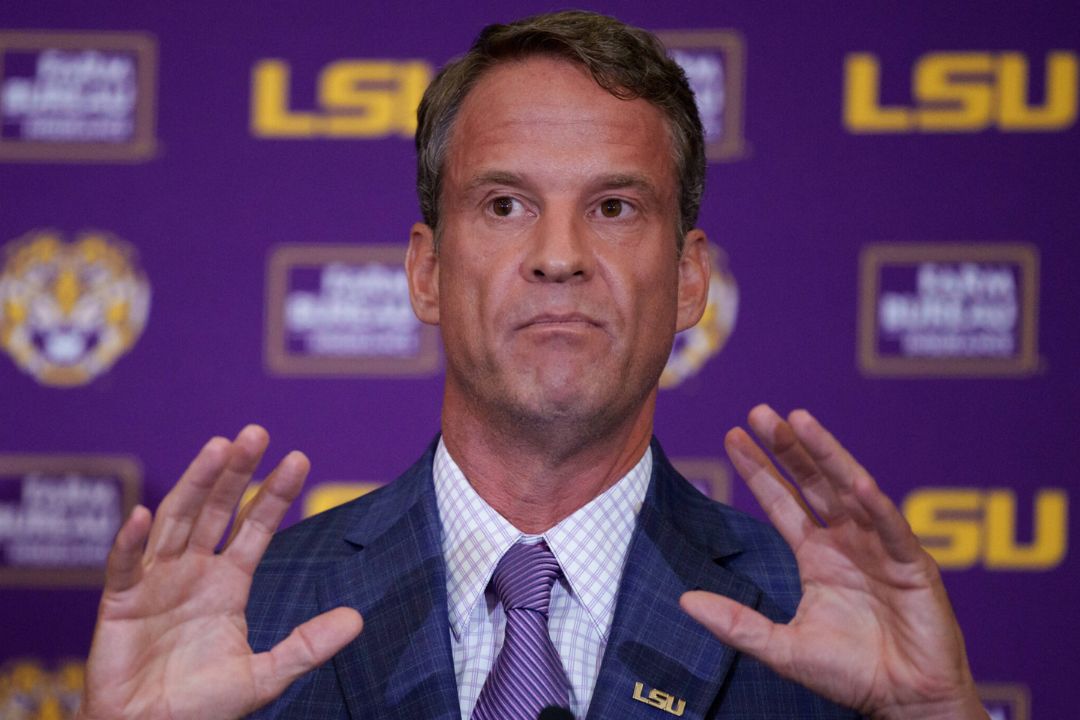
Lane Kiffin’s move to LSU from Ole Miss was controversial for a number of reasons that go beyond his failure to lead the Rebels in the playoffs. Many analysts pointed out the timing as something Kiffin couldn’t control given the portal window opened on January 2. A major bipartisan federal legislation wants to stop such a thing from happening in the future.
Watch What’s Trending Now!
Lane Kiffin left Ole Miss before the conclusion of the 2025 season. Although he wanted to coach the Rebels during their playoff run, his acceptance of a seven-year, $91M contract to coach LSU prevented him from doing so. However, this scenario may not repeat this upcoming season after Senators Ted Cruz and Maria Cantwell introduced the Protect College Sports Act.
“An individual who serves, or has served at any point during a competitive season, as football athletic personnel for a varsity sports team for intercollegiate football at an institution shall not, during that same competitive season, perform for another institution any duties or responsibilities customarily associated with a head coach of a varsity sports team,” read Section 10 of the Protect College Sports Act of 2026.
This particular section was titled: rules governing certain mid-season coaching transitions. According to On3’s Andy Staples, this provision is being called the “Lane Kiffin Rule” behind the scenes. Simply put, the bill is preventing coaches from leaving mid-season. After the failure of the SCORE Act, this legislation gives college sports a little hope for reform.
Although Kiffin became the flag-bearer of why college athletics should follow the NFL model of not allowing any meddling with the coaching staff of teams, several other programs were also affected. For instance, Brian Hartline was announced as the head coach of USF while Ohio State was in the middle of its playoff run. As a result, Ryan Day had to take over playcalling duties.
Even other moves, such as Jon Sumrall to Florida and Alex Golesh to Auburn, had implications for the programs these coaches left behind.


They're calling this part the "Lane Kiffin rule" behind the scenes, but they didn't have the guts to name the man in the bill.

Kiffin claimed that if he were allowed to coach Ole Miss for the 2025 CFP, they would have reached the national title game. However, allowing Kiffin to coach Ole Miss after accepting the job of a direct SEC rival didn’t feel suitable to the program’s AD. Even the LSU AD supported this decision to bar Lane Kiffin.
“I’d probably be like, ‘Nah, we ain’t doing that. No,'” said Verge Ausberry, LSU’s Vice President and Director of Athletics. “But that hand wasn’t dealt. If I’m Ole Miss, I probably would’ve made the same decision. I know LSU would’ve made the same decision. I don’t blame anybody.”
But in an ideal scenario, the ADs and head coaches should not be put into such predicaments. In a way, it reflects a broken calendar.
What else does the bipartisan legislation include?
This new rule standardizes the timeframe for an athlete at a school. It even restricted player movement through the portal. During their undergraduate days, student-athletes are limited to one “free” transfer. Without that, any subsequent transfers could require sitting out a year or strict waivers. Then, a strict five-year eligibility window is also introduced.
“The courts have produced a system with unlimited transfers, pro athletes playing college ball, and shady NIL deals,” said Senators Ted Cruz and Maria Cantwell in a statement. “Schools and governing bodies need the ability to preserve fair competition, protect student athletes from exploitation, and ensure that programs across the country can survive.”
More importantly, it bans pro athletes from participating in college sports if they have earned compensation. The bill also bans universities from actively communicating with coaches during an ongoing season. But it must clear a heavily divided Senate to become law. Now we will see how the schools respond to this new Kiffin rule, if it gets passed.