Imago
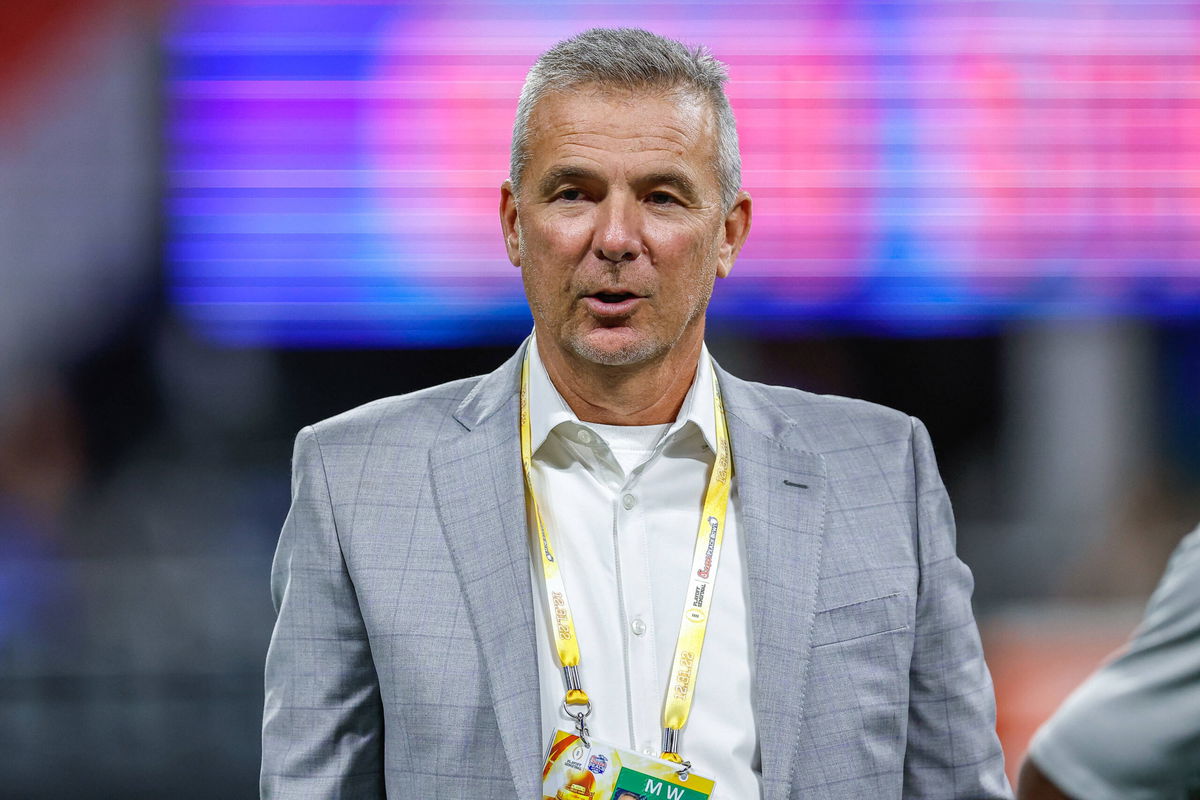
December 31, 2022: ESPN analyst and former Ohio State head coach, Urban Meyer, prior to the Chick-fil-A Peach Bowl a College Football Playoff Semifinal featuring the 4 Ohio State Buckeyes and the 1 Georgia Bulldogs, played at Mercedes-Benz Stadium in Atlanta, Georgia. The Georgia Bulldogs come from behind to defeat Ohio State, 42-41. /MarinMedia.org/CSM Atlanta United States of America – ZUMAc04_ 20221231_zaf_c04_700 Copyright: xCecilxCopelandx
Imago
December 31, 2022: ESPN analyst and former Ohio State head coach, Urban Meyer, prior to the Chick-fil-A Peach Bowl a College Football Playoff Semifinal featuring the 4 Ohio State Buckeyes and the 1 Georgia Bulldogs, played at Mercedes-Benz Stadium in Atlanta, Georgia. The Georgia Bulldogs come from behind to defeat Ohio State, 42-41. /MarinMedia.org/CSM Atlanta United States of America – ZUMAc04_ 20221231_zaf_c04_700 Copyright: xCecilxCopelandx
The reason Senator Tommy Tuberville stepped in with the Student Athlete Act of 2026 is because of the college football pandemonium. Lately, coaches have to keep recruiting their own locker room each offseason lest they leave with a more tempting offer. He believes his bill, although it’s raising debate, could finally bring order.


“My NIL bill is simple,” Sen. Tommy Tuberville posted on X while sharing the video of his proposal. “You get five consecutive years to play five seasons with one free transfer. If you choose to transfer again, you sit out a year.”
Watch What’s Trending Now!
And in another line he added, “Proud to be leading the charge to SAVE COLLEGE SPORTS.”
The US senator isn’t trying to complicate things with his aggressively simple bill. College football even has some players playing for seven programs in six years! Case in point is QB TJ Finley who finally declared for this year’s draft after committing to Clemson this offseason. Although he has his reasons, this scenario isn’t feasible for the sport as the former recipient of the AP College Football Coach of the Year Award sees it.
“Transferring every year interrupts a student’s education and is bad for team morale,” he added. “That’s why I’m introducing a bill that would allow student-athletes to transfer 1 time without penalty, no questions asked. After that if you choose to transfer, you sit out a year. It’s simple.”
My NIL bill is simple.
You get five consecutive years to play five seasons with one free transfer. If you choose to transfer again, you sit out a year.
Proud to be leading the charge to SAVE COLLEGE SPORTS. pic.twitter.com/vcNeXcDMfI
— Coach Tommy Tuberville (@SenTuberville) March 29, 2026
This move is something coaches have been begging for since the NCAA loosened transfer rules following its 2024 settlement with the Department of Justice. Now, continuity is becoming a luxury. And even if you sign a recruit, you can still lose them. Just looks at what Dabo Swinney and Clemson had to go through with LB Luke Ferrelli, who left for Ole Miss after alleged tampering.
While this bill may sound like restriction on the players’ part, even former 3x national champion coach Urban Meyer sees the good in it.
“I think that there’s a big push in agreement that there should be a one-time,” he said on The Triple Option podcast. “You get a one-time, not exempt. So, you can transfer one time, and then it’s over; you have to sit for a year if you transfer again.”
The main objective of this bill is to prevent roster resets that disrupt momentum and culture. While it’s a green signal from a coach’s perspective, the thing is, what helps programs doesn’t always help players. And right now, players finally have leverage. But it’s not just the players finding fault with this change because the frustration of the fans says just as much about college football’s current identity crisis as the bill itself.
Fans push back on the Student Athlete Act of 2026
While coaches and lawmakers talk structure, fans are calling out hypocrisy. “Why is Congress involved in college sports? Have you nothing better to do?” a fan commented. This is a rejection of federal involvement altogether because to many, this feels like overreach, not reform.
Another drew the leverage gap between players and coaches. “So head coaches can come and go as they please but you want to restrict athletes. Shove this bill up your ass,” another shot back. This is the hypocrisy argument, and it hits hard. If coaches have mobility, why shouldn’t players?
Another even reminded Sen. Tuberville of his own coaching past at Auburn. “You couldn’t even save Auburn football, sit this shit out,” they wrote. His nine seasons in Auburn didn’t end on a positive note as he stepped down in 2008 amid intense pressure.
Others made appealing cases for student-athletes. One person wrote, “College sports is now a job. I don’t think we should drastically limit a young adult’s opportunities for employment.” This might be the most important argument of all. If college football is effectively a marketplace, restricting movement starts to look like limiting worker freedom.
Some fans see this as a credibility gap from the NCAA. “why does a US senator need to get involved? why is the NCAA so jacked up that they can’t fix a problem that they created?” another questioned. But now, it’s not just the US Senator who is involved. This bill has already reached President Donald Trump.
“I’ve talked to President Trump about it,” Sen. Tuberville added. “He knows it and understands it. We can’t get into all the antitrust, the agents, we can’t do that.”
Now the biggest question is will Sen. Tuberville’s bill backed by Urban Meyer actually pass? Although it makes sense, restricting movement is a legal risk in the post-NIL world. The Department of Justice has already made it clear that limiting athlete mobility could cross antitrust lines. But again, college football can’t keep operating like this forever.
