
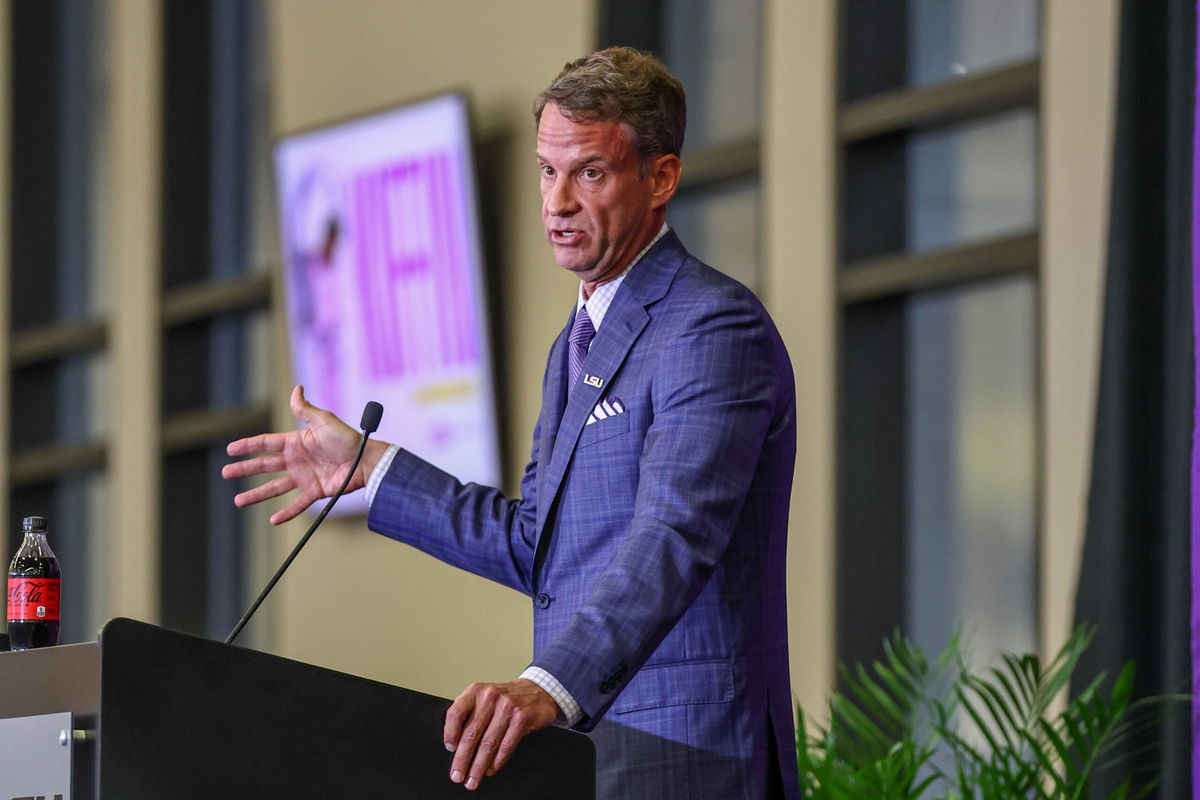
The world has turned upside down and NFL athletes are legally finding their way back to college campuses. Thankfully the football conferences have woken up and are trying to do something about it. As always, on the other end is our man Lane Kiffin.
Watch What’s Trending Now!
The Southeastern Conference has been the first to step up. Following an emergency late-night call, SEC Presidents and Chancellors released a joint statement directly targeting LSU after head coach Kiffin moved to sign cut NFL rookies under a controversial state court ruling.
To be fair to the Tigers, LSU is not the only program caught in this legal tug-of-war. Across the country, college sports are grappling with court orders attempting to grant widespread fifth-year eligibility to college athletes. These are mostly coming from the Class of 2022 who have been allegedly denied extra years.
The SEC Statement
“College athletes, not former professional athletes, have been at the heart of the Southeastern Conference,” wrote the SEC in a statement following their emergency meeting. “Individuals who choose to leave college athletics, sign professional playing contracts, and compete professionally should not then be permitted to return to college competition.”
“Allowing that to occur will blur the line between college and professional sports, create significant competitive equity concerns, and reduce opportunities for high school and current college athletes. College sports are for college athletes.”
Technically there is a federal court order by the U.S. Court of Appeals for the 10th Circuit which stops the Class of 2022 players from coming back and joining college teams.
But you see the American legal system does not put federal law above state ones and the lawyers of these players know it. So a lot of them have gone to their state courts and have received favorable judgements that cannot be stopped by a federal judge.
Is The American Legal System Being Misused?
The controversy mostly took off when a group of 16 football players got the right to play a fifth year from a state judge out of the 19th Judicial District Court of Louisiana.
We are in no way suggesting that there is any bias at play here when it comes to state court judges possibly having a vested interest in their state’s college teams getting these veteran players another shot on the gridiron. The numbers can tell a much clearer story.
According to Sam Ehrlich, a former lawyer based out of Boise State, at least 26 eligibility cases have allegedly been filed against the NCAA in state and county courts across the country. State judges have reportedly granted a temporary restraining order (TRO) or preliminary injunction favoring the players in at least 10 of those cases. In contrast, appeals courts have apparently overturned the athlete’s victory in only one instance.
This is not necessarily a bad thing as most of the narrative has centered around antagonizing these young athletes who are trying to seek a legal remedy to a problem created by the NCAA.
Meanwhile, federal courts themselves are currently divided on how to proceed since the stay order by the appeals court is more of a pause button than an actual agreement to the NCAA’s stance.
However, state judges frequently agree that by excluding the Class of 2022, the NCAA is actively depriving young men of massive financial earnings via NIL deals. Since these state-level TROs only apply to the specific athletes within that state’s boundaries, they remain unaffected from the 10th Circuit’s overarching federal stay.
Kiffin Strikes Gold
This kind of independent temporary order created a legal back door in Baton Rouge, opening a surprise transfer portal window for waived NFL rookies to re-enter college football.
LSU head coach Lane Kiffin spotted the opening and acted fast. He targeted former Ole Miss tight end Dae’Quan Wright right after he was waived by the Cleveland Browns, bringing a player with actual NFL camp experience directly onto the Tigers’ roster.
Kiffin defended his roster additions by arguing that LSU is simply playing within the boundaries set by the court. He pointed out that since the legal system made these players eligible, other top programs would sign them if LSU did not, adding that players should not be punished for taking advantage of available eligibility rules.
SEC Commissioner Greg Sankey had already filed formal affidavits opposing similar court injunctions, arguing that treating college sports like an unregulated pro league destroys the amateur foundation of the sport.
The core of the SEC’s anger comes down to fairness on the field and in the locker room. Conference leaders worry that allowing hardened professionals back into college locker rooms will steal playing time and scholarship money from teenagers fresh out of high school. A 22-year-old who spent months in an NFL training camp brings a physical advantage that an 18-year-old freshman simply cannot match.
Because individual state court rulings continue to override conference policies, the SEC is pushing hard for federal intervention. The league explicitly backed the Protect College Sports Act, a bipartisan bill sponsored by Senators Ted Cruz and Maria Cantwell. The legislation would establish uniform national eligibility standards and block local judges from overriding collegiate sports rules.
For now, the conference remains legally bound. Because the temporary injunction protects these athletes, LSU can field its new additions without immediate penalty from the SEC. Until a higher court hears the conference appeal, Kiffin and the Tigers hold the upper hand on the field.