
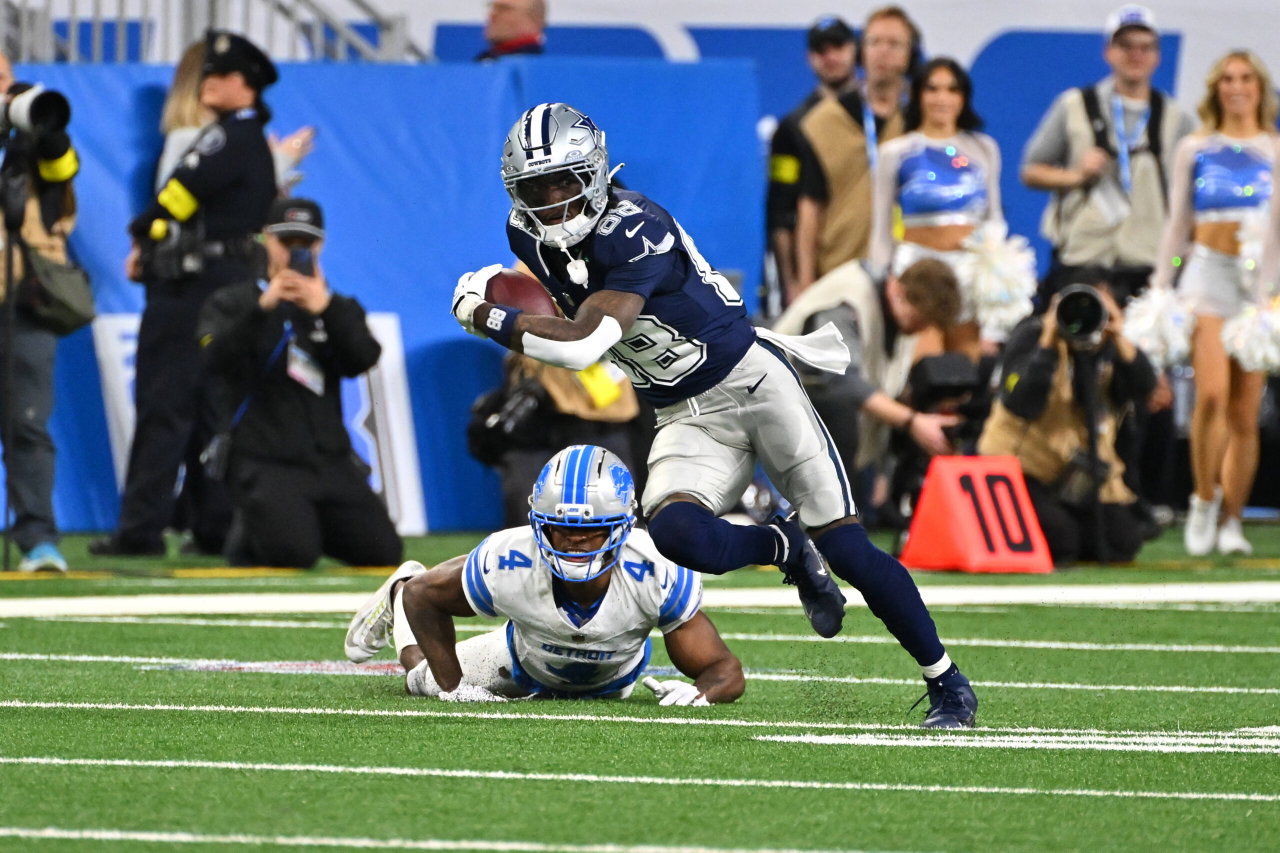
A Louisiana kid who grew up knowing only purple and gold still remembers the pull of Death Valley. Born in Opelousas, CeeDee Lamb spent his earliest years as an LSU fan before Hurricane Katrina uprooted his family and sent them to the Houston area. By the time he became a four-star receiver at Foster High School, the dream of wearing the Tigers’ uniform had not disappeared. It simply arrived too late, and in a form he could not see himself thriving in.
Years later, now a Dallas Cowboys star, Lamb looked back on that recruitment with clear eyes. The Tigers did offer him. The timing and the offense did not match.
“They did recruit me, but it was kind of late,” Lamb said on the Downs 2 Business podcast. “I feel like the scheme at that time, it wasn’t for me. I ain’t gonna lie. It wasn’t. It wasn’t the Joe Burrow. It wasn’t all that. Joe Brady, it wasn’t all that. ”
He did not stop there. The offense under Les Miles in the mid-2010s still leaned heavily on the run and physicality that had defined the program for years. Wide receivers were not yet operating in the spread, tempo-driven system that would soon transform Baton Rouge.
“They wasn’t hitting because that offense wasn’t hitting for nothing,” Lamb continued. “I felt like I wasn’t gonna have no success at that time.”
The offer arrived after Lamb had already committed to Oklahoma. He decommitted in April 2016 while reassessing options, including the late LSU interest, but ultimately recommitted to the Sooners that summer.
Miles was fired early in the 2016 season. Ed Orgeron took over, first as interim and then as the permanent coach. The program was in transition, and Lamb chose the stability and scheme fit he saw in Norman under Lincoln Riley.
At Oklahoma, the decision paid off immediately. Lamb became a three-year starter, a consensus All-American in 2019, and one of the most productive receivers in the country. He posted back-to-back 1,000-yard seasons and helped the Sooners reach the College Football Playoff.
In the 2019 Peach Bowl semifinal, he faced the very program he once dreamed of joining. LSU, now powered by Joe Burrow, Ja’Marr Chase, and the offensive overhaul orchestrated by Joe Brady, dismantled Oklahoma 63-28 en route to the national title. Lamb still produced, but the gap in systems was obvious.
The Dallas Cowboys selected him 17th overall in the 2020 NFL Draft after he fell further than expected. He has since developed into one of the league’s premier receivers, consistently topping 1,000 yards and establishing himself as a centerpiece of the offense.
The blunt assessment of his LSU recruitment does not read as bitterness. It reads as a player who evaluated the situation in front of him and chose the path that offered immediate opportunity.
The late offer, the transitional coaching staff, and an offense that had not yet modernized were decisive. Lamb recognized the difference between the LSU he was recruited to and the LSU that soon dominated the sport.
But think of a scenario in which Burrow also had Lamb as his weapon in the WR room along with Jefferson and Chase. That offense would have been deemed unfair, and rightly so!