Imago
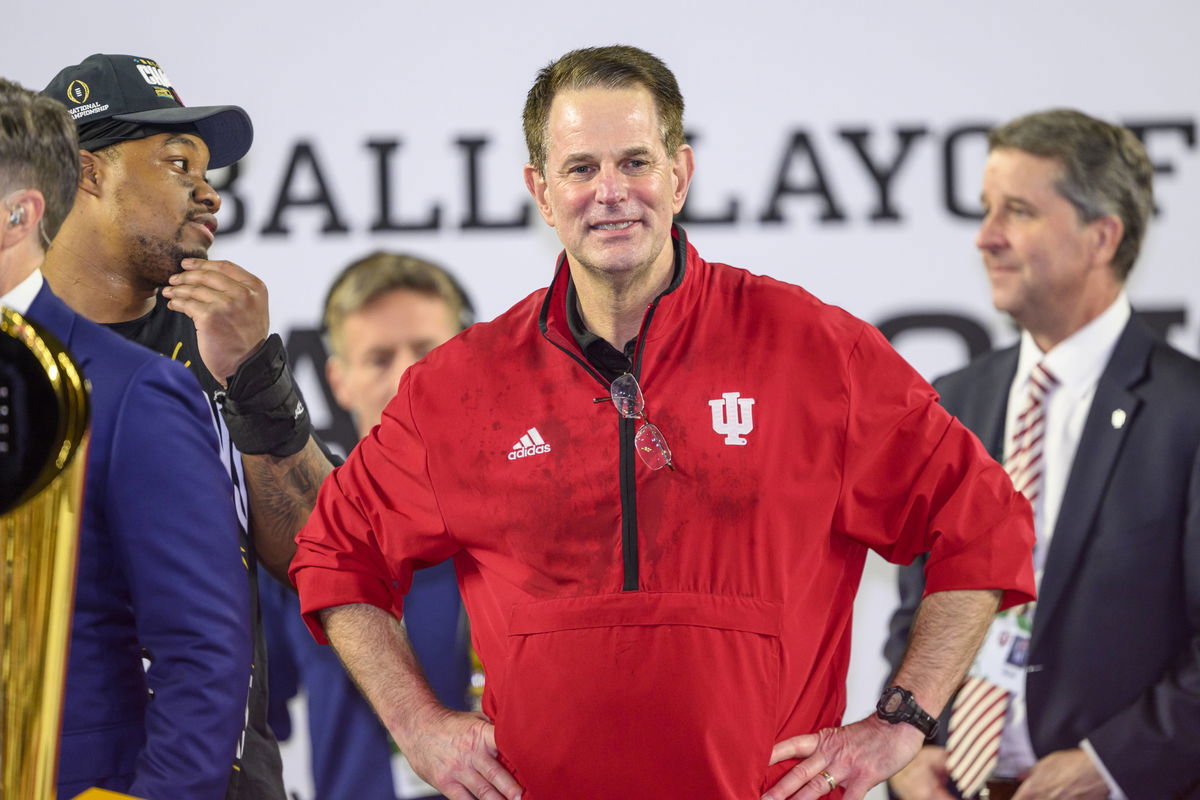
MIAMI GARDENS, FL – JANUARY 19: Head Coach Curt Cignetti of the Indiana Hoosiers smiles after the Indiana Hoosiers versus the Miami Hurricanes College Football Playoff National Championship Game Presented by AT&T on January 19, 2026, at Hard Rock Stadium in Miami Gardens, FL. Photo by Doug Murray/Icon Sportswire COLLEGE FOOTBALL: JAN 19 College Football Playoff National Championship Presented by AT&T Indiana vs Miami EDITORIAL USE ONLY Icon796260119023
Imago
MIAMI GARDENS, FL – JANUARY 19: Head Coach Curt Cignetti of the Indiana Hoosiers smiles after the Indiana Hoosiers versus the Miami Hurricanes College Football Playoff National Championship Game Presented by AT&T on January 19, 2026, at Hard Rock Stadium in Miami Gardens, FL. Photo by Doug Murray/Icon Sportswire COLLEGE FOOTBALL: JAN 19 College Football Playoff National Championship Presented by AT&T Indiana vs Miami EDITORIAL USE ONLY Icon796260119023
Curt Cignetti’s magical season celebrations could be short-lived, as the NCAA’s 51-year-old restitution rule now hangs over the sport. The Hoosiers are in the crosshairs, as this past season, they used a safety despite his eligibility case still pending.
Watch What’s Trending Now!
On Thursday, On3 reported that if the NCAA wins its ongoing eligibility lawsuits, it is threatening to vacate wins, erase stats, and fine schools. Curt Cignetti’s Indiana is on high alert, as they are directly involved in this case: safety Louis Moore played in the 2025 season despite a court injunction.
Here’s where, if the court’s eligibility ruling is eventually overturned, the NCAA’s restitution rule comes into play. This policy permits the NCAA to punish both the school and the athlete for games played under a court order. In that scenario, the NCAA did not grant Moore’s sixth-year eligibility.
In June 2025, the NCAA initially deemed the Indiana safety ineligible. In fact, the association claimed Moore had exhausted his four-year eligibility because of his time at Navarro Junior College. But last August, the safety sued the NCAA, and then a Texas judge granted a TRO, making him eligible for IU’s first two games this past season. Following that, a temporary injunction allowed Moore to play for the Hoosiers for the rest of the season.
Which Prospects should OSU target next?
Let Tony do the scouting, you just make the pick.
NEW: The NCAA is threatening to vacate wins, erase stats, and fine schools if it wins its ongoing eligibility lawsuits.
Indiana’s Louis Moore, Memphis’ Cortez Braham, and SDSU’s Tatuo Martinson are directly in the crosshairs.
(via @RossDellenger) https://t.co/J11wOolI2W pic.twitter.com/ZUyvN99dYT
— On3 (@On3) February 19, 2026
He finished third on the team with 88 tackles, appearing in all 16 games and delivering critical performances. Moreover, he argued that Moore’s case resembles Vandy’s Diego Pavia, who won a legal battle for sixth-year eligibility and argued that junior college seasons shouldn’t count toward the four-year clock. Although Moore’s legal team is confident, the injunction will hold, a significant risk remains: if the NCAA ultimately wins the trial and the injunction is overturned, his stats could be retroactively erased.
Even Indiana could face a considerable effect, too. Could the NCAA vacate Curt Cignetti’s national championship? It is not expected to happen, as Moore’s attorneys filed a motion to dismiss the NCAA’s ongoing appeal. He claimed that there is no longer a “live” controversy. Yet the concern remains, as the association wants to continue these cases.
Basically, the NCAA set a standard for schools regarding the use of ineligible players, which can result in a fine or other consequences. This injunction means the NCAA is currently legally barred from using its restitution rule to punish Indiana, regardless of its internal policies.
Oregon State’s basketball player Lonnie Shelton once faced a similar situation. His injunction was overturned, and the NCAA ordered Oregon State to vacate 15 wins. As Shelton appeared in those games, his stats vanished from the record books.
Past injunctions offer clues to Indiana’s uncertain path
This eligibility issue isn’t new in college football. Recently, Ole Miss QB Trinidad Chambliss got a preliminary injunction that allows him to return for the Rebels for the 2026 season. The ruling comes after a lawsuit against the NCAA. They refused his request for a sixth year of eligibility, even though he had a medical hardship in 2022 due to respiratory issues. Yet in the end, the court determined that the NCAA did not act in good faith.
Although his case differs from Indiana’s safety case, it summarizes the need for the NCAA to investigate these eligibility cases more closely. Besides Ole Miss and Indiana, West Virginia faced a similar eligibility issue. But the injunction helped the Mountaineers. Then, the case of Alabama’s basketball player Charles Bediako vs. the NCAA is also based on the same ground.
Although a temporary restraining order once cleared Bediako to suit up again for the Tide, it even blocked enforcement of the NCAA’s 51-year-old rule. But when a second judge denied a preliminary injunction, that concern of punishment followed. Although the NCAA hasn’t shared much publicly, Darren Heitner, who represented Bediako, wondered if the association actually wanted to escalate the situation.
He warned that if punitive action follows, it is likely to invite “further scrutiny and litigation.” This pattern of legal challenges suggests the situation is far from resolved, leaving Curt Cignetti’s IU program to face an uncertain future.
Written by

Edited by

Jacob Gijy