
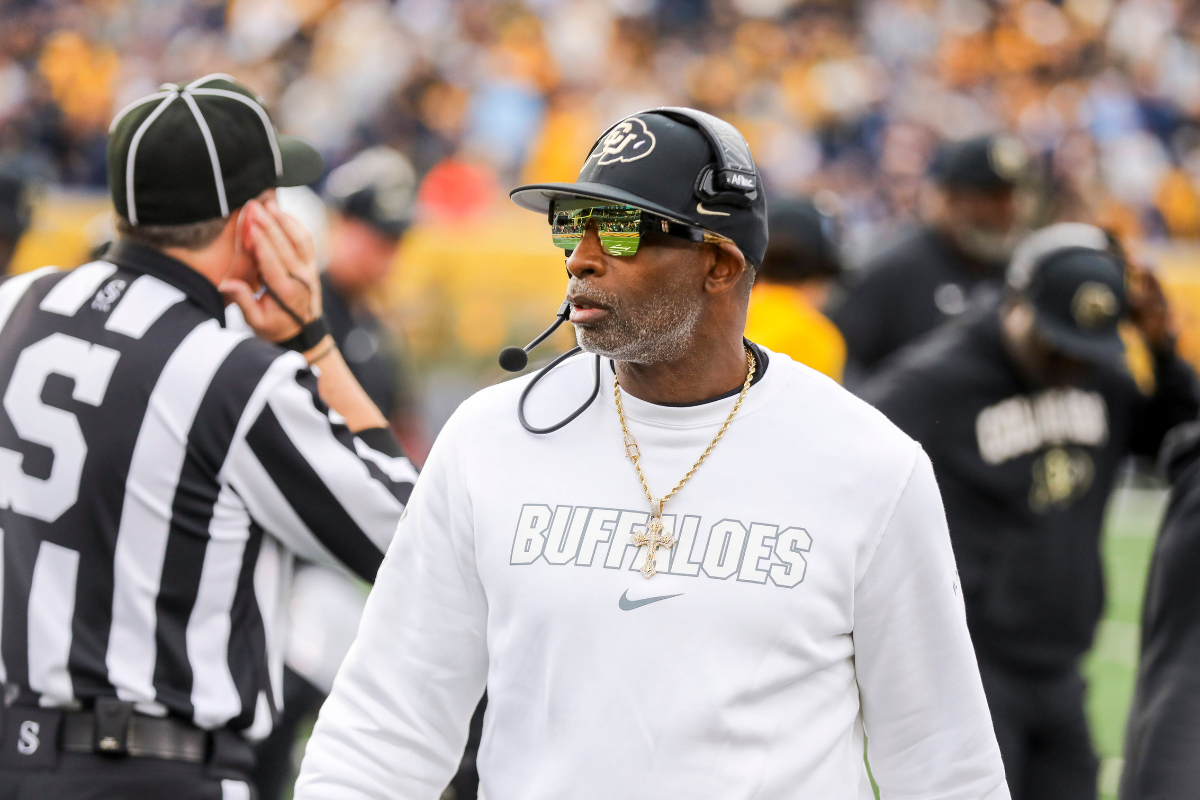
The Big 12 just pulled off a half-billion-dollar move to keep pace with the SEC and Big Ten, and Deion Sanders’ Colorado program is set to be one of the biggest beneficiaries. Over the last five years or so, we’ve seen that no sport, professional or otherwise, has been more dynamic than NCAA college football, thanks largely to NIL. Unlike in the past, staying competitive in any Power 4 program now requires deep financial resources to keep up with the Big Ten and SEC. But reportedly, that is now changing.
Watch What’s Trending Now!
Word is, the Big 12 just pulled off a big-time move by teaming up with RedBird Capital and Weatherford Capital on a five-year deal that’s set to pump up to $500 million into the league, and the Colorado Buffaloes get a big piece of that pie. Interestingly, this is anything but a corporate takeover. Rather, it’s a private capital setup. Schools like Colorado get a big pile of cash without having to sell off pieces of their athletic departments.
For Coach Prime and the Buffs, the star of the show is a $30 million line of credit that Colorado can tap into right away. This cash has to be a lifesaver because the school was staring down a projected $27 million deficit for the 2026 fiscal year.
So, between the new rules requiring schools to pay athletes around $20.5 million a year and Deion Sanders’ own salary bump to $10 million, the university had a hard time paying the bills.
Beyond the initial cash injection, RedBird will function as a sophisticated business development arm. The RedBird private equity firm has already worked with European football giants like AC Milan and MLB’s Boston Red Sox, and did a remarkable job with them. Now, they are planning to do the same with the Big 12, turning it into a global brand within a short time.


Big 12 has approved its private capital deal with RedBird Capital - the first such arrangement from a major NCAA conference. Schools have a choice to opt in for ~$30M in capital and league gets at least a $12.5M infusion as part of a strategic partnership bit.ly/4n3CTnp
They’ll be hunting for new revenue from things like international games, fancy stadium upgrades, and other ventures.
The timing couldn’t be better for Colorado, especially with Shedeur Sanders and Travis Hunter already in the NFL. Now that the “Prime Effect” has moved past the honeymoon phase, the program needs real financial staying power to stay relevant. By grabbing this $30 million boost, Colorado doesn’t have to tighten its belt or cut corners on recruiting.
Now they can stay aggressive in the transfer portal without having to worry too much. The end goal is for programs like Colorado to have the long-term capital necessary to sustain elite-level operations.
Why this is a win for the Big 12 overall
Beyond the massive $30 million check for individual schools, RedBird Capital is basically acting as a super-consultant and business partner.
According to Ross Dellenger’s latest reporting, RedBird has already brought over $145 million in contracted revenue to the league even before this deal was finalized. The Big 12’s next TV deal will be the endgame. RedBird’s founder, Gerry Cardinale, is a former Goldman Sachs partner who helped build YES Network and is currently acquiring Paramount Global. He is giving the Big 12 a professional media-buying seat at the table to squeeze every penny out of their next contract.
Dellenger noted that at least $12.5 million is going straight to the Big 12’s headquarters. So they can invest whatever they like, create their own events, and stop relying solely on the NCAA for money.
The biggest blessing is that it’s zero-equity safety. The “Big 10” (and SEC) have also looked at private equity, but those deals usually involve giving up a percentage of the league forever. RedBird Business Development Partnership is unique because it keeps 100% of the ownership with the schools. Think of it as a loan-and-partner model, not a sell-off. They are helping Commissioner Brett Yormark run the Big 12 more like the NFL and less like a traditional university club.
“We did the necessary due diligence in order to land in a great place,” the Big 12 commissioner said. “I appreciate the board and athletic directors for all of their feedback, guidance, and support. In times of uncertainty, RedBird provides us with incredible bench strength.”
At the end of the day, RedBird is providing the “corporate brain” that college sports have never really had before.