
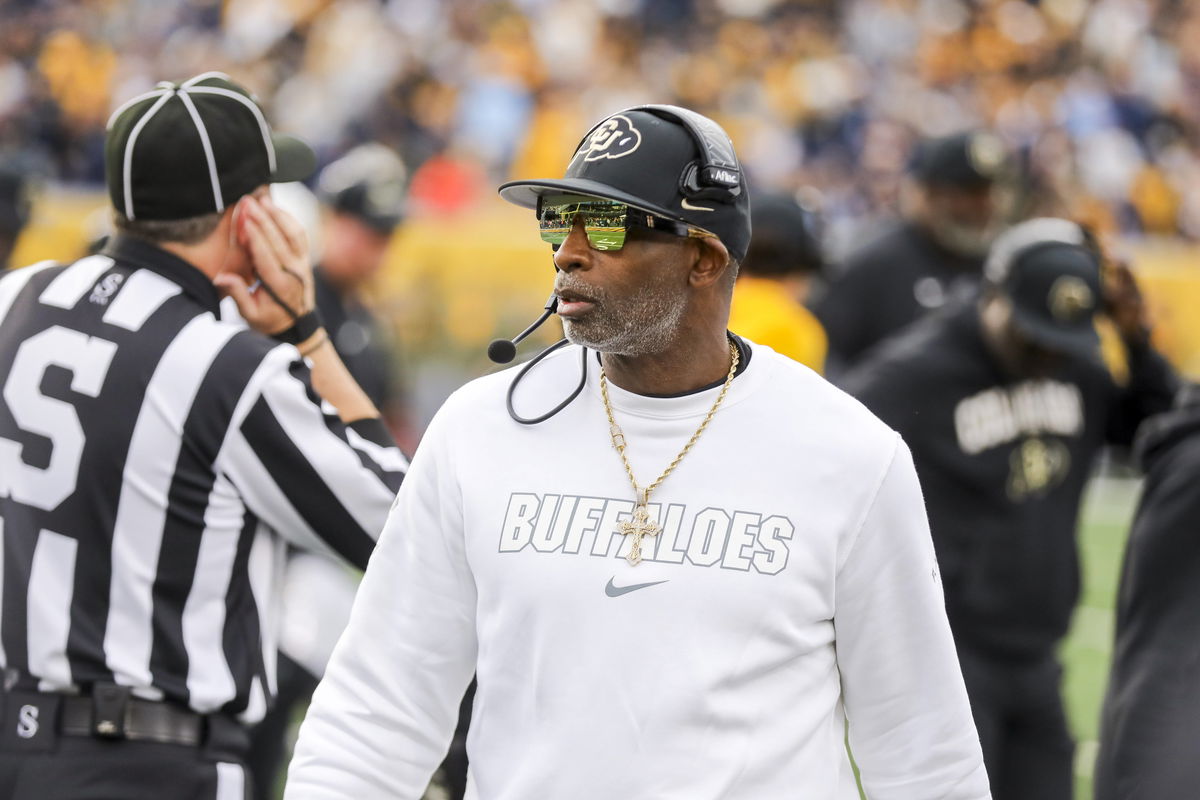
This isn’t just another eligibility dispute for Ezra Christensen. His attorney says it’s the story of a player who never had the same starting line as everyone else. Per On3’s Pete Nakos, the Colorado DL has officially sued the NCAA in Boulder County state court. But the lawsuit isn’t what’s drawing the most attention. It’s the personal story attorney Darren Heitner shared afterward.
Watch What’s Trending Now!
“Ezra Christensen grew up in an orphanage in Sierra Leone, was adopted at 16 with no knowledge of American football or NCAA rules, navigated a pandemic that wiped out his high school senior season and any access to eligibility counseling, and unknowingly allegedly started his clock at a junior college,” Darren Heitner wrote on X in response to Pete Nakos’ report.
Heitner believes the NCAA focused on the rulebook but failed to look at the bigger picture. According to him, Ezra Christensen’s background was never properly taken into account before the waiver was canceled.
“The NCAA canceled his waiver without ever engaging with a single one of those facts,” he added. “The NCAA purportedly reopened Ezra’s case after initially erroneously canceling it. But the NCAA is sitting on its hands, and Ezra can’t wait any longer. We now take our fight to court to allow Ezra to play for Colorado this coming season.”
Ezra Christensen’s football journey has been anything but conventional. He attended San Diego Mesa Junior College before spending two seasons at Fresno State and then starring at New Mexico State. Colorado became the fourth stop of his career, but his JUCO years are now at the center of the legal dispute. His lawsuit comes just weeks after the NCAA adopted a new age-based eligibility model that starts an athlete’s eligibility clock at full-time college enrollment or the academic year after turning 19, whichever comes first.
“While previous NCAA rules have served college sports well for a long time, we heard also loud and clear from NCAA members and student-athletes that eligibility rules should be easier to understand,” NCAA President Charlie Baker said in June.
The new rules don’t automatically give another year to players who have already run out of eligibility. That’s why Darren Heitner says Ezra Christensen’s case should have been looked at on its own. The Colorado transfer is coming off a First-Team All-Conference USA season at New Mexico State, where he posted 11 tackles for loss and six sacks.
Colorado’s Deion Sanders didn’t bring him in to provide depth but expected him to hold a DL that lost several key contributors during the offseason. DL coach Dante Carter praised Ezra Christensen’s skill set during spring camp in April.
“Ezra is very explosive, has a lot of twitch,” he said. “Can make a lot of plays for you within the defense.”
Right now, Colorado is simply playing the waiting game. A favorable ruling would put one of the country’s most disruptive defensive tackles back in the lineup. If it goes the other way, the Buffs will head into the season counting on Santana Hopper and Sedrick Smith to hold down the middle.