
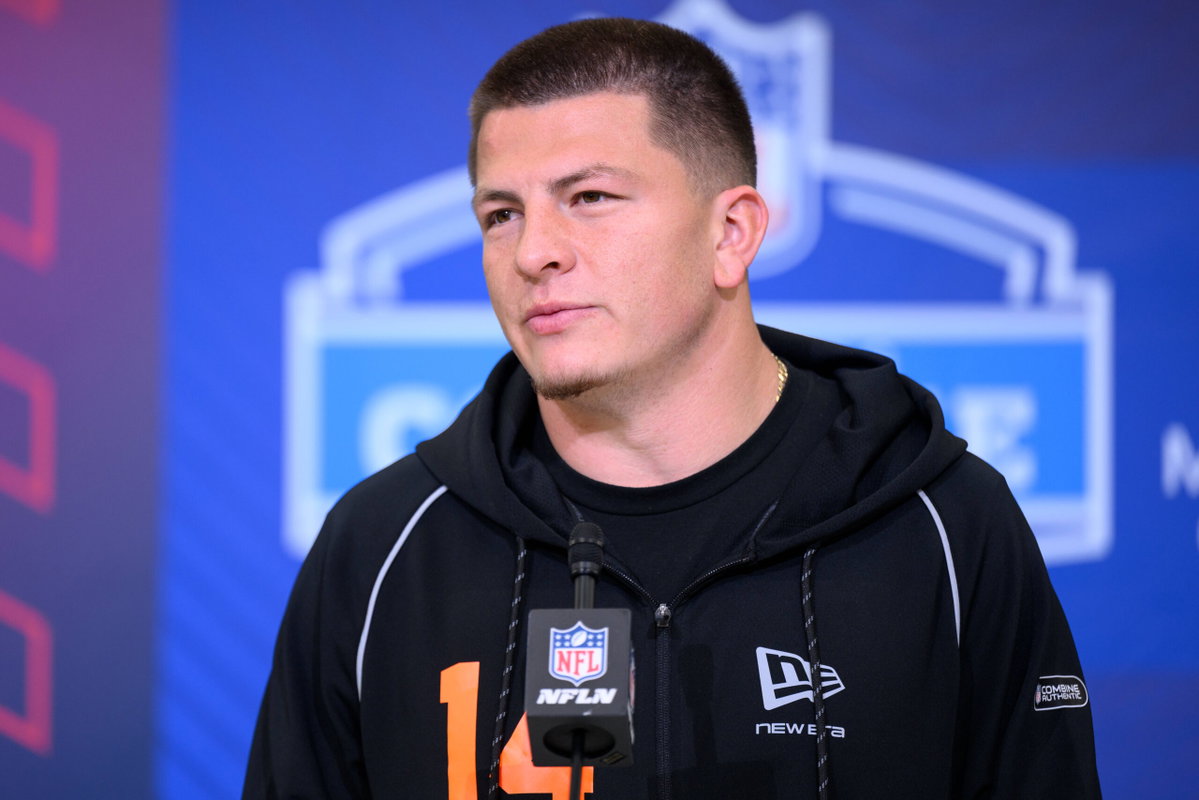
It seems like we can never have enough of Pavia in college football. The Heisman finalist is trying for his seventh overall season of college football and his fifth season of Division I eligibility. It appears like a pipe dream at the moment, but state courts have a way of granting such waivers to athletes.
Watch What’s Trending Now!
While his hopes of being signed by an NFL team as an undrafted free agent have now been dashed, the door behind him remains potentially open. This is due to the age-based eligibility model adopted by the NCAA in June.
This new five-for-five model gives student-athletes a five-year window to play over five seasons, with the eligibility clock starting after full-time college enrollment or the athlete’s 19th birthday, whichever comes first. The only downside is that the model does not apply to athletes from the 2022 class, whose eligibility is subject to the previous model.
However, last month, U.S. District Judge Charlotte Sweeney granted an extra fifth year of eligibility to all athletes from the 2022 class. It was the result of a legal action by a group of Colorado athletes against the NCAA. More recently, a Louisiana judge granted a temporary restraining order allowing multiple players on NFL rosters to return to college football.
Pavia’s collegiate career spanned four D1 seasons, making a fifth year of eligibility possible. He played two seasons of junior college ball at New Mexico Military Institute before transferring to New Mexico State and ultimately Vanderbilt.
Pavia had previously filed a lawsuit arguing that the NCAA “unjustifiably restrains” an athlete’s potential to earn NIL dollars by counting JUCO seasons against their four years of Division I eligibility. By leveraging the new courtroom environment, his legal team can argue his JUCO years should not count against his NCAA clock.
According to Mike Florio of NBC Sports, Pavia will have to file a lawsuit against the NCAA to technically have a chance at a fifth and final season of major college football.
While the legal loophole exists, pulling off a return for the 2026 season would face extreme practical challenges. For a start, fall camps are already concluding, and most programs finalized their starting quarterback battles months ago.
A school would need to take a massive compliance risk by signing him while the NCAA continues to fight eligibility battles in court. Furthermore, Vanderbilt has shifted focus to their quarterback of the future, Jared Curtis, meaning Pavia would likely have to look for a different program in need of an emergency signal-caller.
Around 16 college football players signed by NFL teams this summer are currently attempting a historic return to the collegiate ranks. They are exploiting the same legal loophole as Diego Pavia.
Among the prominent NFL rookies currently attempting this are former Ole Miss tight end Dae’Quan Wright and defensive tackle Zxavian Harris, both of whom are looking to re-enter the transfer portal.
They are joined by former LSU linebacker Jack Pyburn, who is using the court order to target a spot with the Tigers. There is also former Oregon State running back Anthony Hankerson and former Notre Dame defensive lineman Junior Tuihalamaka.
Despite finishing second in the Heisman Trophy voting, Pavia went undrafted in the 2026 NFL Draft. However, the Baltimore Ravens signed the former Vanderbilt quarterback to a three-year undrafted free agent deal in April, only to waive him three months later. The Ravens needed to free up some roster space for Ethan Pocic, and Pavia was the victim of that action. While teams in the CFL and UFL are legitimate fallback options for Pavia, his preference for the NFL has left him without a team deep into fall camp.
Therefore, college football remains a good option for Pavia. It not only allows him to play for a team in 2026 but also affords him another opportunity in the 2027 NFL Draft.
Pavia has quite a unique college career that makes him somewhat likely to win in court should he decide to file a lawsuit. Ever since his exit from the Ravens, there has hardly been any news from Pavia’s camp. And despite the possibility of Pavia returning a college football in 2026, his agent did not respond when Florio reached out for a response.