Imago
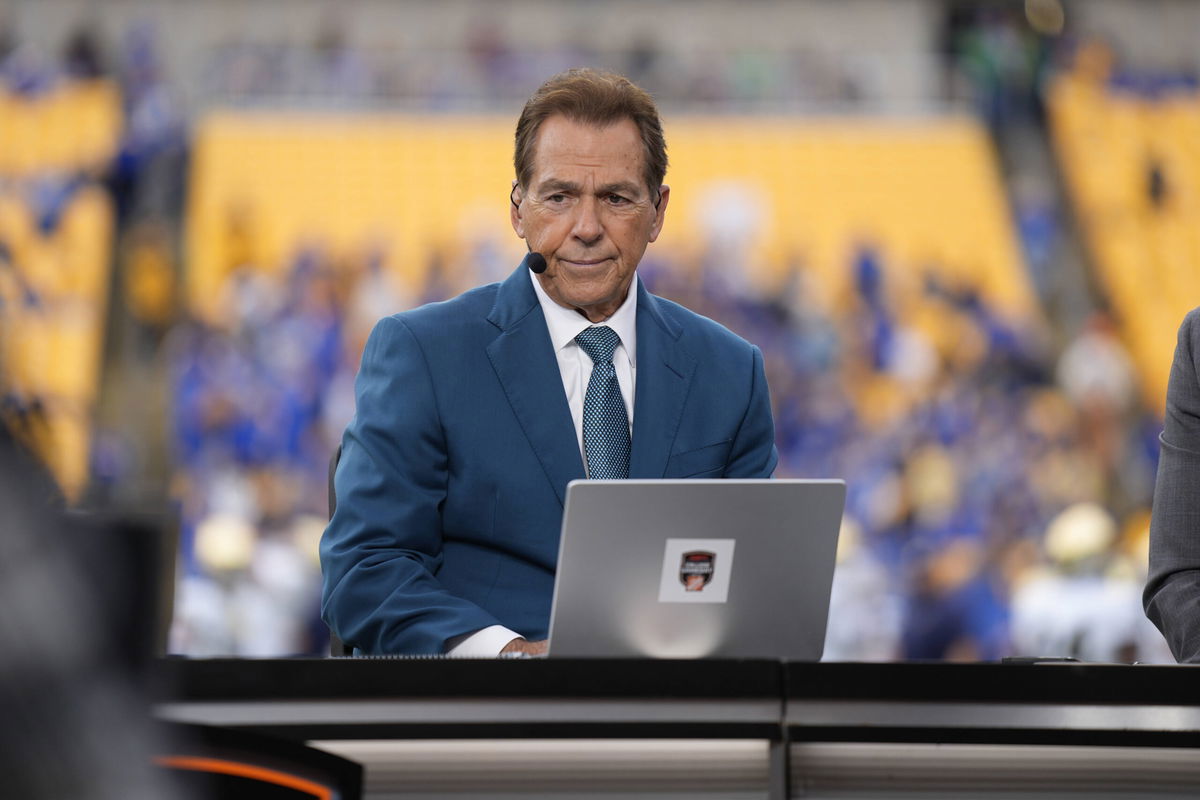
November 15, 2025, Pittsburgh, Pennsylvania, USA: November 15, 2025: Nick Saban on ESPN College Game Day during the University of Pittsburgh Panthers vs. Notre Dame Fighting Irish at Acrisure Stadium in Pittsburgh PA. Brook Ward / Apparent Media Group Pittsburgh USA – ZUMAa234 20251115_zsa_a234_351 Copyright: xAMGx
Imago
November 15, 2025, Pittsburgh, Pennsylvania, USA: November 15, 2025: Nick Saban on ESPN College Game Day during the University of Pittsburgh Panthers vs. Notre Dame Fighting Irish at Acrisure Stadium in Pittsburgh PA. Brook Ward / Apparent Media Group Pittsburgh USA – ZUMAa234 20251115_zsa_a234_351 Copyright: xAMGx
In the middle of a White House roundtable, Donald Trump put Nick Saban on the spot. The US President, who’s in his second stint as president, forced a public confession about the bitter truth behind the legendary coach’s retirement in 2024.
Watch What’s Trending Now!
“I was with Nick Saban the other day, and his timing is exquisite. He played, and he won, and he won and won, and when he saw this thing [NIL], he said, I’m gonna get out—I’m not around this anymore. He’s around here someplace,” U.S. President Donald Trump said during the roundtable. “Where’s Nick? Where are you, Nick? Right? “He doesn’t admit this. I said, ‘How come you left?’– just, he didn’t want to go through one season. There’s no better mind than that of this man. He looked and said, ‘What a shame!’ What a shame.'”
Donald Trump did not just share an anecdote; he cornered the famously guarded coach on a national stage. By calling him out directly, the POTUS stripped away Saban’s polite, PR-approved retirement narrative about age and fatigue, forcing the seven-time champion to publicly validate the exact financial burnout he had previously tried to downplay. Put on the spot at the White House, Saban had no choice but to lay bare the reality of the NIL crisis.
Though Nick Saban never directly claimed that NIL was the only reason for his retirement, events eventually forced him to make the move. During his last season with Alabama, he saw a change in the attitude of players towards money, as they were more focused on rewards rather than performance. Even now, during the White House roundtable, Saban pointed to the same issue with NIL. The veteran coach himself lamented the shift in player priorities from development to dollars.
“People, instead of making decisions about creating value for their future, were making decisions about how much money they could make at whichever school they could go to or transfer to,” Saban said.
Donald Trump at White House roundtable: “I was with Nick Saban the other day and his timing is exquisite. He played and he won and he won and won, and when he saw this thing [NIL] he said, I’m gonna get out — I’m not around this any more. He’s around here someplace. Where’s…
— Mike Rodak (@mikerodak) March 6, 2026
When Nick Saban unexpectedly walked away, the college football ecosystem collectively rolled its eyes at the official “health and age” excuses. Pundits and rival coaches wasted no time in pointing to the unregulated NIL bidding wars as the real culprit. This White House exchange finally transforms the sport’s worst-kept secret into an undeniable and unspoken fact.
Saban isn’t the only mastermind to abandon a sport he no longer recognizes. Moving away from football, we have basketball coach Tony Bennett, who made a similar abrupt exit in late 2024, the same year Nick Saban announced his retirement. Bennett explicitly cited that his exit decision was because of the unregulated portal and NIL landscape, which was his breaking point.
Well, the chaos is real, and players are entering the transfer portal easily just by looking at the price tag. Just take Bryce Underwood’s example, who transferred from LSU to Michigan for a $10.5 million paycheck. Before even taking a single snap on the field, Underwood was earning millions. The same goes for the chaos Colorado faced in the portal this season when more than 45 players left the program. They didn’t just have to rebuild, but also had to find players in this tight market.
Let’s not forget the tampering that made coaches’ lives tougher than ever. Clemson’s Dabo Swinney is the one asking for NIL and transfer portal rules to get stricter after Ole Miss lured away their top linebacker, Luke Ferrelli. Even Duke faced the same situation when their QB Darian Mensah left for Miami despite signing a $4 million deal with them.
These high-profile transfers are not isolated incidents but symptoms of a systemic problem that has coaches like Dabo Swinney demanding reform. Donald Trump already took major steps to tackle the situation by signing an executive order to limit payments to college players from third-party sources back in July 2025. Then came the SCORE Act, which was supposed to get votes back in December but was cancelled.
If that comes in full power, students can learn ways to earn money through sponsorships and social media presence, and can establish the fact that players are not employees of the university who need to be paid. However, they are not the only ones facing this issue.
As POTUS doubles down on Nick Saban’s stance, the open market is in chaos
During the roundtable, Donald Trump raised the same concern about the future of college football, with rising payments, court rulings, and massive NIL contracts ruining the game. Giving $12-$14 million to a teenage quarterback is not the right move. Players should value the money they are earning, but with the chaos in the market, it does not seem possible.
“We have a seven-year freshman,” Trump said. “We’re seeing things that we’ve never seen before. We have college players that don’t want to go to the NFL because they’re making more money in college, right? A lot of really bad things are happening, but basic questions like who is eligible to play are now virtually unregulated and decided randomly by judges rather than by reasonable, agreed-upon rules that could be very simple and very simply drawn.”
The battle for college football’s soul is no longer a behind-the-scenes debate; it’s a public crisis. Whether leaders can forge a system that balances player opportunity with competitive integrity will determine if the sport remains a beloved institution or becomes just another unregulated marketplace.
Related Newsletters