Imago
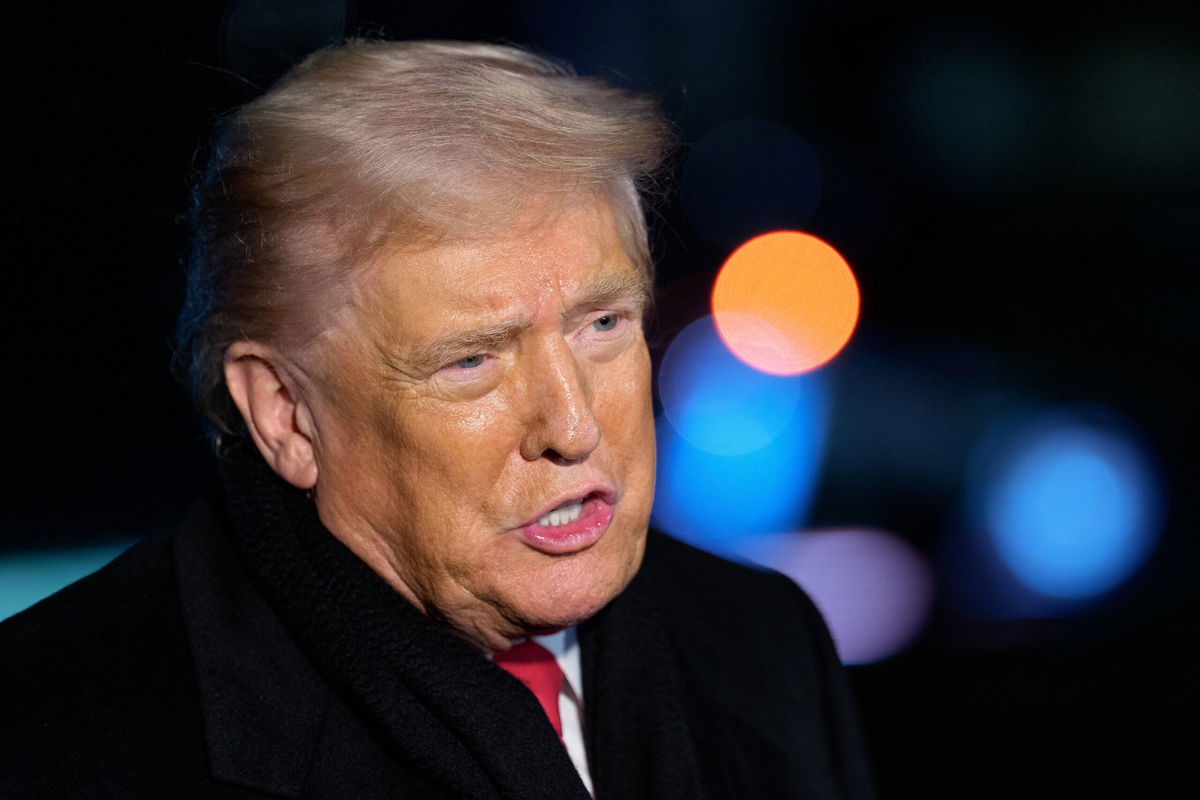
United States President Donald J Trump speaks to the media on the South Lawn of the White House in Washington, DC, USA, on Tuesday, January 20, 2026. President Trump is heading to Davos, Switzerland to attend the World Economic Forum. Copyright: xAaronxSchwartzx/xPoolxviaxCNPx/MediaPunchx
Imago
United States President Donald J Trump speaks to the media on the South Lawn of the White House in Washington, DC, USA, on Tuesday, January 20, 2026. President Trump is heading to Davos, Switzerland to attend the World Economic Forum. Copyright: xAaronxSchwartzx/xPoolxviaxCNPx/MediaPunchx
President Donald Trump has finally pulled the trigger on the NIL and transfer portal chaos. For a long time, coaches struggled to keep their teams intact, losing more than 45 players to the transfer portal, as Colorado did this season. Even “tampering” became a major issue for teams like Clemson, which lost its key player, LB Luke Ferrelli, to Ole Miss. Now, all these struggles will finally come to an end after a strict transfer policy.
Watch What’s Trending Now!
The executive order suggests bringing back stricter transfer rules for college athletes. It supports the older system that allows players to transfer only once without penalty, while still granting a special exception to those who transfer after completing their degree.
It clearly says that universities should “provide for the ability to transfer one time during the five-year (eligibility) period with immediate playing eligibility, and one additional such time if the student-athlete obtains a four-year degree.” This means a player can switch schools once and still play right away, and then transfer one more time later if they have already graduated.
However, the rules become stricter after that. If an athlete tries to transfer a second time without meeting the graduation condition, they will have to sit out for a season, which is called a redshirt year. During this time, they cannot play in official games. The order also introduces a new eligibility system called the 5-for-5 model. Under this system, athletes get five total years to complete their college sports career, and they can play in five seasons within that time.
The mandate forces compliance through a massive leverage point, which is federal money. If universities ignore these new transfer restrictions, they risk losing critical government grants. The financial threat could force schools to adopt the rules, regardless of local court rulings, thereby permanently capping the portal. They could risk losing important financial support if they don’t come on board. On top of that, it also focuses on fairness in other sports funding.
NEW: President Donald Trump is set to sign an executive order regulating college sports, @PeteNakos reports✍️
Athletes will have one free undergraduate transfer.
Details: https://t.co/iWwCxhg3Fv pic.twitter.com/oDXqSE9Q33
— On3 (@On3) April 3, 2026
The order requires schools to continue supporting women’s sports and Olympic sports so that these programs are not ignored or underfunded compared to bigger sports like football. All of these changes are planned to start from August 1. All of this comes after Donald Trump’s push to save college sports. He also conducted a meeting with all sports personalities and media people at the White House during the first week of March.
After that meeting, Trump created five different committees to focus on key areas like laws, rules, NCAA changes, media, and player-related issues. Each group works on finding solutions to problems in college sports. The result? The new executive order came into play. The urgency came after looking at the chaos college sports are going through.
Players like Virginia quarterback Chandler Morris were fighting for a seventh year of eligibility, and even Joey Aguilar was fighting for one more year of eligibility, but both got denied. Now, the order tries to fix that by putting a limit on the playtime to five years. Plus, their transfer moment also saw a major surge as around 25% of FBS players entered the transfer portal during the 2026 cycle.
But even with this new law, the chaos won’t end as another concern comes right into play.
Donald Trump’s executive order creates confusion
The executive order creates confusion and tension right away. Courts have already made decisions on many of these issues, so now colleges and the NCAA are stuck in a difficult situation. They have to choose whether to follow the president’s order or follow what the courts have already said. Legal experts believe this will lead to more court cases, especially about whether the president even has the power to decide NCAA eligibility rules.
“It’s terrible for the schools, do they ignore the presidential order or a court order? Coaches are going to be pissed,” sports lawyer Darren Heitner said.
On top of that, the transfer rules can bring in more problems than solutions. Right now, players are allowed to transfer multiple times because of a rule change in 2024 based on a 2023 court decision. But the new order tries to limit that freedom. With the basketball transfer portal opening next week, many players who have already transferred once are planning to transfer again, which could make things very complicated for schools and coaches.
At the same time, the order also tries to solve ongoing problems about player eligibility, which have already caused many lawsuits across the country. So, it will be interesting to see how this entire thing turns out for college sports. Even with expected lawsuits, the game has fundamentally shifted. By linking transfer rules directly to federal university money, the administration created a high-stakes standoff. Regardless of what judges say, the days of an unregulated, penalty-free transfer market are officially finished.

