
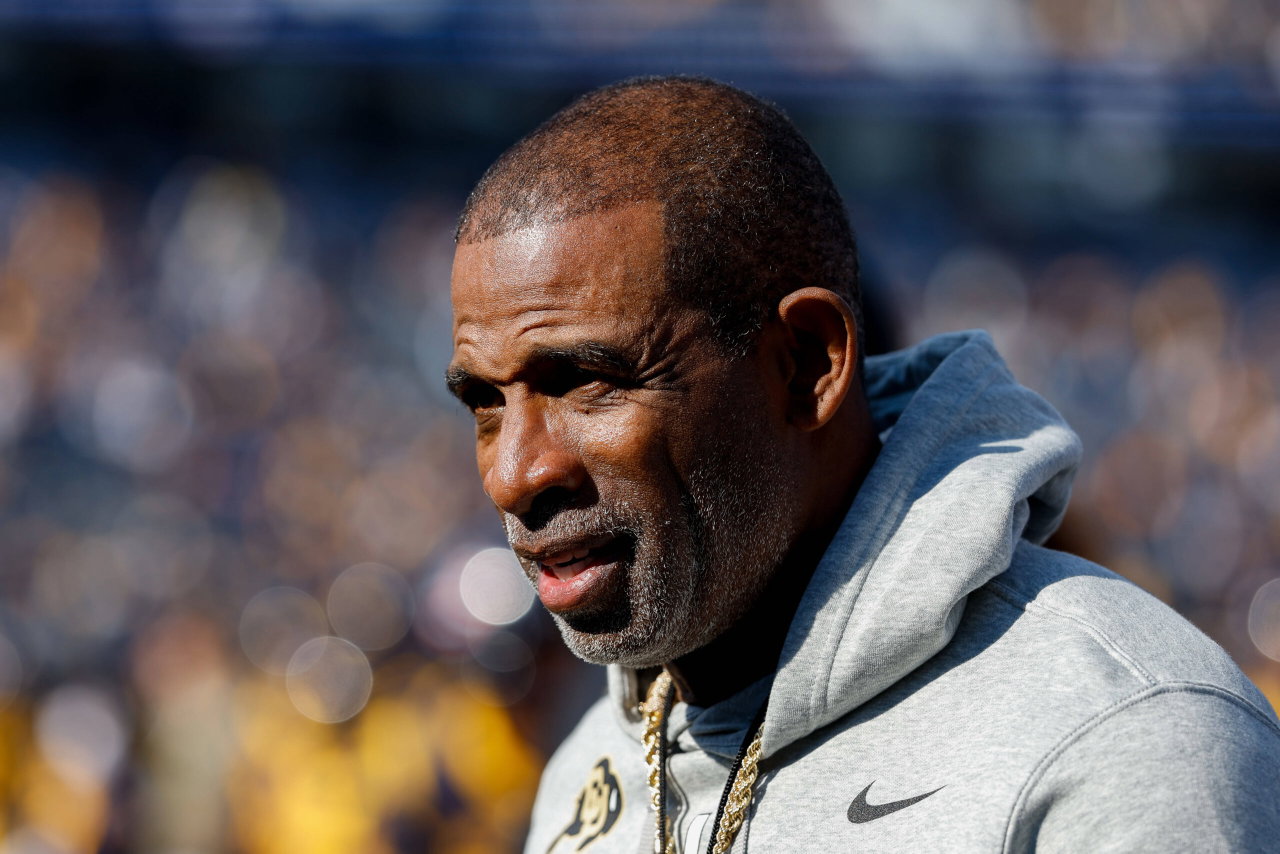
Jason Whitlock claims Deion Sanders showed up to his Fox Sports dressing room with an unwritten message: stop criticizing me. On camera, Coach Prime looks like the ultimate charismatic mentor who loves everyone. But behind closed doors, the long-time sports journalist says Sanders operates under a completely different set of rules, using personal pressure to quiet anyone who dares to push back against his public image.
Watch What’s Trending Now!
The former ESPN and Fox Sports commentator recalled a tense moment when Sanders unexpectedly walked into his private green room. Whitlock had been openly critical of Sanders on television, and he believes Sanders showed up to personally press pause on that negative coverage.
“But I had probably written something that had irritated Deion, and Deion quit speaking to me at one point,” Whitlock said on his Fearless Podcast. “Then he came into my dressing room when I was at Fox Sports to make an awkward piece. You know, it was—I didn’t know what he was doing. It’s not like, ‘Hey man, can we have a private talk?’ He, I think, knocked on my door and came in and just tried to make an awkward piece.”
Whitlock believed Sanders was trying to send him a message without saying it directly. In his view, the message was about him stopping being critical of Coach Prime.
“His awkward piece was really him trying to say, ‘Hey man, don’t criticize me.’ You know, I try to be respectful, but I’m always gonna be that guy.”
This off-camera encounter fits a broader pattern in how Sanders manages his public narrative. Throughout his transition from Hall of Fame player to high-profile head coach, Sanders has maintained tight control over his media footprint, occasionally clashing with journalists who question his methods.
While most public figures address media criticism through press statements or on-air debates, Whitlock’s account suggests Coach Prime prefers using his physical presence to quiet pushback behind closed doors.
Whitlock, however, stood his ground. He respected everything Sanders had accomplished as an athlete, but he also made it clear that he did not need to be Sanders’ friend. His job was to give his honest opinion, even when that opinion was negative.
And this was not the only story that made people question the difference between Sanders’ public and private personality.
Former LSU player Breiden Fehoko also shared a similar experience from when he was just 17 years old. At the time, Fehoko was one of the top high school recruits in the country and had been selected to play in the Under Armour All-America Game in Orlando.
When Fehoko found out that Sanders was coaching defensive backs at the event, he was excited.
Sanders had been one of his childhood idols, so Fehoko simply wanted to meet him, get his cleats and jersey signed, and maybe receive a little advice from the legendary defensive back.
But when Fehoko finally saw Sanders in a hotel lounge, the meeting went very differently than he expected.
According to Fehoko, Sanders looked him in the eyes and said, “Hey man, move along.” Fehoko also recalled that Sanders’ security team stepped in and physically moved him away.
For a 17-year-old who had grown up looking up to Sanders, the moment was obviously shocking.
To his defenders, these moments can be explained by the relentless demands of superstar status. Sanders has spent decades building youth programs, mentoring thousands of young athletes, and driving historic attention to college football programs.
Managing that level of fame requires strict personal boundaries. Yet for critics like Whitlock and former fans like Fehoko, those off-camera encounters reveal an uncomfortable truth. The warm, accessible “Coach Prime” persona on television may be a carefully managed product that disappears the moment the bright lights turn off.