
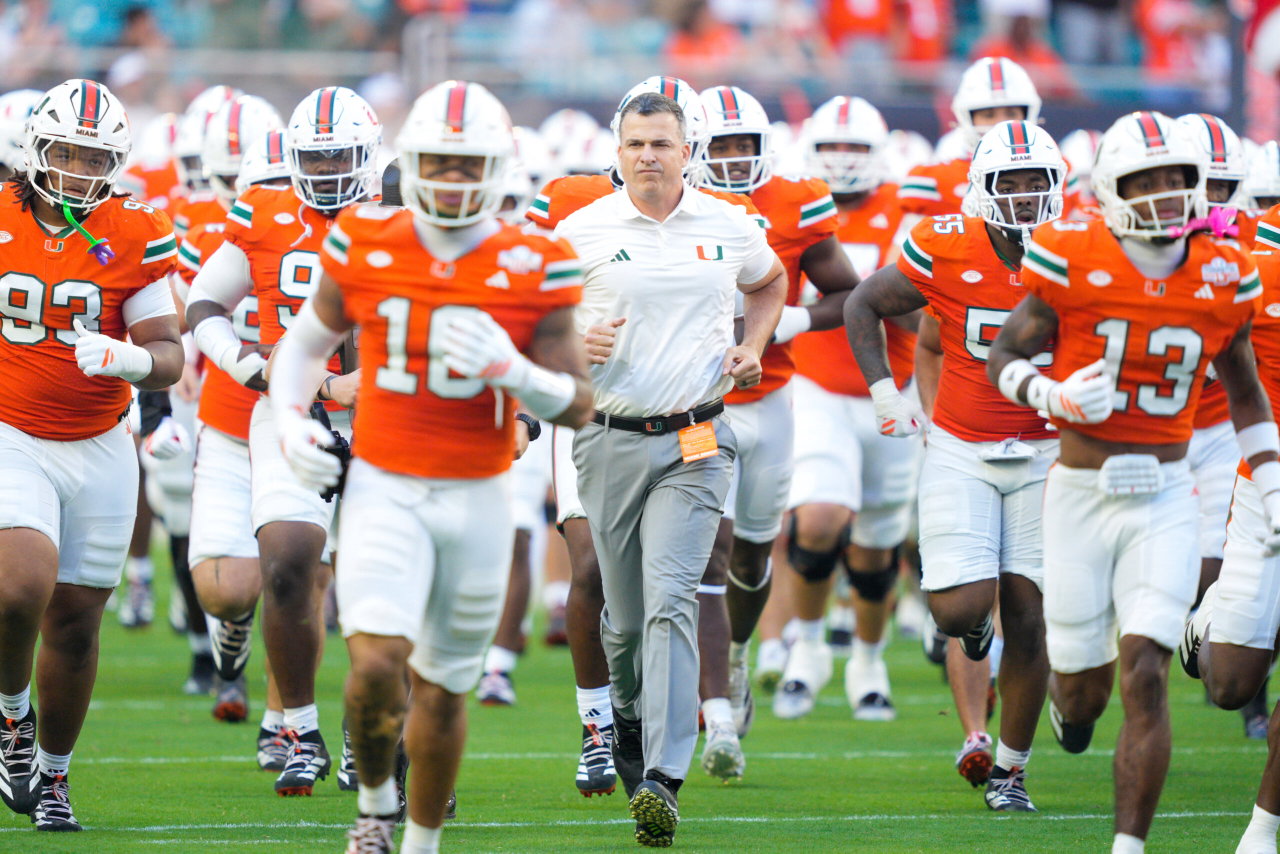
Mario Cristobal might not have expected the FBI to become part of Miami’s offseason development program. But here we are. The truth is, most college football players are not going pro. That’s where FBI Miami Special Agent in Charge (SAIC) Brett Skiles and Supervising Special Agent (SSA) Cipriano stepped in.
Watch What’s Trending Now!
On May 21, FBI Miami hosted a group of Miami football players at the FBI Miami Field Office in Miramar, Florida. During the event, the bureau gave the players a real look at what it actually takes to become an FBI special agent.
“Yesterday, it was ‘All about the U’ at FBI Miami when a group of University of Miami football players spent some time at our office to learn about FBI careers and to get an inside look at our capabilities,” FBI Miami posted on X. “The FBI actively recruits former college athletes as they possess many of the skills we are looking for in agents, including fitness, discipline, and teamwork.”
The FBI knows athletes are already conditioned to operate under stress without folding emotionally. College football players already live in structured environments built around accountability, pressure, preparation, film study, physical conditioning, and handling criticism publicly. That sounds closer to federal work than we realize, and Mario Cristobal’s players didn’t just walk through the building for pictures.
SAC Skiles reportedly broke down the FBI’s global missions, operational structure, and regional responsibilities. Meanwhile, SSA Cipriano detailed the actual hiring process, background checks, qualifications, and physical testing standards needed to join the bureau. Because while college football sells NFL dreams 24/7, it’s not for everyone.


Yesterday, it was “All about the U” at FBI Miami when a group of University of Miami football players spent some time at our office to learn about FBI careers and to get an inside look at our capabilities. The FBI actively recruits former college athletes as they possess many of Show more

The NCAA estimates that only about 1.6% to 2% of college football players ever make the NFL. That means roughly 98% won’t. There are over 1 million high school football players in America, where only around 6.5% will even play NCAA football. From there, only 254 players hear their names called during the NFL Draft each year. Out of nearly 74,000 NCAA football participants, only 1-2% make it to the league through the draft process.
Miami enjoyed a strong 2026 NFL Draft cycle, sending 13 Hurricanes to the league. NFL franchises drafted nine of those players, with the New York Giants selecting Francis Mauigoa No. 10 overall to top the list. Four of them signed UDFA deals. But even a program sending double-digit players into pro football still leaves the majority of the roster needing another career path eventually. That’s why this Miami-FBI partnership is a wonderful step for preparation. History already shows that football players transition naturally into law enforcement work.
Football players blend well with law enforcement
Several former Hurricanes have already proven this pipeline works. Former Miami wide receiver Randal “Thrill” Hill transitioned into law enforcement and became a Homeland Security special agent. Another former Hurricane, Ed Hudak, is the current Chief of Police in Coral Gables.
Former NFL Pro Bowl WR Laveranues Coles found purpose when he joined the Jacksonville Police Department. That’s after he finished a 10-year NFL career that included 674 receptions, 8,609 yards, and a Pro Bowl season in Washington.
“This job allows me to feel like I’m a part of something greater than myself, like when I was in the NFL,” he told NBC News. “It’s giving me a sense of purpose, and I feel good about it.”
That sense of structure, mission, and team environment is what makes the job a natural fit for football players. Former NFL LB Jeff Kopp, now working in Jacksonville law enforcement, called his job “a totally natural fit” for former players. Football players already understand the chain of command, preparation, sacrifice, physical conditioning, and performing while exhausted. The biggest difference is that the stakes become real-world instead of a scoreboard.
“The people who call us, it’s probably their worst day,” Kopp said. “And you just get to go in there and bring calm [and] peace, de-escalate the situation, and then just help people figure stuff out.”
Mario Cristobal probably loves the step too. Because of all the NFL branding coaches sell during recruiting, the best programs also prepare players for life outside of football.