Imago
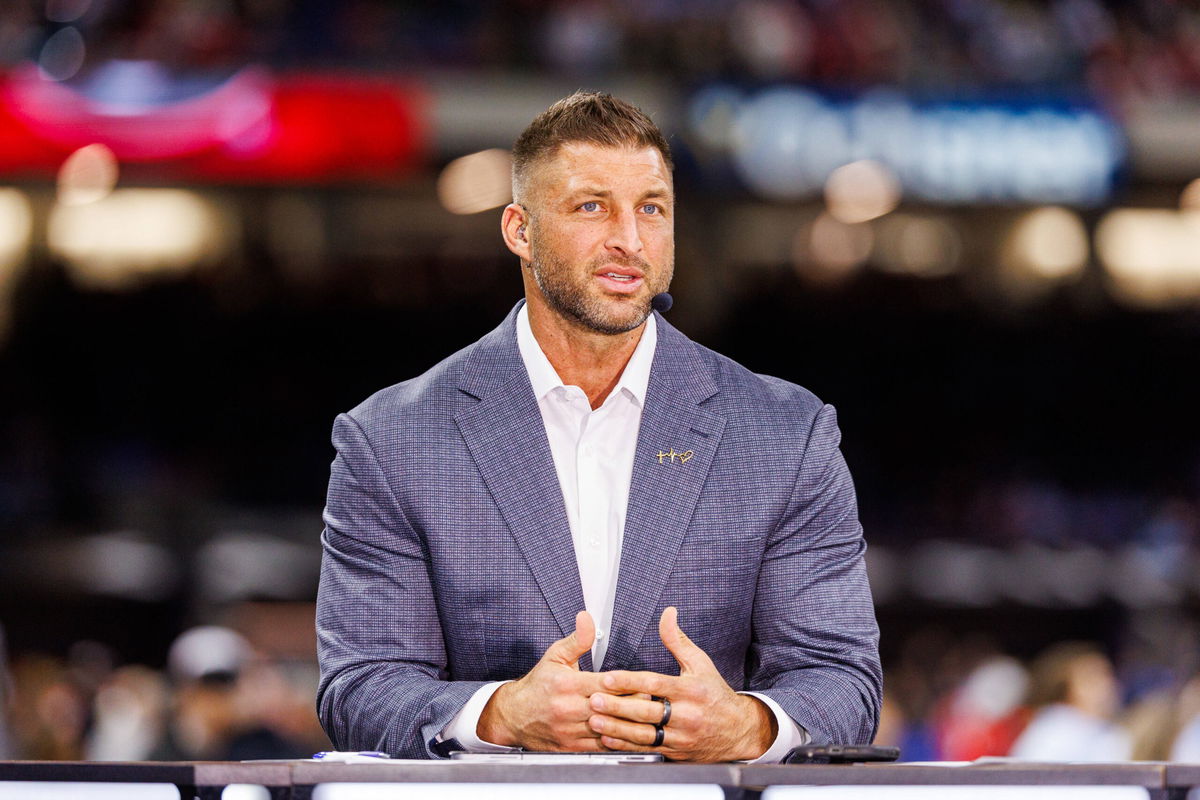
January 01, 2026: SEC Network analyst Tim Tebow prior to NCAA, College League, USA football game action between the Ole Miss Rebels and the Georgia Bulldogs at Caesars Superdome in New Orleans, Louisiana. /CSM New Orleans United States of America – ZUMAc04_ 20260101_zma_c04_168 Copyright: xJohnxMersitsx
Imago
January 01, 2026: SEC Network analyst Tim Tebow prior to NCAA, College League, USA football game action between the Ole Miss Rebels and the Georgia Bulldogs at Caesars Superdome in New Orleans, Louisiana. /CSM New Orleans United States of America – ZUMAc04_ 20260101_zma_c04_168 Copyright: xJohnxMersitsx
Tebow is still considered the greatest college player of all time by a lot of fans and analysts. But his 2008 teams won despite the chaos surrounding it. Things came to a head in 2012 when Aaron Hernandez, who was a Patriot at the time, was in the national spotlight for a double homicide investigation. The media pulled in their head coach, Urban Meyer, into the conversation too.


It didn’t matter that he was already at Ohio State then. Meyer still had to listen to questions about Aaron Hernandez, about arrests at Florida, about whether things had spiraled under his watch. But during Tim Tebow’s time in Gainesville from 2006 to 2009, things were indeed quite wild.
Watch What’s Trending Now!
How else do you explain the fact that 41 of the 121 players on the 2008 Florida Gators football team roster got arrested at some point during their careers or afterward? That’s 33% of the national championship lineup. It seems contradictory to state that one of the greatest teams in college football history was also one of the most chaotic off the field.
Tim Tebow was in the middle of that wild phase in 2008. He fulfilled the promise he made after losing to Ole Miss that things would change. Florida finished 12-1, beat Alabama in the SEC Championship, and took down Oklahoma 24-14 for the national title. But beyond Saturdays, that same roster was anything but stable the rest of the week.
According to The New York Times, those 41 arrests included 16 players from the two-deep, nine starters, plus specialists. These are locker room leaders, some of whom later went to the NFL. This even included eventual Heisman winner Cam Newton, who was involved in a stolen laptop incident that led to his transfer from the program.
View this post on Instagram
Talent was never the issue. It was about lack of control. Even Tim Tebow couldn’t keep everyone in line. Take 2007, for instance, when he found himself in the middle of a bar altercation involving Aaron Hernandez. The QB tried to de-escalate it, even offering to pay the bill. But it didn’t matter as his teammate threw a punch and walked out.
By 2009, the situation had gotten so frequent that The Orlando Sentinel literally built a database to track Florida player arrests. Most of the cases were minor, like possession and fights. Just college stuff, as Urban Meyer later described it. But there have also been more grim cases.
Other cases linked to Florida’s 2008 roster arrests
Jamar Hornsby was a safety for the Florida Gators during the 2006 and 2007 seasons. In May 2008, he was arrested for using the credit card of Ashley Slonina, a 22-year-old fellow student who had died in a motorcycle accident six months earlier. Ashley Slonina, the victim, was killed in October 2007 in a crash that also claimed the life of Florida walk-on football player Michael Guilford.
Hornsby was accused of making nearly 70 fraudulent charges totaling approximately $3,000 on Slonina’s gas credit card. He allegedly began using the card the very day after she died. Ashley’s father, James Slonina, noticed unexplained charges on the card and hired a private investigator. James later described the ordeal as a “six-month reign of terror” that affected his family’s grieving process.
Hornsby pleaded no contest to four misdemeanor counts in December 2008. He was sentenced to one year of probation, ordered to pay nearly $10,000 in restitution, and required by the judge to tour Florida State Prison and write an essay about the experience. Immediately following his arrest in May 2008, Urban Meyer dismissed Hornsby from the Florida football team. Before the credit card incident, Hornsby had already served a five-game suspension in 2007 for selling his complimentary team tickets.
Then comes the case of Ronnie Wilson, who was a highly touted offensive lineman for the Florida Gators. He was a top-ranked prospect from Pompano Beach, FL, and a member of Urban Meyer’s initial 2005 recruiting class. He became an SEC All-Freshman performer in 2006 and played as a reserve on the Gators’ 2006 National Championship team.
But in April, 2007, after a dispute at a nightclub where Wilson allegedly spit on and slapped a man, the man followed Wilson’s car to report him to the police. Wilson retrieved a semi-automatic rifle (widely reported as an AK-47) from his trunk, and fired a shot into the air to intimidate the man. He pleaded no contest to misdemeanor charges of battery and discharging a firearm. He was then sentenced to two years of probation and 100 hours of community service.
Wilson was famously allowed back onto the team as a walk-on for the 2008 season after serving a one-year suspension. He transitioned to the defensive line during this time to help the team’s depth. Despite being given a second chance for the 2008 season, Wilson was eventually kicked off the team for good in early 2008 after failing a drug test.
After that comes Chris Rainey, who was an exceptionally fast running back and return specialist for the Gators from 2007 to 2011. Renowned for his track-star speed, Rainey also competed for the Gators’ track and field team, winning an NCAA Championship in the 4x100m relay in 2010. In the Gators’ spread offense, he was used both as a traditional running back and a slot receiver.
In September 2010, he was arrested and charged with felony aggravated stalking after allegedly sending a threatening text message to a woman that read, “Time to d*e“. Meyer initially dismissed him from the team, but Rainey was reinstated just weeks later after pleading to a reduced misdemeanor charge.
Some other student-related cases include Carlos Dunlap picking up a DUI before the SEC title game and Janoris Jenkins getting charged with resisting arrest. Some players were charged with theft and assault, others with drug-related offenses. In many cases, charges were dropped, or discipline was minimal. That’s where the criticism of Urban Meyer picked up, with many suggesting that talent was being protected.
But that’s what makes Tim Tebow’s 2008 team such a fascinating case study. It’s why stories like American Sports Story, revisiting the Hernandez saga, are eye-opening. They pull back the curtain on an entire era of college football where winning sometimes covered up everything else.
Written by

Edited by

Deepali Verma