
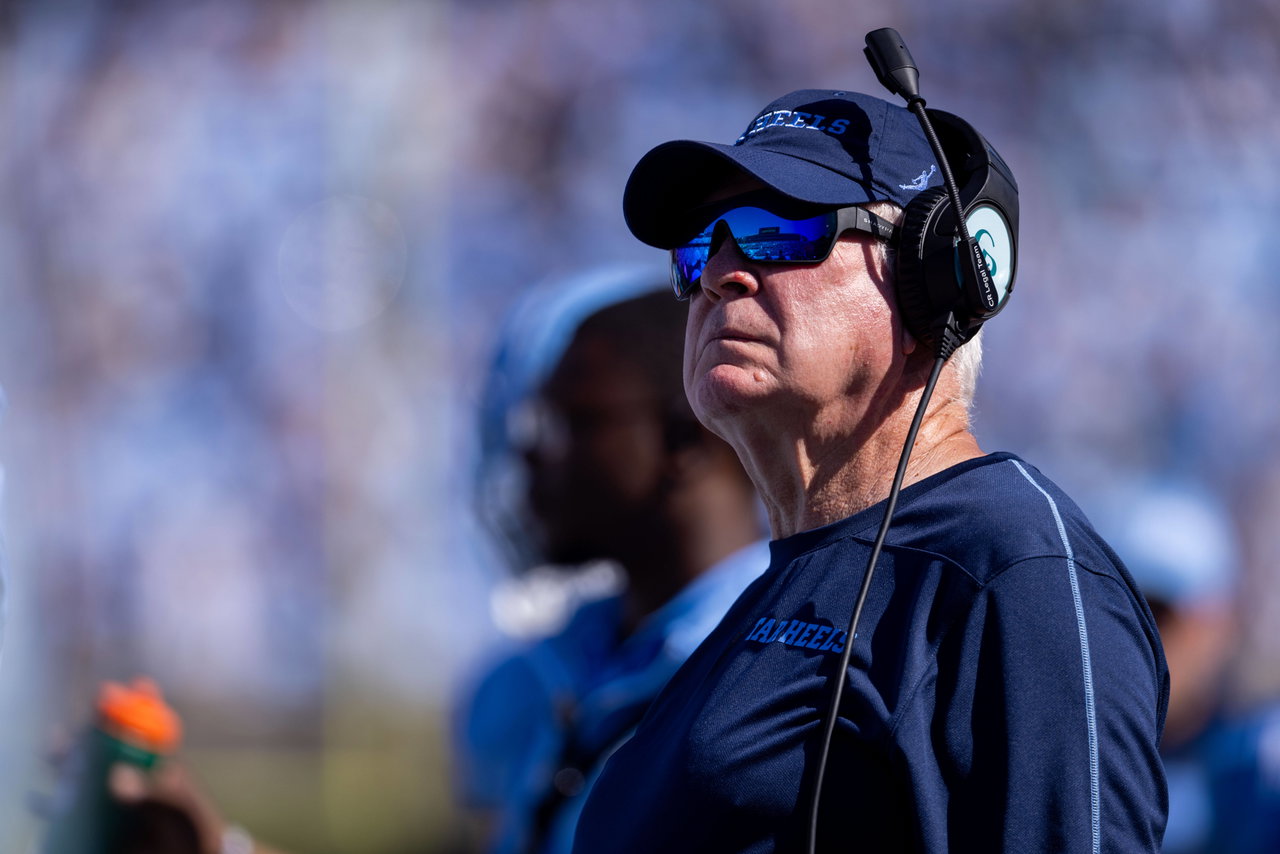
College football has changed a great deal in its history. From the post-season to the forward pass to conference championships, the landscape has endured everything. Now, the NIL era poses unique challenges to the sport’s overall health. According to former Texas head coach Mack Brown, it would take some honest conversations for college sports to flourish.
Watch What’s Trending Now!
“This is our game. This is about these kids. It’s about mental health; it’s about graduation. It’s about a game that we’re passionate about when we’ve loved forever,” Mack Brown said on Urban Meyer’s Triple Option podcast on July 22. “We can’t just sit here and let it die, and it’s growing in so many wonderful ways. But we’ve got some cancer on there. We’ve got to cut it out. We gotta get rid of the negatives, and be strong enough to tell each other that’s not best.”
The Supreme Court’s landmark 2021 NCAA vs. Alston ruling opened the floodgates for athletes to earn money from their NIL rights. Ever since then, there has been a widespread financial arms race to build multimillion-dollar collectives, as some even surpass the $50 million mark. Texas’ One Fund NIL collective is by far the richest in the country, with an annual budget of more than $35 million. Amid those deep pockets, it’s particularly challenging for the lower-tier programs to compete.
“Let’s figure out what is best if it’s not best to have 50 million in a collective?” Mack Brown said. “What is best? What do we do if we’ve got a system where every time somebody makes a rule, they just sue, and there’s no rule makers? And what do we do? We can’t just sit here and say that’s okay.”
Beyond collectives, the House settlement compounds the problem by allowing programs to pay up to $20.5 million to their athletes. While in theory it proposed an upper limit, top programs have already found ways to circumvent it. According to reports, many programs now ink sponsorship and marketing deals with companies. In return, the companies offer multi-million dollar NIL deals to their athletes. All of it is completely legal since there’s no NIL cap in college sports.
House Settlement requires NIL deals over $600 to pass fair-market-value tests via NIL Go, but enforcement is weak. As per Deloitte’s baseline algorithm, over 70% of the booster-led collective deals would fail the FMV criteria.
The NCAA and its programs are facing hundreds of lawsuits from athletes over eligibility, NIL disputes, and revenue-sharing agreements. In June 2026, USC linebacker Talanoa Ili and Stanford QB Charlie Mirer filed a class action lawsuit against the NCAA and CSC over restrictions on their NIL compensation. The State of Tennessee & Commonwealth of Virginia vs. NCAA is another lawsuit filed after the NCAA attempted to investigate UT’s Spyre Sports Group regarding Nico Iamaleava’s contract.
In truth, without federal antitrust legislation, nothing would move easily for college sports.