
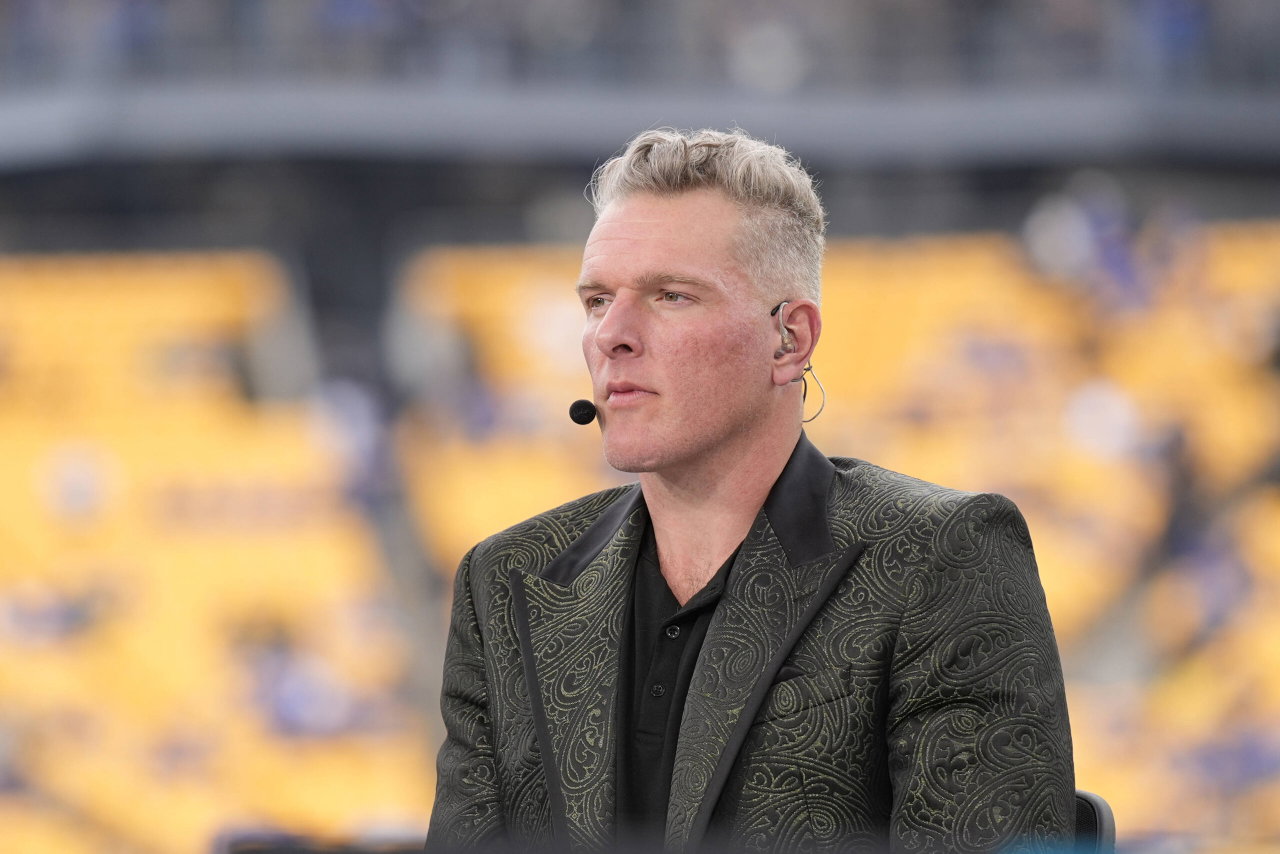
What started as another competitive roster storyline quickly turned into a heated debate over how far coaches should go to gain an advantage. Lane Kiffin has faced criticism for signing former NFL pros to his roster. However, Pat McAfee doesn’t see the whole thing from an LSU lens. Instead, the ESPN broadcaster wants to look at how this latest fiasco again proved that the NCAA can’t do anything anymore.
Watch What’s Trending Now!
“I think this is going to get really loud, and we’ve been talking about how loud it is. We hate that this is the conversation heading into the season,” McAfee said on his own on August 29. “This whole TRO state court judge conferences’ ruling things have a much bigger ripple effect. The NCAA has gotten to the point where they don’t do anything because they will get sued and lose. So, they try not to even waste their time. Hey, we need a ruling from somebody. Why isn’t the NCAA doing that? I thought that’s what they’re supposed to do.’ Well, the NCAA was making rulings on these types of things, especially now in the NIL era.”
“Every time they would make a ruling, the person would sue because you’re taking money out of my pocket. I’m an employer. There are some labor laws here. There’s a lot of this type of stuff, eligibility stuff. So, they would sue the NCAA. They would end up in a court. The NCAA would lose. So then it would happen again, and then it would happen again, and it would happen again.”
Rather than blaming Kiffin as most critics have, McAfee pointed out that the NCAA is repeatedly losing antitrust lawsuits. He argued that the governing body’s incompetence has left college sports entirely vulnerable. McAfee isn’t wrong.
The NCAA has lost its authority after repeatedly losing a series of lawsuits. In late 2023 and early 2024, a federal judge in West Virginia issued a temporary restraining order that completely banned the NCAA from enforcing its multi-time transfer rules.
After that, Diego Pavia secured a critical injunction that prevented the NCAA from counting his JUCO years against his college eligibility. It opened a pandora’s box for former JUCO players.
Another wave of 2026 court injunctions and temporary restraining orders ruled that the NCAA had denied a specific class of 2022 recruits their fifth year of eligibility. This came after the governing body introduced the five-for-five rule to address eligibility issues.
Because of these court orders, athletes from that specific class remain fully eligible to return to college football. This includes players who signed undrafted NFL free-agent deals or attended NFL training camps this summer. Even if they were later cut or waived, they can still return to the college game.
Kiffin acted quickly, weaponizing LSU’s NIL financial resources to secure elite talent right off the NFL waiver wire. The new roster includes former Ole Miss tight end Dae’Quan Wright. The Cleveland Browns recently waived him. Former Notre Dame defensive lineman Junior Tuihalamaka and former Ole Miss defensive lineman Zxavian Harris are also new LSU additions.
The SEC initially strongly opposed the move, stating that “college sports are for college athletes.” The conference officially backed down after a fresh TRO and ruled that it would comply with the court orders, clearing the path for Kiffin’s new pros to take the field.
When Kiffin appeared on the Pat McAfee show, he openly admitted that he structurally dislikes the idea of professional athletes returning to the amateur ranks. But as the leader of his team, he refuses to disadvantage his team intentionally.
“At the end of the day, because of these rulings, they’re either going to play for you, or they’re going to play for someone else around the country,” Kiffin told McAfee. “So we’ve made the decision to recruit them.”