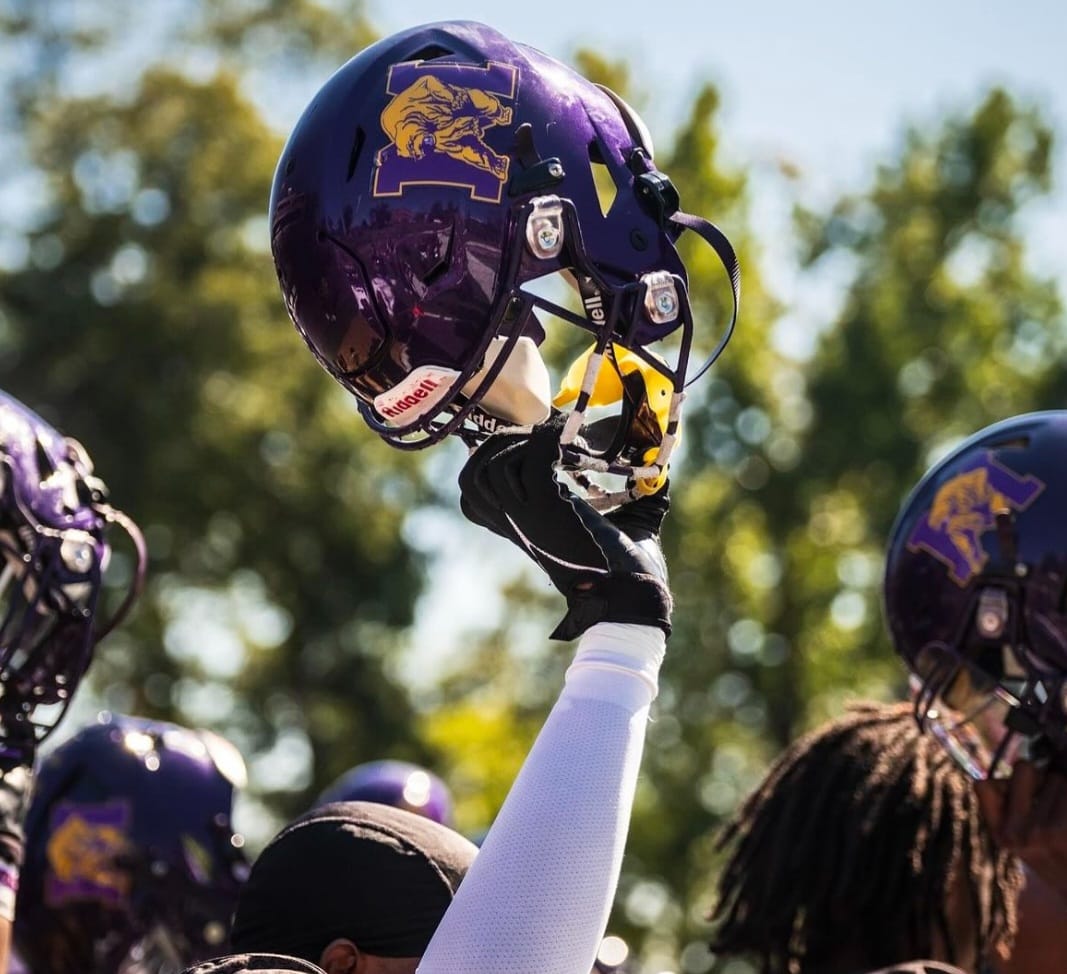
Before Deion Sanders went to Colorado, he made sure that Jackson State was the most-watched program in the entire FCS. Since then, Sanders is long gone to Boulder, but his impact hasn’t dimmed one bit. JSU led the FCS in average home attendance in 2025 with 28,733 fans per game. This number has only strengthened the case for why this program deserves a stadium worthy of its fanbase. That stadium, however, just ran into yet another legislative wall.
Watch What’s Trending Now!
House Bill 117, introduced during Mississippi’s 2026 Legislative Session by Rep. Robert Johnson (D-Natchez), died in committee this week. The bill would have appropriated $40 million from Mississippi’s general fund to the Board of Trustees of State Institutions of Higher Learning. It would’ve been the seed money to get the planning, design, and early construction phases of a new multi-purpose stadium off the ground. Johnson had previously told WLBT that the February 26 deadline was the last realistic window for the bill to advance. And it didn’t.
The vision attached to the bill was ambitious. A $250 million stadium project, with the state’s $40 million contribution, would have unlocked other funding sources. Alumni and administrators who pushed for the bill argued it would enhance student life, help attract recruits, and give JSU the modern facilities it needs to compete in an increasingly resource-driven college football landscape.
In the wake of HB117’s failure, Johnson hasn’t gone quiet. He’s signaled openness to a different path. He wants to pursue legislation to fund renovations to Mississippi Veterans Memorial Stadium, the Tigers’ current home. The Vet, as it’s known, has been JSU’s home since 1970 and has been owned and operated by the university since July 1, 2011.
A bill that aimed to jumpstart plans for a new stadium at Jackson State has died in committee.
STORY: https://t.co/VEGYse7ojE pic.twitter.com/22UVvmJoWx
— HBCU Sports (@HBCUSports) February 27, 2026
It holds 60,492 seats and underwent its last major expansion back in 1981. That means the facility is over four decades removed from any significant structural upgrade. In fact, JSU’s own legislative priorities include a $19 million request for Phase I stadium structural repairs. It shows how urgently the existing venue needs attention, even before any new-build conversation begins.


What makes this sting a little more is that it’s not the first time JSU has watched a stadium bill die in committee. During the 2025 legislative session, HB137, a $40 million appropriation bill for a new JSU athletic stadium, failed to advance past committee as well. That same session also saw Senate Bill 3151 collapse because lawmakers couldn’t agree on a location for a new stadium. Two bills, same session, same fate.
And going back further, Mississippi Gov. Tate Reeves made his position crystal clear back in 2022. “I’m not real excited about Jackson State building a football stadium,” he said. “At most of our universities, they build stadiums through donations of alumni. ” That resistance from the top of the state government shows a structural skepticism that’s been the ceiling on every JSU stadium push for years.
The dream of a new stadium isn’t dead. Johnson has already said he’ll keep pushing. Jackson City Councilman Kenneth Stokes is also publicly urging state leaders to fund the project. Whether the Mississippi Legislature ever matches that energy is the question that’s been unanswered for years. And after another failed bill, it remains just as open as it ever was.
Deion Sanders brought JSU into the national spotlight
Deion Sanders inherited JSU, which had struggled through nine losing seasons over 16 years, and turned it into a national powerhouse from 2020 to 2022. Under his leadership, the HBCU program won consecutive SWAC titles in 2021 and 2022. To cap it off, he led the Tigers to a 27-6 overall record, notably bringing in talent like Travis Hunter from FSU to JSU.
“What we’re accomplishing and what we’re trying to accomplish isn’t easy, although it may look like that from the outside because we’ve had a tremendous amount of success early on,” said Sanders during his JSU days.
More importantly, his presence gave the HBCU program an economic and media boost. Under his tenure, JSU games moved from niche streaming to national broadcasts on CBS and ESPN. He even broke a long drought of Tigers drafted for the NFL with LB James Houston’s selection in 2022 as the 217th overall pick for the Detroit Lions.
After his departure, JSU faced a huge drop in APR, as well as a mass exodus. But now the program has started to develop again; still, their effort to enhance the football facilities and improve the fans’ game-day experience has not succeeded.
Related Newsletters