
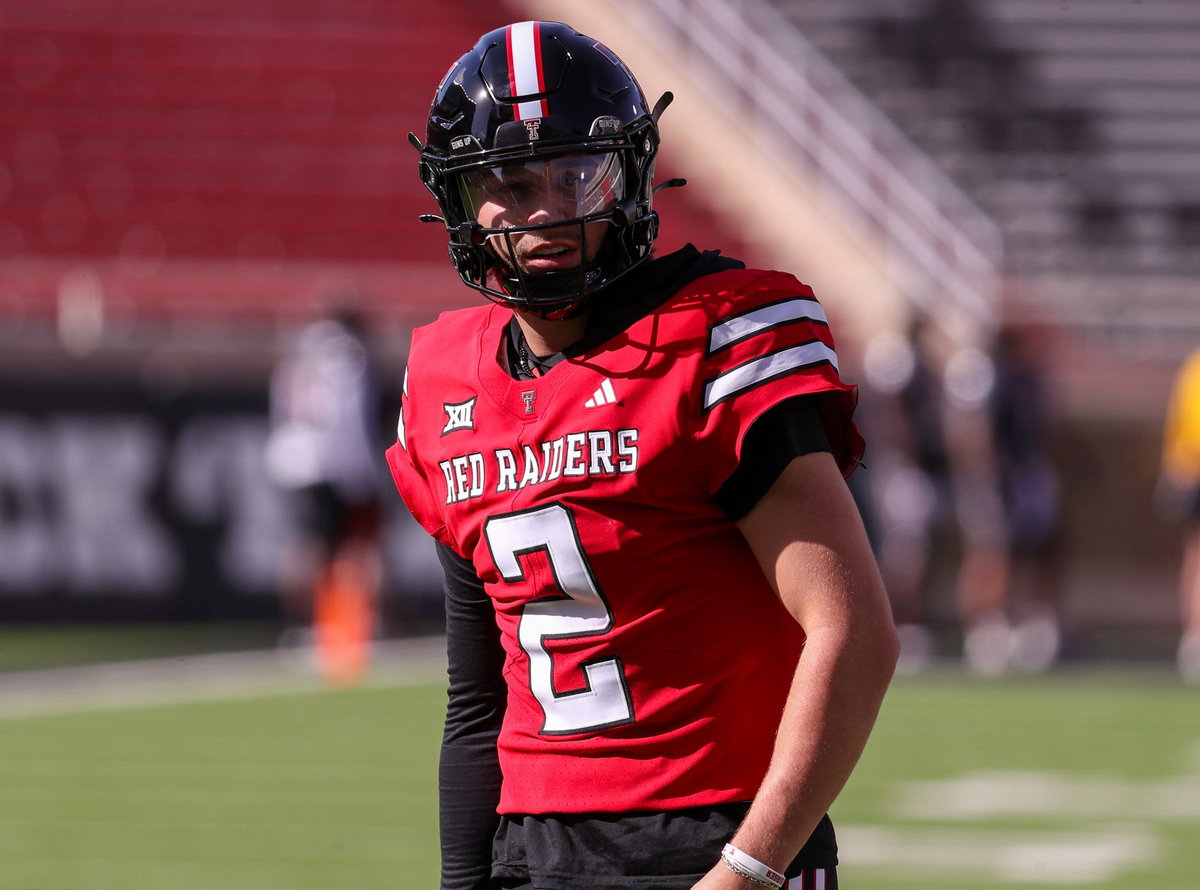
The football doors closed one after another for Brendan Sorsby. First came the NCAA ban. Then came the end of his time at Texas Tech. The NFL declined to hold a supplemental draft for him. Days later, the CFL told all nine teams they could not sign him either. A QB who expected to start in the Big 12 this fall suddenly found himself without a team, a league, or a season. But before the two leagues arrived at their decisions, Sorsby’s agent was asking them to look past his betting history for a particular reason.
Watch What’s Trending Now!
“Can we trust the kid in the locker room? Will he be betting on his own team in his games when he’s playing? He never did that, and he definitely never did that during his 35 starts,” Sorsby’s agent Ron Slavin said to NBC’s Mike Florio on June 24. “So, he’s not going to start now. That was never what this is about. This was about a kid who would watch a game and put three or five dollars on a game.”
As per the NCAA’s findings, Sorsby admitted to placing at least 40 bets on Indiana while being a part of the roster. In total, the former Red Raiders’ QB wagered around $90,000 during his college career. Yes, most of his bets were meager and involved other sports like NASCAR. But critics argue that even if the bets were small, Sorsby’s actions undermined the competitive integrity of sports. And that’s the whole issue. Slavin, though, had a separate theory.
“Once he became a starting player, most of his bets [are] for UFC and NASCAR, things [that] are actually legal to bet on,” Slavin expanded. “This isn’t some kid who was out there placing $50,000 bets and fixing games and doing things that, for whatever reason, people want to build that up; that was something that happened. And that never happened. His average bet was $10 a bet.”
Another thing both the NFL and the CFL have fixated on is Sorsby’s lack of remorse. The NFL, while denying him the opportunity to enter the supplemental draft, accused the former QB of failing to accept responsibility for his actions. Instead, he took a legal route to circumvent the NCAA’s decision and ultimately won an injunction. Whereas the Canadian league cited “integrity of the league” and “serious allegations” as the reasons for denying him play in the CFL. Sorsby is now left with very limited options.
How can Brendan Sorsby rebuild his football career from scratch?
Despite everything, this year does not have to become a wasted season for the former Texas Tech QB. Sorsby already entered and completed a residential treatment program for gambling addiction earlier this year. He publicly acknowledged the issue and spent more than a month in treatment. He can now spend the next several months training, attending counseling, rebuilding trust, and preparing for pro workouts in 2027.
There are examples he can follow. Hunter Dekkers faced gambling issues that ended his time at Iowa State. Dekkers rebuilt his career through the JUCO route and alternative paths before returning to the NFL radar. Now, Dekkers is part of the New Orleans Saints’ roster in 2026 and has an exciting pro career ahead.
For Sorsby, the challenge has changed. It is no longer about arm strength, mobility, or reading defenses. It is about trust. Football teams invest millions in quarterbacks. Coaches need to believe their locker room leader can handle pressure and responsibility. If Sorsby spends this lost season proving exactly that, his comeback story may still have another chapter left to write.