Imago
Credits: IMAGO
Imago
Credits: IMAGO


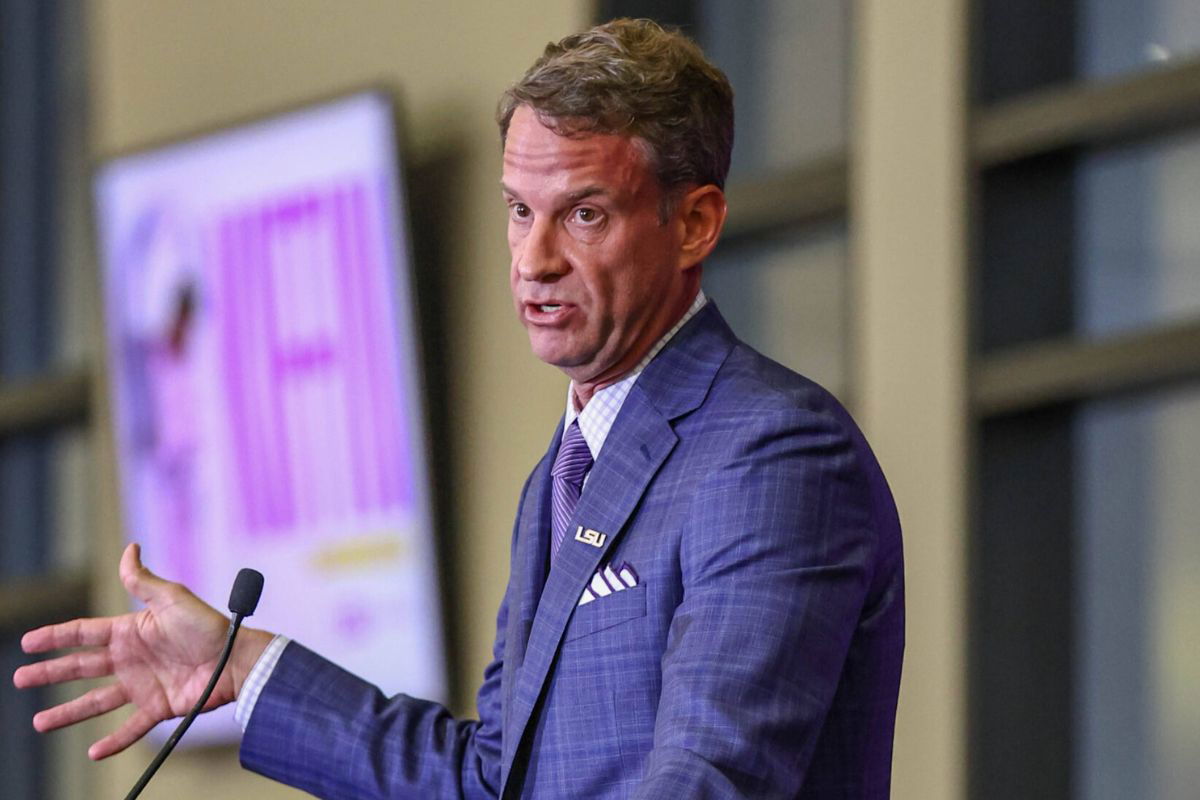
Before Bryce Underwood officially chose Michigan, LSU made a strong push to bring back its former 2025 prize but came up short. Even so, it’s hardly a crushing loss. Lane Kiffin has already flexed financially, landing Sam Leavitt for a reported $3.1 million and Jordan Seaton for at least $2 million within a day of each other. Needless to say, money matters now. LSU boosters learned that lesson the hard way after losing Underwood, despite holding his commitment for nearly a year.
“Underwood flips. And one of the ironies of that is this awful moment, Underwood flipping ended up being the catalyst for a very positive moment,” Matt Moscona said on the January 24 episode of Locked on LSU.
“Which was funding the collective. You had a lot of people, very wealthy LSU fans, who were so put off, saying, “You mean they just paid this guy more and took out this number one quarterback who’d been committed for a year, and we were all excited about because we didn’t pay him, but how much do y’all need? And so all of a sudden, LSU’s boosters got very aggressive in funding the collective.”
The Tigers loaded up for 2026 through the portal, landing the No. 1 transfer class in the country. Their roster value now reportedly sits north of $40 million. That’s a massive shift from the Brian Kelly era, and it didn’t happen by accident. The wake-up call came when Bryce Underwood flipped from LSU to Michigan after being committed for nearly a year.
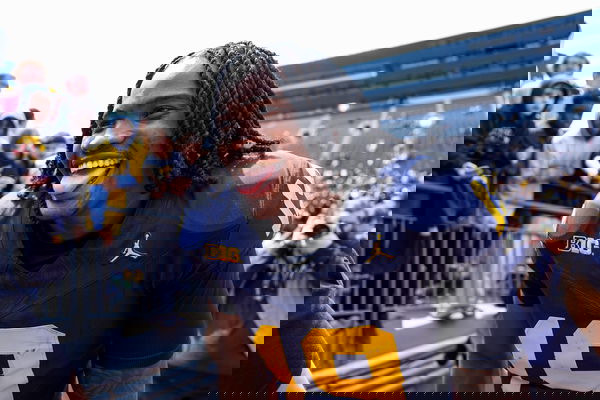
That moment sent shockwaves through college football. Back in January 2024, Underwood sounded fully locked in. He cited LSU’s QB legacy with Joe Burrow and Jayden Daniels, making multiple trips to Baton Rouge, and even posting an LSU jersey on Instagram with the caption, “It’s always been LSU. And nothing will change that.” Still, Michigan never backed off. When Underwood flipped, he said he wanted to stay close to home.
He lived just 30 minutes from Ann Arbor. But the money told the real story. LSU had him at roughly $1.5 million per year, which would’ve made him the highest-paid player on the roster. At the time, LSU spent just $5.5 million total on its roster, with 27% of that tied to a then 16-year-old QB. Michigan countered with a monster offer: $10–12 million over four years. That made the decision pretty easy.
After that, the purse strings loosened. LSU’s 2025 roster budget jumped to about $18 million. A major fundraising push during the 2024 season, including Brian Kelly pledging to match donations up to $1 million, raised over $3.2 million. And most of it was funneled straight into the Bayou Traditions collective. On top of that, LSU leaned into the new revenue-sharing model, allocating $13.5 million to football for the 2025–26 academic year.
The Tigers targeted key needs and brought in impact transfers like edge rusher Patrick Payton, corner Mansoor Delane, and safety A.J. Haulcy. The talent improved. But the results didn’t follow. LSU finished 7–6, and Brian Kelly ultimately lost his job. The losses were painful, but they changed everything. That reset opened the door for Lane Kiffin to fully embrace the money game. The average NIL value for a general LSU commit in 2026 is calculated at approximately $174K.
How did the revenue-sharing model act as a helping hand?
Once LSU truly wrapped its head around how important money is in today’s college football world, it wasn’t too late. And to be fair, the Tigers also caught a break at the perfect time. The NCAA’s new revenue-sharing model, born out of the House v. NCAA settlement, changed everything. The settlement was approved on June 6, 2025, and the new rules officially kicked in on July 1, 2025.
Under this framework, schools can now share up to roughly $20.5 million a year in revenue with athletes, on top of scholarships and NIL deals. That’s basically college football acting like the NFL. LSU didn’t take time adjusting. The Tigers adopted a front-loading strategy, pushing to finalize and pay out huge NIL deals before July 1. The idea was simple: lock in key transfer portal players before the new system fully comes into action. It worked.
A big chunk of that early money, around $10 million, came from the Bayou Traditions collective as part of an overall $18 million budget for the 2025 roster. Once revenue sharing officially began, LSU layered in institutional funds to further strengthen those deals. They even brought Garrett Nussmeier back at roughly $3.6 million per year, a clear signal that LSU was ready to play the money game for real. That financial firepower fueled an all-in push in the portal.
Because many of those deals were already signed and paid before July 1, LSU entered the new era ahead of the curve.
Watch What’s Trending Now!
Related Newsletters