
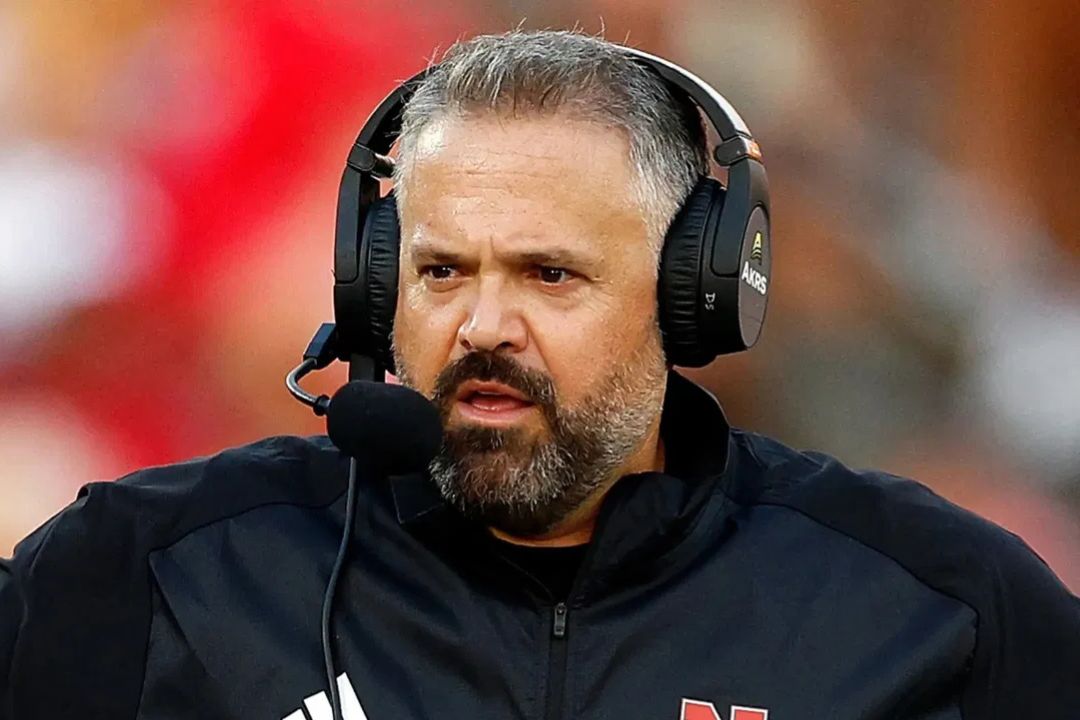
Nebraska AD Troy Dannen is navigating a minefield of new rules, a $600M renovation of the Memorial Stadium, and player lawsuits over rejected NIL. Even then he just drew a hard line in the sand on how the program can and legally cannot be funded.
Watch What’s Trending Now!
“The days of going to ask a donor to support NIL by writing a check are gone. It’s illegal,” said Dannen during his Saturday presser. “So part of it, there are misnomers about what can happen. And I don’t blame anybody because the rules change by the day. That’s where we sit today. But we’re trying to prepare for whatever the inevitability of tomorrow is.”
The new rules under the House v. NCAA settlement serve as the first major precedent-setting challenge to the new enforcement model of college athletics. The old method of donors writing checks directly to a collective like 1890 Nebraska to distribute as general “pay-for-play” is no longer the legal standard. In the modern rev-share era, as schools get used to sharing revenue with players within a limit, they’re also actively seeking additional NIL money beyond that limit to stay competitive.
“We’ve got to be prepared for whatever’s ahead. I will tell you we will be prepared for an uncapped world because if we’re prepared for an uncapped world, we’ll be prepared for anything in between. But that’s internal,” added Nebraska AD.
But if donors spend money on players’ NIL, there won’t be any money left for stadium renovation. That’s not necessarily true, because Dannen clarifies that donors pay for stadium renovations not as money lost to roster pay but as a permanent endowment, and acknowledges that third-party NIL is now purely corporate.

Nebraska AD Troy Dannen, on how he will separate asking donors for stadium donations and funding rosters with 3rd party NIL. “The days of going to ask a donor to support NIL by writing a check are gone, it’s illegal..” “…We will be prepared for an uncapped world, because if Show more
“I don’t think people realize what NIL is today,” said Dannen. “It isn’t the days of everybody writing a check and how many people will give us money, and we’ll go to 1890, deposit that, and then money’s paid. That’s not even legal anymore. The third-party NIL, the ‘above the rev-share cap’ NIL—those are actual corporate relationships with the athletes. So this isn’t a matter of, hey,’ I’m going to the donor now instead of 1890.’ You can’t even do that anymore.”
“So, one, there is a distinction. Secondly, donors don’t care for NIL. They’re doing it because they want our coaches to have success. That’s what’s happened up until now. What the stadium does, though, is I would tell you to look at it almost as an endowment. The investment made by our donors in this stadium is going to produce revenue above debt—$15-$20 million of that revenue early on and then growing from there,” mentioned the Nebraska AD.
By pushing third-party NIL into the commercial and corporate sector, Dannen keeps the Cornhuskers’ traditional fundraising lanes clear for facility upgrades that actively produce future revenue. However, the AD’s strategy relies on financial leverage. Instead of begging donors to scrape together $20 million every single year to give to players, he is asking donors to pay for the stadium once.
Dannen is showing donors that a single gift to the stadium creates a permanent, self-sustaining loop to keep Nebraska competitive in roster salaries forever. But will the new stadium revenue “offset” the massive new financial burden of paying the roster? Because in the NIL era, multiple rosters are over $40 million.
“As the increased costs of college athletics continue, I will tell you the No. 1 increase in costs is going to come from player compensation in whatever form it takes; it’s going to continue to grow,” said Dannen. “That’s how we fund player compensation moving forward. Matt Rhule has to have every bullet in his holster, and the ability to fund the player compensation piece, I would guess he would tell you, is the silver bullet.
“It is the most important bullet in his holster. So the idea is that we have to fund this through our department. We have to find partnerships with companies for our athletes to get above the cap.”
While the Nebraska AD clarifies his stance on the Cornhuskers’ approach to donors, the massive reconstruction of Memorial Stadium shows the program isn’t just upgrading seats.
What does the $600 million design offer Nebraska?
To modernize the 103-year-old Memorial Stadium, the massive financial aid is entirely independent of public funding. The project relies on private funding. While $250 million is sourced through philanthropic donations from supporters and alumni, $350 million is raised via private bond financing. However, a heavy chunk of this budget is actually going toward backdated repairs.
The fan experience is at the heart of the redesign, even with total seating dropping to 80,000. Comfort and modern amenities take precedence, with 20,000 new chair-backs being installed and fully connected 360-degree concourses on the 100 and 200 levels, allowing fans to finally walk the entire stadium bowl. The student body and marching band aren’t forgotten, with 7,000 seats dedicated to preserving the iconic home-field atmosphere.
This design is meant to amplify field noise and create a hostile environment for opponents driving toward the south end zone. The completed facility is projected to yield an estimated $95 million in annual revenue by doubling as a year-round entertainment hub for national concerts and major touring events.