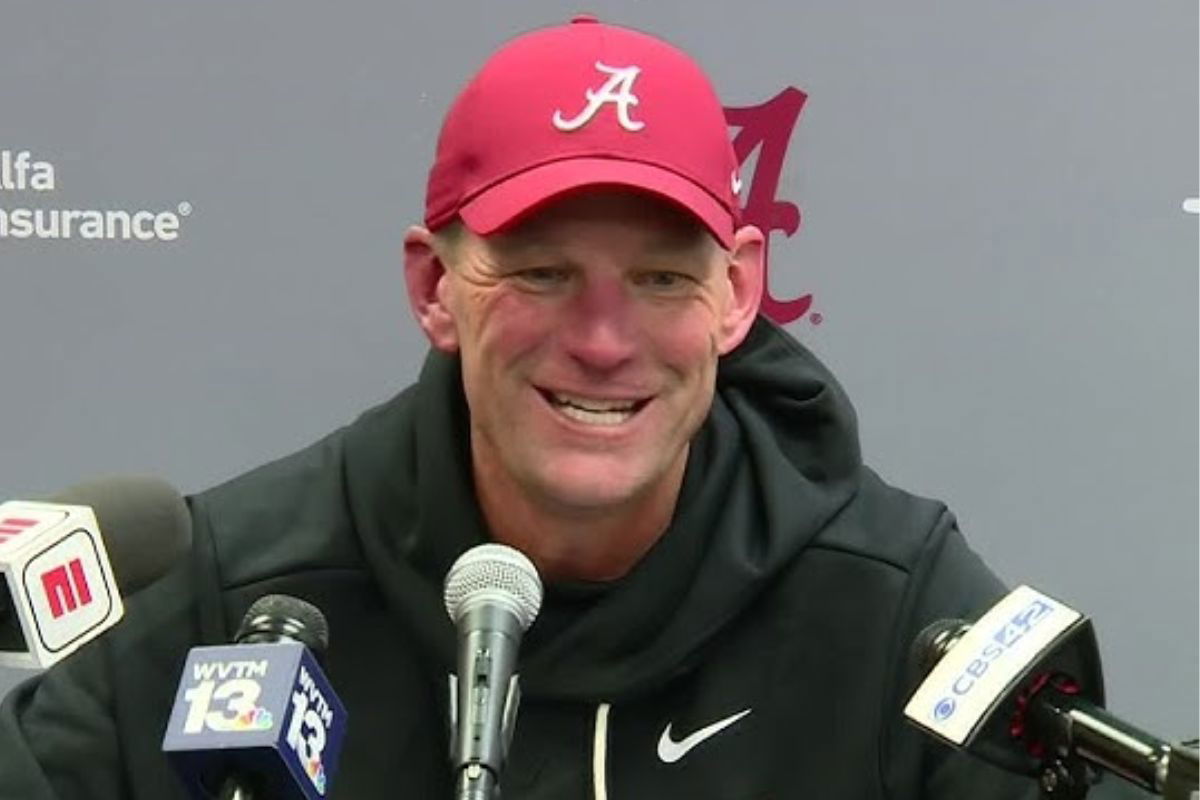
How can Alabama’s football program be swimming in a $64 million profit while simultaneously losing its grip on the SEC’s recruiting hierarchy? For Kalen DeBoer, that’s the multi-million dollar question.


The biggest reason for this “profit” is actually a clever accounting move. The university gave the athletics department a one-time boost of about $27 million to get ready for the “House settlement.”
Watch What’s Trending Now!
This new rule will eventually let schools share revenue with players. It’s because that money was counted as income this year, but the actual payments to players won’t start until next season. It makes the current budget look way more flush than it actually is in the long run. The department also managed to slash its overall spending by about $28 million, mainly because the chaos of changing football coaches is finally over.
Last year was super expensive because they were essentially paying for two coaching staffs at the same time while moving from Nick Saban to Kalen DeBoer. This year, football coaching costs dropped from $47 million to $25 million. This alone accounts for most of the money they saved across their entire athletics department.
The University of Alabama athletics department had a budget surplus of nearly $33 million for the 2024-25 fiscal year. 🐘💰
Alabama sponsors nine men’s teams and 12 women’s teams that play on the NCAA level. Football turned a profit of more than $64.8 million in 2024-25, while… pic.twitter.com/jzfcbIuneX
— Alabama Crimson Tide | AL.com (@aldotcomTide) February 11, 2026
A breakdown of the 21 sports teams shows that football remains the powerhouse, essentially funding the rest of the athletic department. The football team brought in nearly $148 million and walked away with a $65 million profit. That’s a massive respite compared to what happened in the last two years.
Men’s basketball also had a solid year with a $9 million profit. But almost every other sport, including baseball and women’s basketball, actually operated at a loss. Women’s basketball posted a loss of over $4.5 million.
However, the school warned that the surplus is temporary. Next year, those enormous settlement costs will start kicking in. And Alabama will have to share over $20 million a year with its athletes. For now, though, the Tide’s bank account is riding a high wave thanks to football’s status as a powerhouse and some thoughtful planning for the future.
Alabama’s athletic department darted a massive $33 million surplus, a stark turnaround from recent losses. But as the accountants pop the champagne, Kalen DeBoer’s program faced a different kind of deficit on the recruiting trail. It raised queries about whether financial health can offset a potential decline in SEC dominance.
Alabama falls behind four SEC rivals in key recruiting metrics
Alabama and Kalen DeBoer are still trying to recover after that Rose Bowl loss. As they looked ahead to 2026, they hoped for a fresh start. However, the news of recruiting brought more challenges. Four SEC rivals, LSU, Texas, Texas A&M, and Florida, did better than Alabama in both high school recruiting and the transfer portal.
According to On3 Sports, only six programs nationwide landed both a top-15 high school class and a top-15 transfer class. It’s a list that notably includes four SEC rivals:
- LSU
- Texas
- Texas A&M
- Florida
But not Alabama!
The program did not qualify because its transfer portal class was not in the top 15. Meanwhile, teams such as Texas A&M and LSU ranked among the top five in transfer player rankings.
Even though Alabama struggled in the transfer portal, its high school recruiting is as good as anybody in the country. The Crimson Tide is ranked No. 6 in the 2026 recruiting rankings with 26 commits. That is better than many of their SEC rivals. So, the main issue for Alabama isn’t high school recruiting but bringing in experienced players from the transfer portal.
One reason for the team’s struggles in the transfer portal could be its recent performance. In DeBoer’s first year, Alabama finished 9-4 and missed the Playoff. Although they improved, the early struggles may have left some transfer players unsure about Bama in the end.
Written by

Edited by

Jacob Gijy