
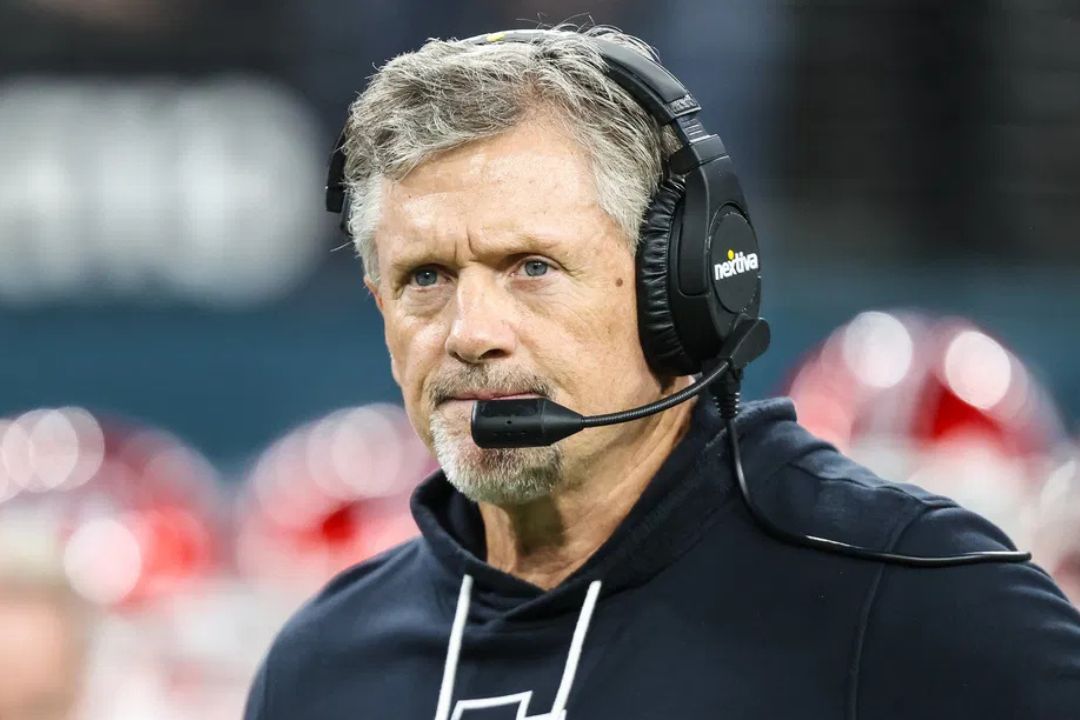
With the demands of NIL deals, the Michigan Wolverines are known for being one of the biggest spenders in college football. However, their NIL valuation ahead of the 2026 season puts them behind their rivals, Ohio State. With room for more additions, it is clear that the Ohio State Buckeyes are going all out to get back to the National Championship game next season as well.
Watch What’s Trending Now!
According to the NIL Standard, the Michigan Wolverines have a roster valuation of $37.34 million. Their roster’s NIL value is ranked No. 11 nationally. Only the Oregon Ducks at $44.2 million and Ohio State at $42.6 million are above Michigan in the Big Ten.

The NIL Standard values Michigan's roster at $37.34M This is an independent estimate of NIL market value, not reported salaries or disclosed deals. Full position-by-position breakdown here: thenilstandard.com/football/insig… #GoBlue #MichiganFootball #NIL #CFB #BigTen

More than a quarter of their spending is spent on the offense starters. The 11 players in the Wolverines’ starting offense cost $11.03 million, with Bryce Underwood alone taking almost 30% of that. The second-year quarterback has an NIL value of $3 million, more than two times the value of any other player. The second-most expensive player on the offense is right tackle Andrew Sprague at $1,009,422.
Following Sprague closely on the offense is wide receiver Andrew Marsh at $970,211, while wide receiver JJ Buchanan at $962,500, wide receiver Jaime Ffrench Jr. at $904,326 and running back Jordan Marshall at $900,000, are the other offensive players earning above $900,000.
The team’s starting defense cost $8.38 million. Right defensive end John Henry Daley, at $1,224,999, is the highest-paid defensive player, while left defensive end Cameron Brandt is the only other defensive player earning over a million, at $1,008,269. All other starting defensive players earn below $900,000.
Also, a large part of the spending was to retain players from the previous season. Despite finishing 9-3 last season, the program seems to attribute its playoff absence to the coaching change and other off-field issues, rather than its issues on the field. As a result, $26.02 million was spent on returning players.
The 2026 transfer class cost the program $8.15 million. The transfer class included just 16 additions, with five of them joining Kyle Whittingham from the Utah Utes. Three of Whittingham’s former players, John Henry Daley, Smith Snowden, and JJ Buchanan, who are starters, cost the program almost $3 million.
The 2026 recruiting class had no player with an astronomical deal, like the last class. Hence, they cost the program just $3.17 million to make up the total cost of $37.34 million. Per RallyFuel, the top talent in the 2026 recruiting class and No. 1 running back, Savion Hiter, is expected to receive about $1 million in NIL earnings in his freshman year, way less than what Underwood received in his debut season as the highest-paid college football recruit ever. Per On3, another five-star talent in the 2026 class, edge rusher Carter Meadows, has an NIL valuation of about $362,000.
Ohio State’s roster value compared with the Wolverines’
The Buckeyes’ roster value of $42.6 million ranked them fourth in the nation and second in the Big Ten. Having just come off a season where they finished unbeaten in the regular season, the Buckeyes are hoping for a national championship win in the next season. And this desire has been shown in how much they are spending on their roster.
The Buckeyes are spending more on their retained players than the Wolverines, with a value of $28.6 million. Wide receiver Jeremiah Smith, with a value of $5 million, is the most paid player on the team. However, the Wolverines had a slightly more expensive transfer portal, as the Buckeyes have a transfer class valued at $8.0 million. But with their top-five-ranked recruiting class, the Buckeyes have a much more valuable recruiting class, at $6.0 million.
The Ohio State edged the Wolverines in this one, but their roster would have been even more costly if they had not lost 11 players to the NFL draft. In the 2026 NFL Draft class, they had four players among the top 11 picks. If the program had to retain them, they would have to pay a hefty price, but the program would be unstoppable if they had those players on the field, with all the new additions made to their roster.