
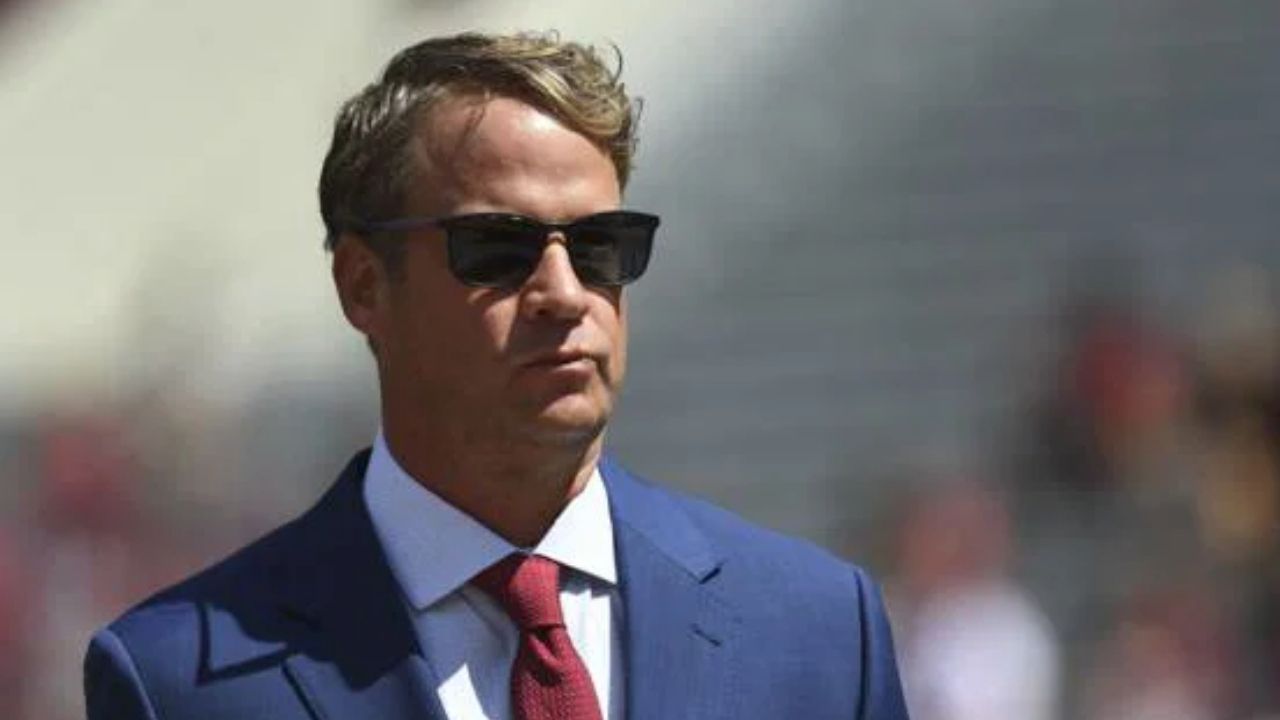
Lane Kiffin did not expect to spend the final days before LSU’s season opener talking about lawyers, judges and eligibility rules. Yet that is where the Tigers find themselves. The LSU head coach opened up about the whole controversy involving former NFL players coming to Baton Rouge.
Watch What’s Trending Now!
“These kids made these decisions on their own with attorneys,” Kiffin said on August 28 on College Sports SiriusXM radio. “And this was a while back that they made these decisions, and it’s all around the country. Everyone wants to point to the Louisiana case, but there are cases in South Carolina, Texas, and California. That have already won athletes in the same situations wanting to play this year; they’ve been granted.”
Lane Kiffin’s LSU got pulled into the mess when former Ole Miss players Dae’Quan Wright and Zxavian Harris decided to return to college football. A Louisiana court ruling opened the door for some members of the 2022 recruiting class to get another season, and LSU moved quickly to bring the two in.
Wright had most recently been with the Cleveland Browns, while Harris had spent time with the New Orleans Saints. Their returns did not sit well with the SEC, which soon put new restrictions on players with professional experience.
On Aug. 25, the conference adopted a rule barring athletes with professional experience from returning to SEC competition. The move put LSU directly at odds with the court order and raised the possibility of sanctions against programs that used those players. And the situation changed again this week.
A Texas judge issued a temporary restraining order on Aug. 27 preventing the NCAA and SEC from blocking 41 athletes from returning to college sports. The group includes former NFL players, including Dallas Cowboys receiver Jordon Hudson and Kansas City Chiefs linebacker Wesley Bissainthe.
“Like I said the other day when I was asked about it, what if a conference comes in on top and tries to say you can’t?” Kiffin said. “So I think that’d be really interesting legally, and now you’re in it.”
LSU has already taken a different position from the SEC on the matter. The school abstained from the conference vote on the new restrictions, while Kiffin has openly defended his decision to recruit the players. For Kiffin, the reasoning has stayed fairly simple. If a court says a player can play, he believes coaches should be able to recruit that player. But it’s not only about the SEC or LSU.
The Big Ten moved first on Aug. 25, voting unanimously to keep football players with professional experience from returning to its schools. Schools that ignore the rule could face a half-season suspension for the head coach and an institutional fine. Then the Big 12 joined the fight.
On Aug. 26, its members unanimously approved a rule blocking athletes with professional experience from joining its schools. Unlike the Big Ten’s football-only policy, the Big 12 rule covers every sport sponsored by the conference. Similarly, the ACC followed suit on August 27. The NFL has also drawn its own line.
NFL executive Troy Vincent said players who leave the league to return to college will not be eligible to return to the NFL during the 2026 season. They would have to wait until 2027. So a player caught in the middle could find himself with nowhere to play professionally for a year.
The NCAA, though, has a lot on its plate and is dealing with the eligibility lawsuits. The conferences are trying to protect their own rules. The NFL has its own eligibility policy. And judges are stepping in whenever players challenge those decisions. LSU just happens to be standing right in the middle of it.