
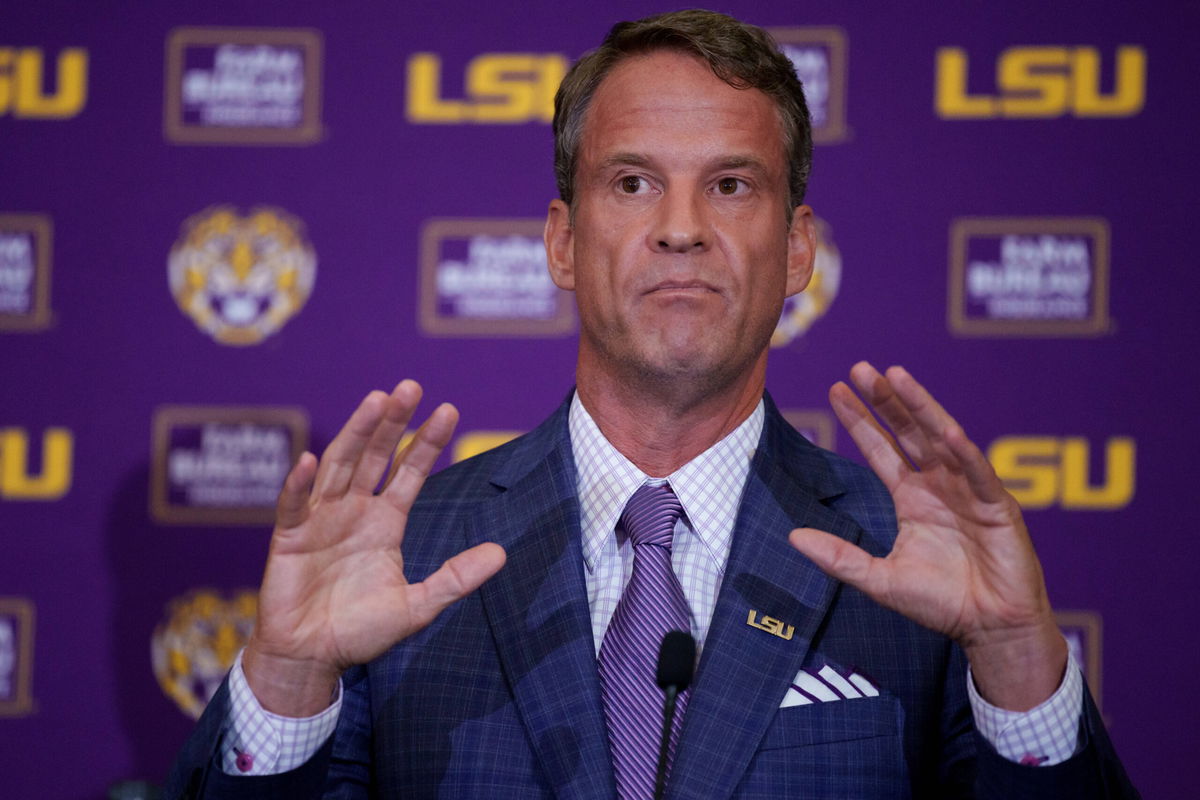
It wasn’t really an NIL problem when LSU was rebuilding it’s entire roster. Lane Kiffin is already operating with one of college football’s biggest NIL budgets at LSU, but he still wants the rules changed. Despite his new squad’s worth being reportedly close to $40 million in NIL money, his concern is not the spending itself but how the system rewards newcomers before they have played a snap.
Watch What’s Trending Now!
Kiffin said at SEC Media Days that the current setup is “screwed up,” arguing that freshmen should not earn like proven players and that rosters should be built with longer-term structure.
“Our system is a little bit screwed up in my opinion,” said Kiffin at SEC Media Days, as reported by ON3 on July 23. “The kids that haven’t played at all coming out of high school should be making less.… There should be a freshman or rookie cap (for how much they can make) and then [have] max slots per position that they make. Then they’re signed to multi-year contracts, so no, you do really get into building through high school because that guy could stay longer.”
His idea follows the logic of the pro game, where time in the system usually matters more than hype. That is a sharp contrast to college football now, where the portal can reshape a roster overnight.
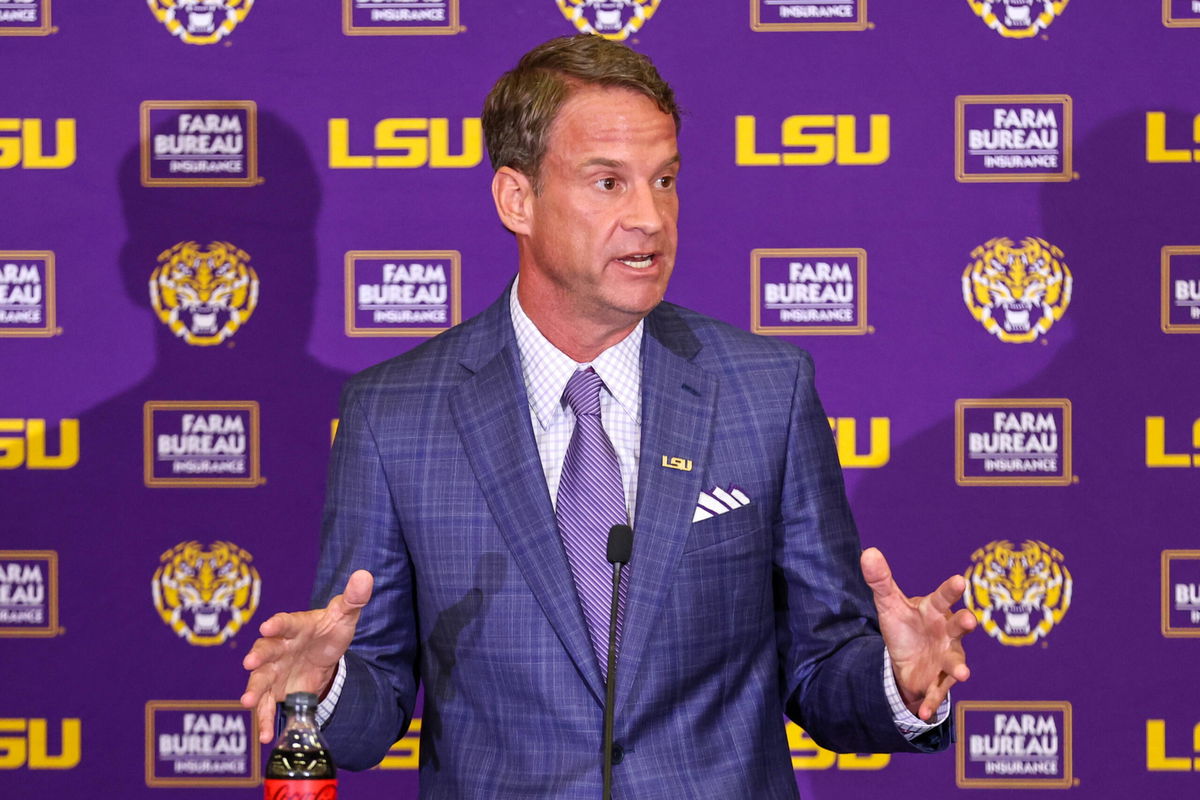
Imago
December 1, 2025: New LSU Head Football Coach Lane Kiffin holds his first press conference, PK, Pressekonferenz and meets with the media for the first time at Tiger Stadium s South Stadium Club in Baton Rouge, LA. /CSM Baton Rouge USA – ZUMAc04_ 20251201_zma_c04_045 Copyright: xJonathanxMailhesx
In the current market, even young recruits can carry major price tags before they ever take the field. That makes recruiting less about projection and more about who can pay fastest.
The recruiting battle for the nation’s second best running back prospect, David Gabriel Georges, is a perfect example of this phenomenon. Tennessee threw everything at the wall to get him to Neyland over Ohio State. After his commitment, don’t be surprised to find him being the highest paid running back recruit in college football history. Yet, he hasn’t played a snap under Saturday night lights.
Even though Georges was a standout at Baylor for his high school, that doesn’t guarantee that his production in college would match what Josh Heupel is paying to get him. The price of future potential has risen exponentially with the NIL.
“We’ve reached the period where everyone has an agent. There are no layups anymore in high school recruiting. Nothing is even reasonably priced,” said an anonymous SEC GM to the ON3 analyst.
But if you don’t pay, the players won’t come. Just see how Texas Tech has been able to rise through the ranks and use its boosters to smartly take over the conference as it’s most dominant power. Even Mark Cuban helped Indiana out and they won’t necessarily have won the Natty if not for that help from the Hoosiers alumni.
At the same time, proven players in the portal continue to see their value rise. Quarterbacks and top receivers are commanding the biggest deals, which only widens the gap between untested freshmen and experienced stars.
That is where the irony sits. LSU is among the biggest spenders right now, yet its head coach is calling for limits on how money flows. Whether that is a long-term vision or a short-term contradiction will determine how this idea is received.
But Kiffin’s version of a rookie salary cap is a pipe dream that will not come true anytime soon. NIL has opened the floodgates and the money will not stop rolling in until there is some serious oversight from external forces. The NCAA has been rendered toothless in many such matters. Even the proposed legislation from the Senate is pushing people like Kirby Smart to want to take the SEC independent. College football is only going to get more messy before it settles down.
As fans of the sport, if your team has a booster collective, you will enjoy a level of parity which was not possible earlier. But there will be teams and conferences that will be affected as they struggle to keep up. The gap between the two would widen, and eventually we will see programs split into two vast groups. The ones who have the money to compete in this sport, and the ones who are present to win some games, but never reach the postseason.
Lane Kiffin’s arrival brings changes in Baton Rouge
At LSU, the spending brings pressure right away. When a roster is built with this much money, the expectation is simple: win now, not later. The program’s special assistant to recruiting and defense, Ed Orgeron, said Kiffin has brought a sharper, more disciplined routine to Baton Rouge, with a stronger emphasis on work and accountability.
“Believe me, Coach Kiffin is an expert on it (NIL),” said Orgeron at SEC Media Days. “I was so happy to see that. Everything is, ‘Yes, sir.’ Everything is a practice, like the Tigers. Behind the line, nobody misses workouts. Nobody is late. Everybody works extra. He’s got a phenomenal culture he has built within six months he’s been here.”
Kiffin’s remarks may not change NIL overnight, but they do show where the next fight in college football is heading. The question now is not whether money matters, but who gets it first, and on what terms.