
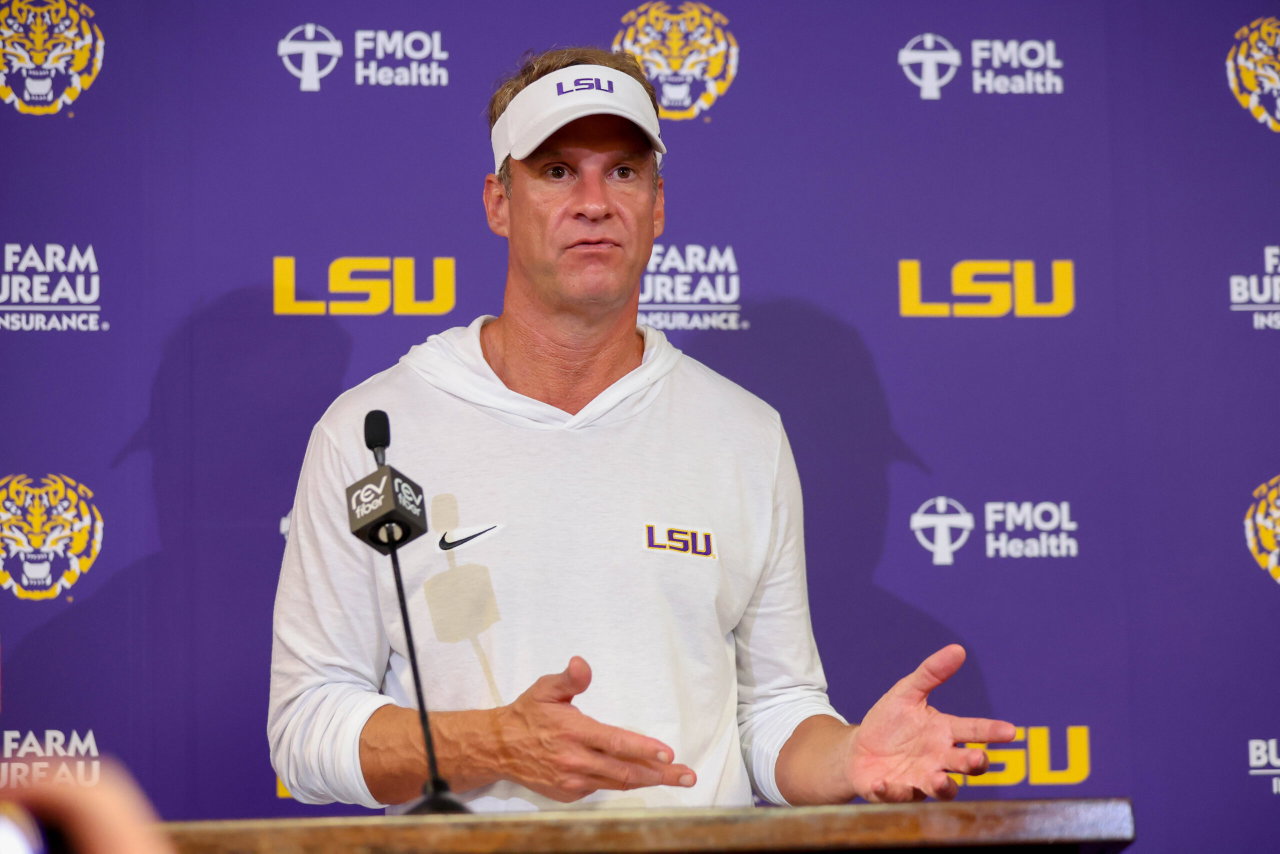
Lane Kiffin ignored his lawyer’s warnings and turned to ChatGPT for legal advice on recruiting former NFL players to LSU. While Kiffin opened the 2026 season facing legal pressure over adding professional athletes to his roster, prominent attorney Tom Mars revealed that Kiffin repeatedly countered sound legal strategy with AI-generated screenshots.
Watch What’s Trending Now!
Mars, a long-time legal advisor, detailed the unusual exchanges during an ESPN report published on September 17.
“Usually, when I would express an opinion about what LSU was doing, Lane would reply with a screenshot from ChatGPT that supported LSU’s position, which was almost always wrong,” Mars said. “Lane ignored most of my unsolicited advice, but I don’t think he’ll be using ChatGPT anymore for legal advice. Eventually, I told him that a guy with a $91 million contract ought to have a top-notch lawyer on speed dial and not be using ChatGPT for legal advice.”
While Kiffin relied on ChatGPT to argue LSU was in the right, Mars warned him that the AI’s legal logic was completely flawed. Kiffin ultimately backed down on the eve of the season opener against Clemson, locking LSU’s 105-man roster with standard student-athletes and putting an end to the saga.
Kiffin was attempting to exploit a legal loophole, not breaking explicit laws, but testing NCAA boundary limits to bring back tight end Dae’Quan Wright and defensive tackle Zxavian Harris. Both were former Ole Miss players under Kiffin who had declared for the NFL Draft but were cut from NFL training camps in August. Similar to past legal battles Kiffin navigated during his tenures at Ole Miss and USC, the coach sought to aggressively push roster rules to gain a competitive edge.
The standoff originated when 42 student-athletes sued the NCAA and the SEC seeking an extra fifth year of eligibility, following the NCAA’s introduction of the “five-for-five” rule, which granted certain classes five full seasons of competition.
A judge issued a preliminary injunction barring the NCAA from declaring the players ineligible, technically opening the door for LSU to sign the duo. However, SEC Commissioner Greg Sankey fiercely opposed the move, arguing that allowing professional athletes into college athletics destroyed conference integrity.
The SEC filed suit against LSU and Kiffin 24 hours before the season opener, arguing that forcing member schools to play against active or former NFL players violated the SEC’s First Amendment right of association. The SEC even scheduled a vote among university presidents to potentially expel LSU from the conference if they fielded the players.
Kiffin fought hard for these players and even embraced public criticism for bending the rules. “A lot of times, to do great things, you are going to be hated,” Kiffin said. Ultimately, facing severe conference sanctions, Kiffin folded to the SEC.
What Happened on LSU Game Day?
After officially deciding not to add the former NFL players to LSU’s roster, Lane Kiffin addressed the decision on the morning of September 5. He expressed massive internal conflict, noting that he had to look at the “bigger picture” for the university and prioritize the program over his own personal preference.
“Yeah, that wasn’t easy. I feel for the players. I believe you fight for what you believe in, and I believe these kids have an opportunity to play,” Kiffin said during his appearance on ESPN’s College GameDay.
As for Dae’Quan Wright and Zxavian Harris, both players remain in football limbo. The NFL issued an official memo clarifying that Wright and Harris are ineligible to visit, try out for, or sign with any NFL club for the remainder of the 2026 season, a ruling delivered just after the Green Bay Packers attempted to host Harris for a tryout. Wright and Harris have expressed deep frustration over the ordeal and are currently exploring legal remedies regarding their lost eligibility.