
For a moment, Sam Leavitt probably thought he had gotten away with it. On third-and-6 in the first quarter, he scrambled toward the marker and initially appeared to have picked up the first down. Replay told a different story. Officials ruled that Leavitt had started his slide a yard short, wiping away what looked like a conversion. LSU then tried unsuccessfully to draw Texas A&M offsides on fourth down, took a delay-of-game penalty and punted, turning Leavitt’s split-second decision into a drive-ending mistake.
Watch What’s Trending Now!
That was apparently enough to get under Lane Kiffin’s skin. Kiffin usually does a pretty good job of keeping his irritation wrapped in sarcasm and one-liners, but this one was harder to hide because LSU had spent plenty of time coaching the exact situation Leavitt botched.
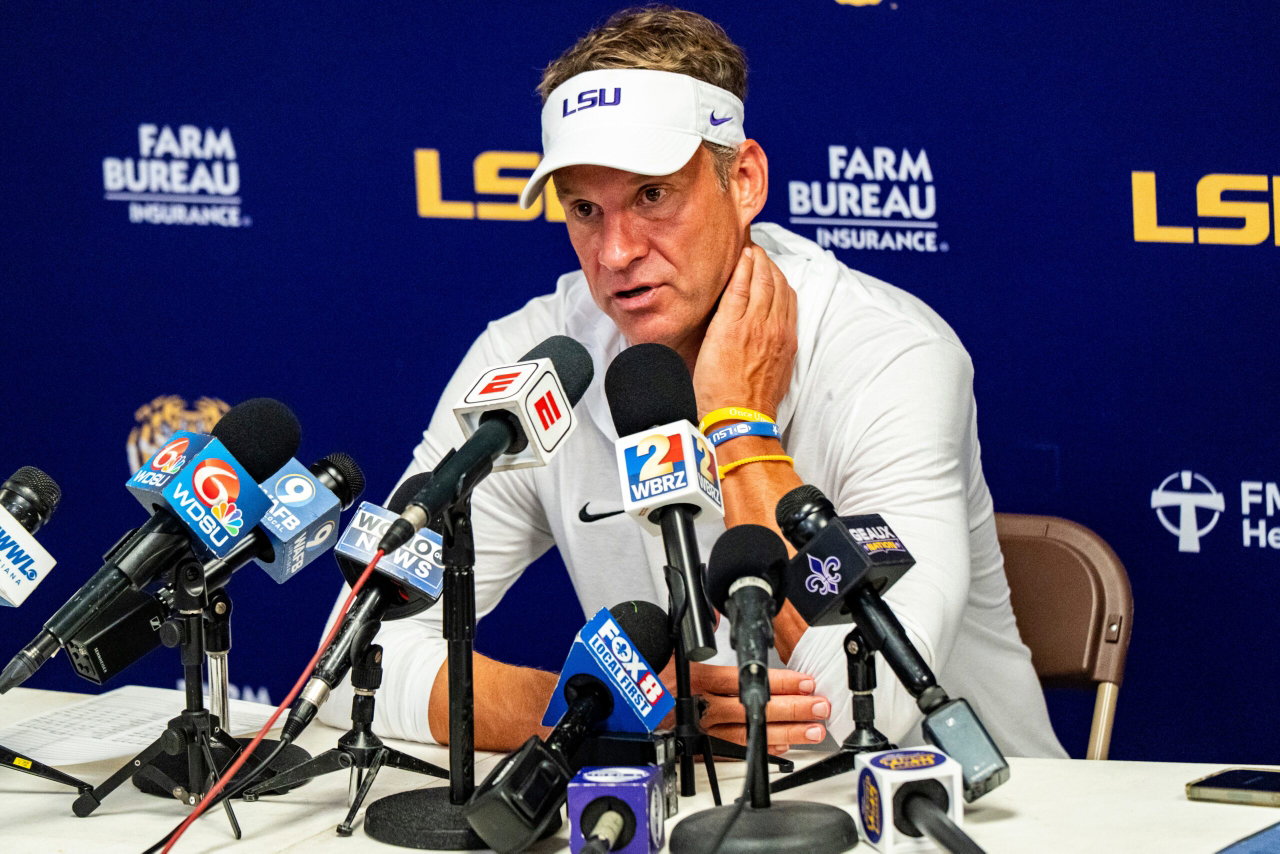
“He’s not supposed to do that. That was really frustrating,” Kiffin said during the press conference, according to LSU Sports. “We show film with that all the time. Whenever you’re near the stick, you don’t start a slide early. They pay me a lot of money. I hope our players understand that rule.”
Speaking after the Week 4 matchup, Kiffin was asked whether the moment set back the staff’s efforts to get Leavitt to play smarter in key situations. It was not a bad throw, disguised coverage or some impossible read. Leavitt simply slid before securing the first down, effectively handing the ball back to Texas A&M, and for a quarterback trusted in high-leverage moments, that is exactly the kind of avoidable mistake coaches hate.
“We show those exact clips of important plays like that where you’ve lost games like that at the end of games. When you start a slide like that, we knew it right away. And he even knew; he said he started and thought he’d already passed it, but he can’t leave a situation like that up to that close of a decision.”
That is what made the mistake sting. Leavitt’s instinct to protect himself was understandable, but near the sticks, caution can become costly in a hurry. Kiffin wanted him to know exactly where the marker was and make the decision before leaving something that important to inches.
Leavitt has been willing to use his legs more this season, rushing for 135 yards and five touchdowns across LSU’s first two games against Clemson and Louisiana Tech. The quarterback has also had an uneven start, throwing four interceptions over those two weeks.
He then posted a rough 158-yard, one-interception outing against Ole Miss, where he recorded more rushing attempts than completions. A shoulder injury had limited his practice reps beforehand, adding another layer to a season in which Leavitt is still searching for consistency.
Kiffin had already pointed to that missed practice time when discussing some of Leavitt’s execution issues against Ole Miss, particularly in situational work such as third downs and the red zone. The early slide against Texas A&M was harder to excuse, though, because it came down to awareness rather than health or missed reps.
Some mistakes are inevitable for a quarterback learning Kiffin’s system, but LSU cannot afford to let small mental errors become drive-killers. After the Ole Miss loss, details like knowing when to slide could separate a team capable of staying in the playoff conversation from one that keeps creating problems for itself.