
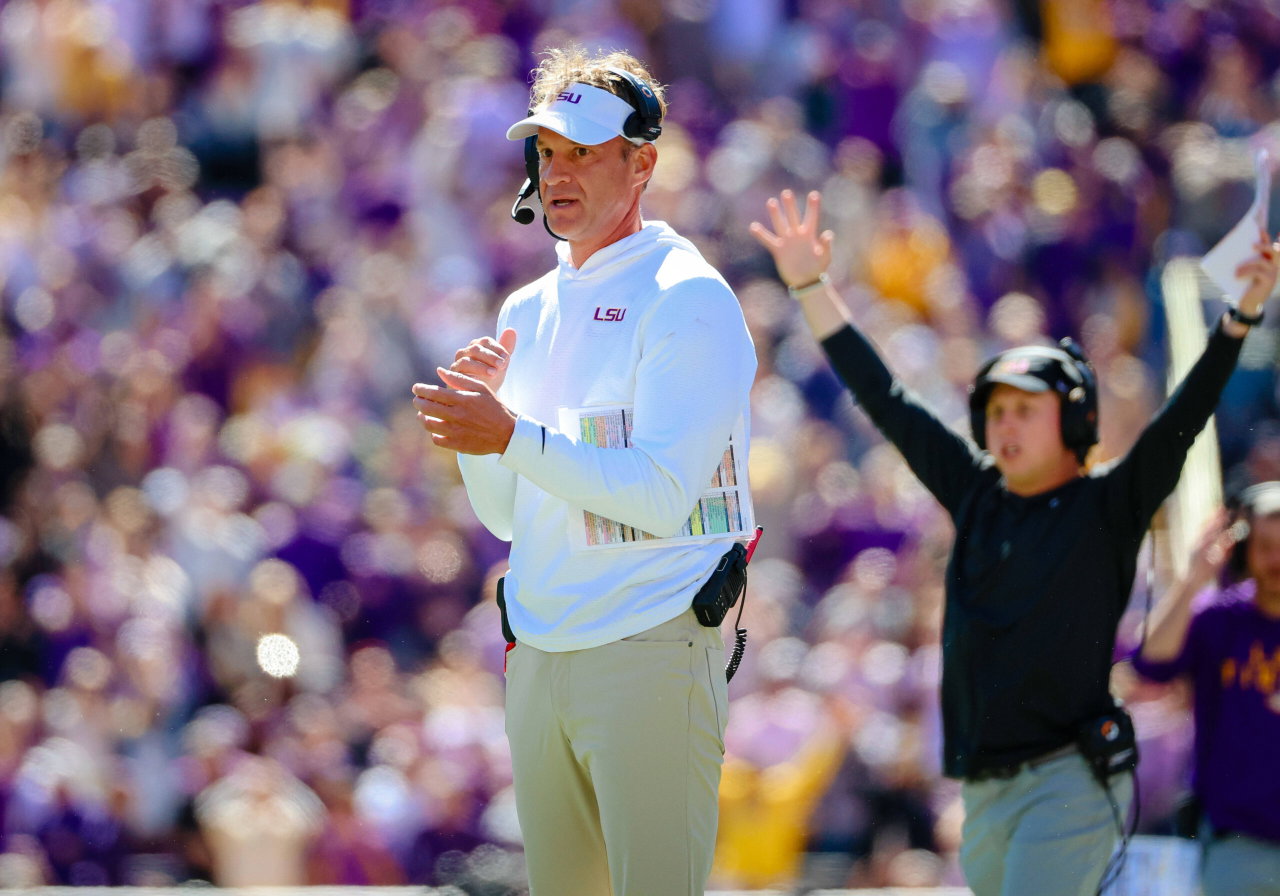
Lane Kiffin is backing a 24-team College Football Playoff, but the Big Ten could pay a brutal price. ESPN’s Pete Thamel reports that a deal for the 2027 expansion is nearing completion, pending final approval. And Dan Wetzel believes the fallout could hit the conference where it hurts most, with Ohio State and Michigan potentially abandoning the Big Ten altogether.
Watch What’s Trending Now!
Kiffin backed the proposal during a Sunday teleconference following LSU’s 31-0 win over Mississippi State, arguing that the SEC’s nine-game conference schedule makes a larger playoff field necessary.
“When the decision was made by the league to go to nine games, I felt we have to go to 24,” Kiffin said during the teleconference, according to LSU Tigers on TigerBait. “Because we’re going to play these nine conference games, we’re going to have seasons with a lot of nine-win teams that may be really good teams.”
“So you need to go to 24, or else you’re just going to knock out teams that might be really good. And that year they have five road games and play three hard, really hard ones, that might be top 15 teams and not make the playoffs because of it.”
Kiffin believes the current 12-team format fails to account for the SEC’s depth and the difficulty of its schedule. Automatic qualifiers also reduce the number of at-large spots, potentially leaving strong teams out despite facing tougher competition than programs from other conferences.
“I think that variable of the depth of the conference is different than any other conference, especially two of the other conferences. I don’t think that’s a really good way to evaluate in the current system of just 12 teams, and sometimes it’s 11 or even 10 because of automatic. I think my point of going to 24 just gives you a better chance to get the right teams in.”
Kiffin pointed to Miami’s run to last season’s national championship game as an example. The Hurricanes entered as the No. 10 seed and reached the title game against Indiana despite questions about whether they deserved a playoff berth.
However, Kiffin stopped short of advocating for eliminating the SEC Championship Game, even as he questioned whether additional physical matchups help teams prepare for the postseason.
“I wouldn’t say I’ve been an advocate for it,” Kiffin said. “I’ve never said it should….The value of where that puts you in the position to make the strongest run in the playoffs, which I said is like it’s why you don’t want the super hard schedule in season. People say battle-tested. No, no, no. You want to be in the best shape. You want to win those games, be in the best shape as you get in the playoffs from a health standpoint.”
Winning the SEC Championship Game can improve playoff positioning, but it also means facing another physical opponent before the postseason. For teams already dealing with demanding schedules, that extra matchup could come at the cost of injuries and exhaustion.
But Kiffin’s push for expansion could create an entirely different problem for the Big Ten. The proposed format would feature 19 at-large bids and five automatic qualifiers, including the four Power Four champions and the highest-ranked Group of Six team. The top eight seeds would receive first-round byes. With significantly more postseason spots available, programs like Ohio State and Michigan could have less reason to depend on conference membership for playoff access.
That’s where Wetzel sees an opportunity for the Big Ten’s biggest brands to follow Notre Dame’s independent model. His argument comes down to money and control. Ohio State and Michigan currently share television revenue with 16 other conference members, despite potentially being able to earn far more independently.
Wetzel suggests the Buckeyes, Wolverines, and Penn State could establish their own scheduling agreement and potentially double or triple their media revenue. They could also gain greater control over television arrangements and schedule eight or nine home games.
With a 24-team playoff diminishing the importance of conference championships, Wetzel sees little financial sense in sacrificing that potential revenue for Big Ten loyalty. Notre Dame already operates independently, and he believes Ohio State and Michigan could eventually do the same.