
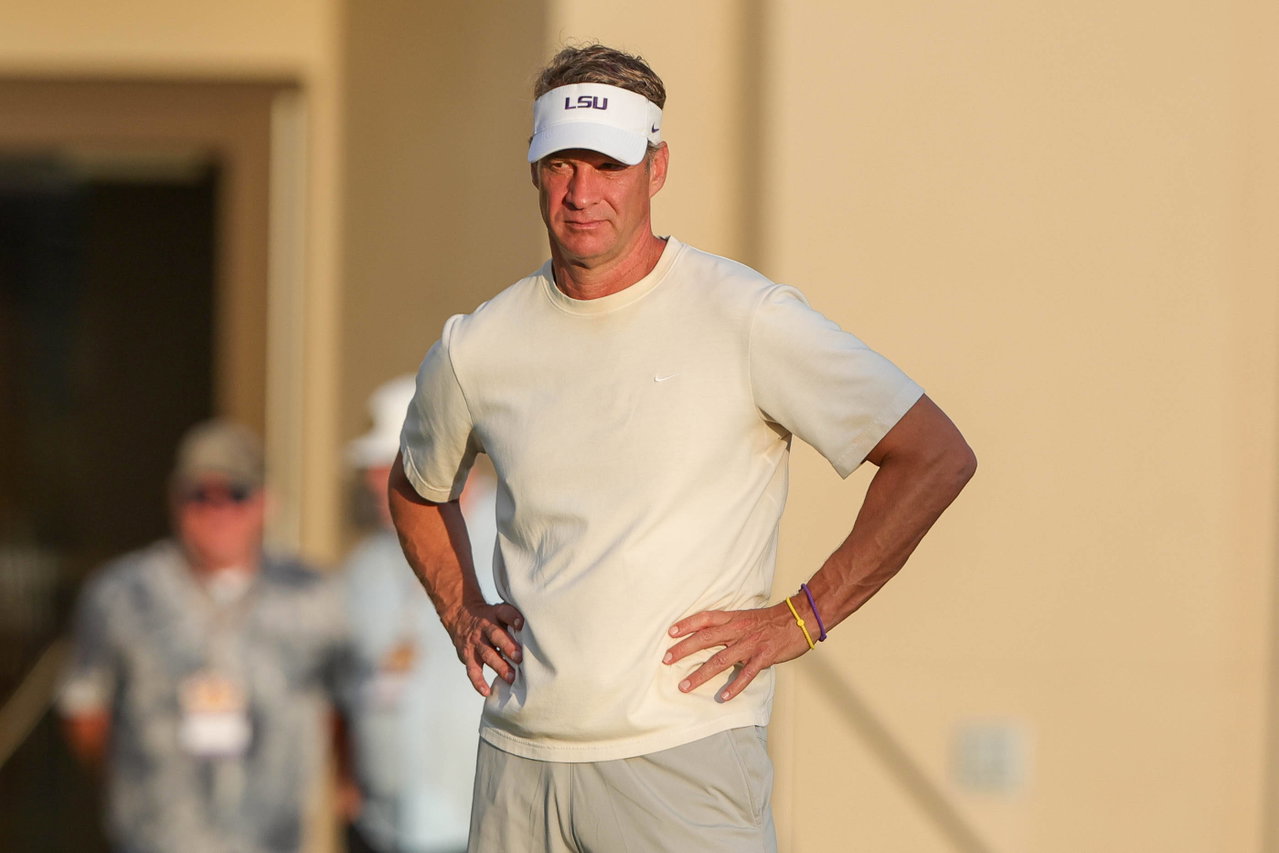
Lane Kiffin walked into an SEC that said former pro athletes were done in college. The conference put that rule on paper this week, and judges then put the conference itself into the case.
Watch What’s Trending Now!
The SEC has told attorneys it will comply with court orders that protect former professional athletes granted eligibility by judges. That update comes from The Field of 68, based on sports attorney Darren Heitner’s understanding. The written anti-pro policy is still on the books, but the signal is that the league will not punish schools for rostering named plaintiffs covered by those orders.
The SEC’s August 25 policy said a member school could not roster an athlete who declared for the NFL, NBA, or WNBA draft and did not withdraw the right way, and signed a contract with an NFL or other pro football team. On August 26, the conference circulated penalties.
A head coach suspension for half the season, a fine equal to 50% of that sport’s annual operating budget, and loss of SEC voting privileges. Presidents were reported as unanimous on the policy. LSU later abstained from the penalty vote, which was 15-0 with LSU sitting out.
State courts then changed the math. A Louisiana temporary restraining order around August 19 restored a fifth year for a specific Class of 2022 athletes. Some had NFL ties and still had to terminate pro contracts and repay wages before playing.
Plaintiffs later added the SEC and Sankey as defendants. On Friday, Aug 28, a Louisiana judge signed an order that, for now, bars the SEC from punishing schools that play those protected football players with NFL-contract ties. A show-cause and preliminary-injunction track was set for early September.
On Thursday, Aug 27, Judge Martin Hoffman issued a TRO covering about 41 athletes. It restrained the NCAA, the SEC, and Sankey from using NCAA Bylaw 12.6 or any other NCAA or SEC rule to keep those plaintiffs from competing in 2026-27. The order lasts 14 days, and a hearing is set for Sept 11.
The SEC tried a second wall through conference penalties. Judges then put the conference and Sankey in the orders and blocked that punishment for the same plaintiffs. The Aug 29 message to attorneys says the SEC will follow those orders.
A school can roster a protected plaintiff without facing penalties. A former NFL player who is not a plaintiff is still on the wrong side of the policy. Lane Kiffin recruited former Ole Miss players coming out of NFL camps in his first season in Baton Rouge. Tight end Dae’Quan Wright and defensive tackle Zxavian Harris are the football names that made the SEC rule look aimed at one program.
For players covered by the orders, it still does not answer who can stay on the roster if the next hearings shrink the orders.
The LSU names and why September still decides this
Wright went from Virginia Tech to Ole Miss. He went undrafted, spent time with the Eagles and Browns, and was waived Aug 24. The same day, he signed with LSU.
Harris played four seasons at Ole Miss, appearing in 52 games. He signed with the Saints as an undrafted free agent and was waived Aug 8. He is also a Louisiana plaintiff committed to LSU. Those two files are why the league’s new rule was read as a Kiffin problem first.
The case of Junior Tuihalamaka is different. The former Notre Dame edge committed to LSU after the Louisiana order. He never signed an NFL contract, so the SEC’s pro-contract ban did not apply to him even before Aug 29.
Jack Pyburn played at LSU in 2025 after transferring from Florida. He signed with the Buccaneers as an undrafted free agent and was still chasing an NFL roster in late August. He is a Louisiana plaintiff. If Tampa Bay cuts him and he returns, LSU can roster him without facing penalties under the new compliance posture.
Kiffin’s public line stayed the same. At a press conference around Aug 24, he said, “At the end of the day, because of these rulings, they’re either going to play for you, or they’re going to play for someone else around the country. So we’ve made the decision to recruit them like probably most people are.”
The SEC’s broader view has not been pulled back. In an Aug 20 affidavit opposing Luis, Sankey wrote that allowing former professionals back “fuels disruption,” creates competitive unfairness for athletes who stayed in college, and harms high-schoolers waiting for roster spots.
Aug 29 is not the end of the case. Players generally must terminate the pro contract and repay wages before they play a college snap.
Heitner stated that no school is required to roster anyone, and cover exists only when the order also blocks action against the school and its coaches. The next dates are Sept 3 in Louisiana and Sept 11 in Texas.