
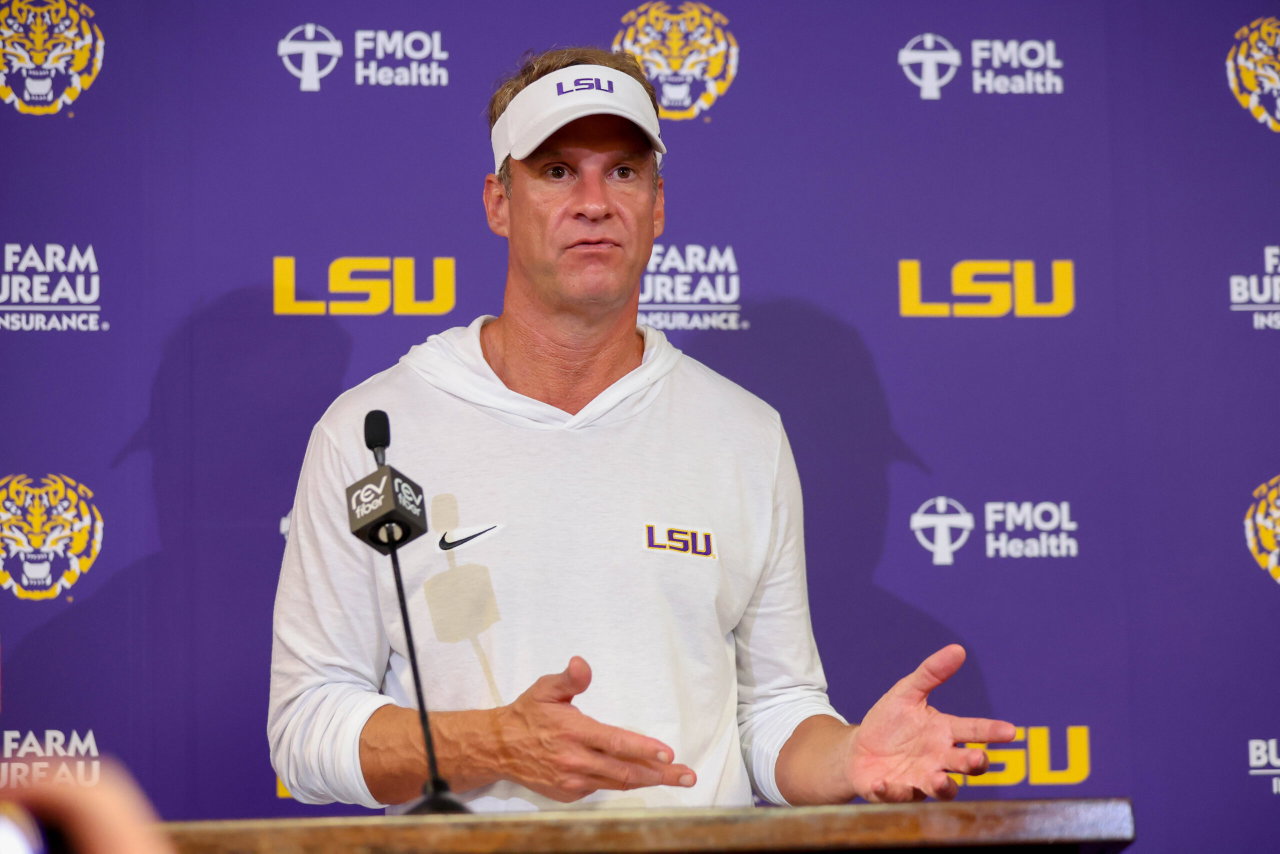
College football has seen its governing bodies make legal mistakes before, often with costly results. Now the SEC may be considering a move that could put it in the same position, despite its reputation for knowing how to handle the business side of the sport.
Watch What’s Trending Now!
Lane Kiffin, though, already called the SEC’s move “terrible” and called it a “worse” decision. While many thought Kiffin’s apprehensions stemmed from his troubled history with the conference, that’s not the case. Prominent attorney Tom Mars jumped in to support Kiffin.
“Lane is right. What’s more, I’m starting to question the legal acumen of the SEC,” Mars said in his October 9 X post. “Unless the SEC wants to be on the receiving end of a federal court lawsuit for the next couple of years. Why would the league even think about resurrecting its intraconference transfer rule?”
Recent reports say SEC presidents will meet next week to discuss bringing back a rule that would force athletes who transfer between conference schools to sit out a year before playing again.
SEC leaders want to stop conference schools from losing players to their rivals down the road. LSU’s 2026 roster includes players who were wearing the colors of SEC rivals not long ago.
That has frustrated boosters who now see conference opponents losing key players to Kiffin’s team. Princewill Umanmielen, who recorded nine sacks for Ole Miss last season, followed Kiffin to LSU.
LB TJ Dottery and WR Winston Watkins Jr. made the same move. Kiffin also added receiver Eugene Wilson III from Florida, edge Jordan Ross and OL William Satterwhite from Tennessee, along with DT Malik Blocton from Auburn.
SEC schools have a reason to want tighter rules on transfers between conference rivals. The SEC could face a court fight if it tries to make players sit out a season after transferring within the conference.
And even if the rule takes effect, it may not keep players from leaving. Someone unhappy at an SEC school could choose a Big Ten or Big 12 program rather than lose a year of eligibility by joining another SEC team.
Jordan Ross, whose NIL value reportedly drew major attention while he was at Tennessee, is one example. If a rule stopped him from joining LSU, he could look at Ohio State or Oregon.
The SEC could end up losing players to other conferences. Moreover, the timing could make things difficult for players.
The winter transfer portal is set to open on January 4 and remains open for 10 days. If the SEC brings in the new rule before then, players looking for more playing time will have to rethink their options.
An Auburn backup QB, for example, could face a choice between spending another season on the bench or transferring to a school outside the SEC where he has a chance to start right away. But that’s not the only concern.
Sports lawyer Tom Mars, who helped players secure transfer waivers for players like Justin Fields and Shea Patterson before the portal was introduced, rightly pushed back hard against the SEC’s plan.
The SEC has tried to keep transfers between its schools under tight control before. In 2016, Nick Saban resisted Maurice Smith’s move from Alabama to Georgia.
Four years later, Cade Mays faced a fight over his eligibility after transferring from Georgia to Tennessee. The conference eventually eased its transfer restrictions as the portal changed how players moved between programs.
The NCAA, though, had already run into trouble over its transfer rules. In 2024, it agreed to stop enforcing the one-year sit-out requirement under a consent judgment tied to an antitrust case brought by the Justice Department, 10 states and the District of Columbia, as Mars pointed out.
The states behind the case argued that the NCAA had no right to stop athletes from transferring and playing immediately.vThey said the rule limited players’ choices and their ability to earn money at another school. The SEC could run into the same legal trouble if it brings back the restriction.