Imago
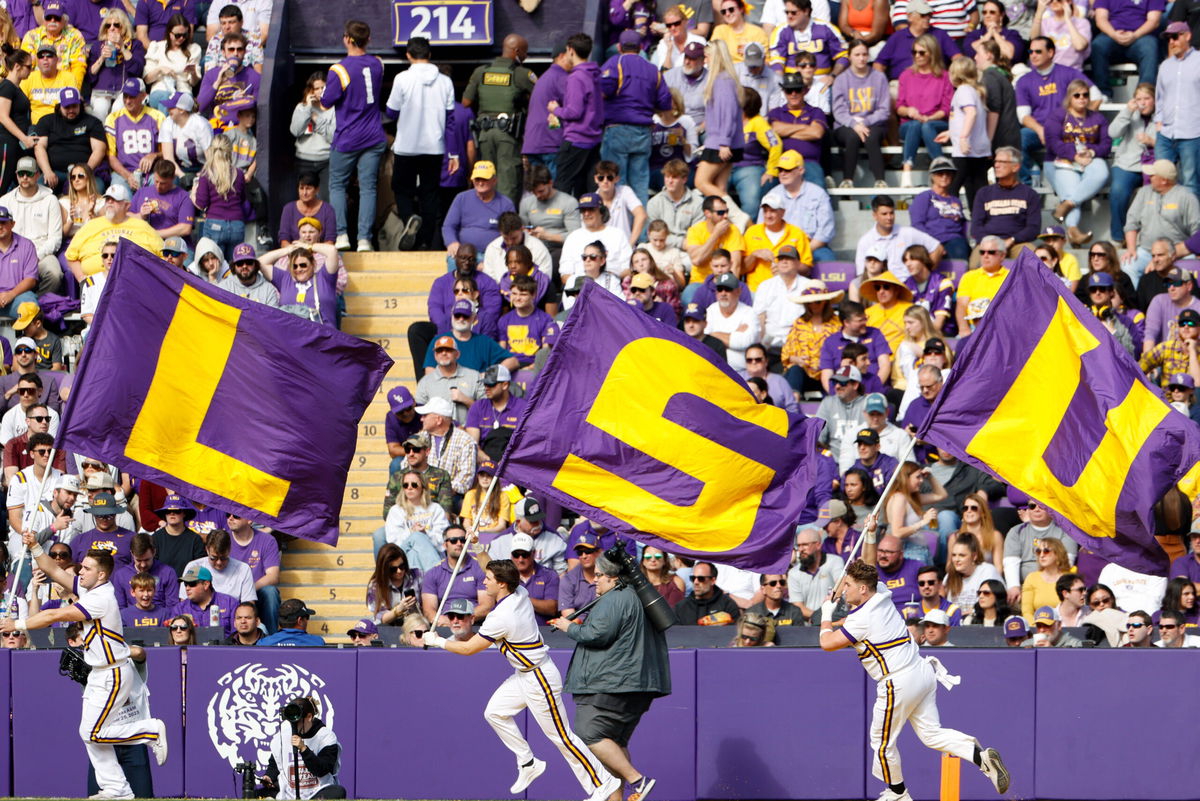
November 25, 2023: LSU Tigers flag carriers after a Tigers touchdown during an SEC college football game between LSU and Texas A&M on November 25, 2023, in Baton Rouge. LSU won, 42-30. – ZUMAc201 20231125_zap_c201_031 Copyright: xScottxColemanx
Imago
November 25, 2023: LSU Tigers flag carriers after a Tigers touchdown during an SEC college football game between LSU and Texas A&M on November 25, 2023, in Baton Rouge. LSU won, 42-30. – ZUMAc201 20231125_zap_c201_031 Copyright: xScottxColemanx
Watch What’s Trending Now!
Lane Kiffin’s debut year at Baton Rouge is not going swimmingly. LSU might be expected to show up in court in the future, thanks to the huge paychecks it is offering its players. The athletics department plans to use a legal loopholes, but this time, there is a lot of attention from the community.
Louisiana Illuminator’s Piper Hutchinson, WAFB-TV investigative reporter Chris Nakamoto, and Tiger Rag Executive Editor Todd Horne have approached the court in the public interest. They want LSU to show records of how the university is using public money to pay its student-athletes in NIL compensation. Their lawyer, Scott Sternberg, filed the case in a court in Baton Rouge on Thursday.
They had earlier asked the university for these records using Louisiana’s public records law, which allows people to request government information. However, LSU refused to give them the records. Because of that, the journalists decided to take the matter to court. According to their argument, the information should be public because the funds LSU uses is considered public money. However, they are not pursuing information about private NIL deals, which are sponsorship deals that athletes make with companies.
“The expenditure of public funds is what government transparency laws are all, at their bedrock, fundamentally about,” Sternberg said. “Asking for records of how the Louisiana government, including LSU, spends state dollars is usually not a question. These news organizations have joined together to file suit because they believe the public’s right to know how our money is spent is sacred.”
The issue stems from the House vs. NCAA settlement. Colleges are now allowed to directly distribute $20.5 million among student-athletes in revenue sharing. Most of this money is expected to go to football (about 75%), then men’s basketball (15%), women’s basketball (5%), and the last 5% will be shared by other sports. However, LSU claims that they don’t have to make the details of the model because of federal student law. In Louisiana, NIL contracts are free to remain hidden, as it allows rival college programs to affect recruitment.
Reporters Sue LSU for Records on Public Payments to Student-Athletes
LSU sued over athlete payments ⚖️🐯 Louisiana reporters filed suit seeking records of public dollars LSU pays athletes under revenue sharing. #LSU #NIL #CollegeSports
READ: https://t.co/N85nyKGg2Q pic.twitter.com/wINV1VqW2m
— 104.5 ESPN (@1045espn) March 12, 2026
“Releasing this information puts LSU at a competitive disadvantage on the field and runs contrary to the privacy interest of our student athletes,” LSU spokeswoman Meg Sunstorm stated.
This hurdle is faced by journos almost everywhere. CBS Sports said last year that it had requested details of NIL contracts of big-name players from multiple programs. They had received only six responses, which were all denials. Florida reasoned that the state’s public records law allowed it not to reveal quarterback DJ Lagway’s contract. The law that is used as a shield by most colleges is the Family Educational Rights and Privacy Act (FERPA). It treats NIL contracts as educational records, which makes them confidential.
LSU itself had used this law to deny public disclosure of NIL disclosure forms that athletes had to sign in 2021. Gray Media, a company that runs multiple TV stations in Louisiana, sued LSU claming that these contracts are not exempt from being on the state’s public records law, and that there was “overwhelming public interest” in these contracts. Gray Media lost that lawsuit. We’ll have to wait and watch how this trio fares in their fight.
Meanwhile, in South Carolina, lawmakers lost a key battle in keeping their NIL revenue-sharing details away from the public eye.
South Carolina could be forced to reveal some information about NIL spending
South Carolina Governor Henry McMaster vetoed a fast-tracked bill that would prevent NIL contracts from becoming available to the public. However, this was just one part of the bill. McMaster had a problem with how much information about athletic expenditure on individual sports was shrouded in secrecy. However, the Governor also provided a solution. He would sign the bill if lawmakers would agree to disclose how much a school is spending in revenue-sharing on each sport. But individual contracts with students will remain hidden. The General Assembly, however, is planning to override the veto.
Like the Louisiana trio’s argument, the bill saw a temporary snag when there were doubts about the money being public or private. Senate Majority Leader Shane Marsey claimed that “if they were private contracts or private money, we wouldn’t have a need for the bill.”
LSU is one of the bigger schools in the SEC, where funds are arguably going to be high. And it is well known to the public that this marquee school has recruited some very high-profile athletes, who are bound to get a lot of money. How the school tries to navigate this new legal hurdle will be an interesting storyline.