Imago
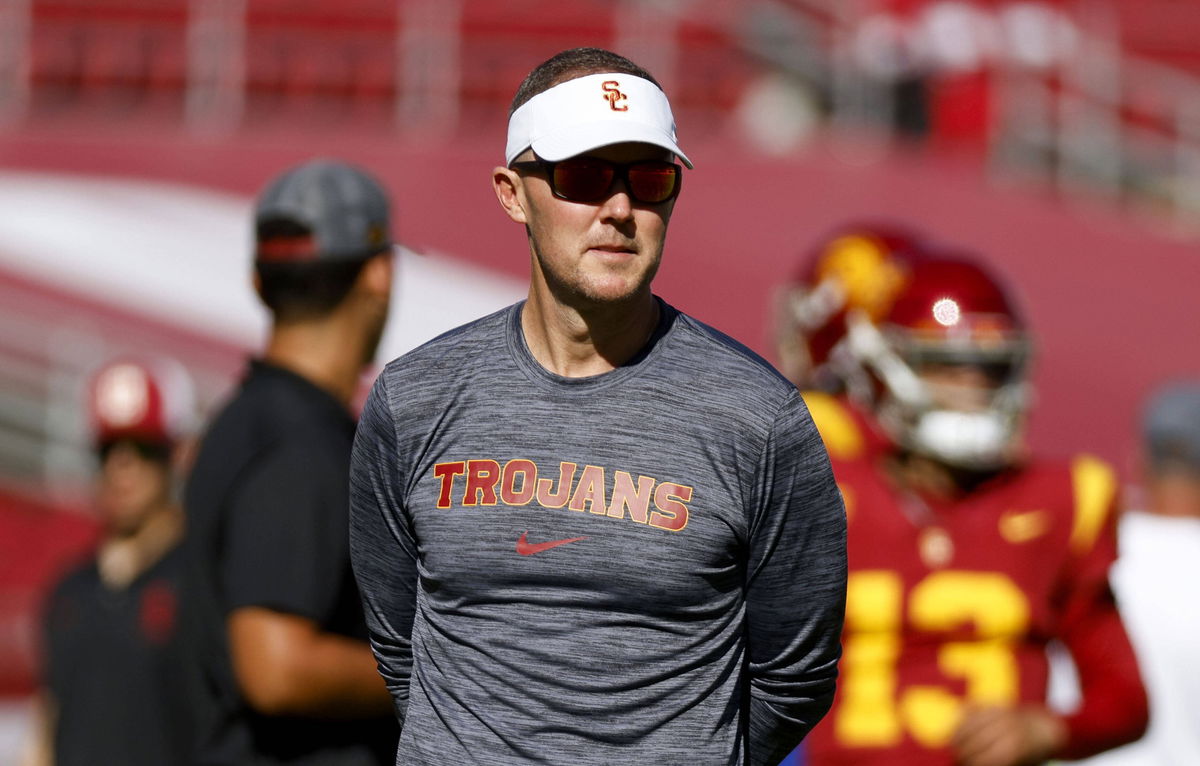
Despite an injury-hit season for USC Trojans, Lincoln Riley has led them to the top six of B1G.
Imago
Despite an injury-hit season for USC Trojans, Lincoln Riley has led them to the top six of B1G.
Essentials Inside The Story
- The new reality of College Football
- Lincoln Riley drops his viewpoints on significant CFP changes
- Paul Finebaum on player developments
Since the NIL era began, college football has lost its amateurism, or what some might call its “innocence.” Players are now treated far more favorably than they once were. The sport bears a striking resemblance to the NFL more than ever before. Some head coaches, like Lincoln Riley, align with it, while analysts are calling out the integrity of college football for that very reason.


The new reality is that schools must use NIL deals to retain their top players from leaving through the transfer portal. It works just like free agency in the pros. They offer a player a substantial amount of money to commit for another year, essentially acting like a contract.
Watch What’s Trending Now!
USC head coach Lincoln Riley seems pretty excited about it, even calling for a celebration when asked about whether their ‘re-signing’ deserves some celebration:
“I think that’s something that should be celebrated,” Lincoln Riley said. “In this day and age again, it’s almost more like an NFL team. It’s an accomplishment to be welcomed back, and then on top of that, it’s something that should be celebrated by a school or a program that somebody wants to continue with.”
USC HC Lincoln Riley noted how USC’s re-signings reflect the evolution of CFB:
“In this day and age, it’s almost more like an NFL team. It’s an accomplishment to be welcomed back – and it’s something that should be celebrated that somebody wants to continue what’s being built.” pic.twitter.com/KxdcuMoiQg
— Keely Eure (@keelyismyname) December 16, 2025
Truth be told, this isn’t just a USC thing; it’s everywhere now.
For example, South Carolina locked down their QB for next year in LaNorris Sellers, with big-time interest to keep him from other powerhouses. USC did the same with their RB, Waymond Jordan, convincing him to skip the NFL draft for one more year in college.
More of these re-signing posts will pop up in the next few weeks. It’s a gold rush era at this point. The programs essentially pay players millions to remain loyal for as long as possible. This whole thing is definitely blurring the lines with the NFL. Some college QBs, and even wideouts, make more money than some top-tier NFL superstars in their rookie contracts.
Plus, with the NCAA settlement allowing schools to eventually pay players directly through revenue sharing, any pretense of being “students first” is basically gone.
This re-signing process feels more like a financial lock-in than an amateur commitment. This whole thing is going to make this offseason feel more like pro sports contract negotiations than anything else.
Coaches like Lincoln Riley are all for it, calling it “imperative” for building a championship roster. From their (coaches’) perspective, it’s an innovative business in the modern landscape. However, many analysts and traditional fans are somewhat skeptical about it.
They argue that this pay-for-play system is eroding the integrity of college football. It’s even if they acknowledge that it has become the new normal.
Paul Finebaum on college football programs re-signing their players
On December 15, Paul Finebaum appeared on Cube Cubelic’s podcast and addressed the glaring issue of re-signing and where college football is headed. Cubelic didn’t mince words, asking how long everyone can pretend this isn’t happening right in front of them.
“Our brains don’t have a full understanding of it yet.”
Paul Finebaum explained that the sport is now very business-driven. Fans don’t seem to care about it as long as they keep winning:
“I think most fans are okay with it, because they just want to win. But I think a lot of folks like us who cover the minutiae and who have been around long enough to know that when you went on the day that you signed with Auburn.”
Finebaum doubled down on how much the meaning of signing day has changed. What was once a defining moment for families and communities is now tied to business decisions and financial leverage.
“You didn’t sign because they handed you a $2.3 million contract,” Cubelic said. “You signed because that’s where you wanted to go.” Although that feeling still exists, it now shares space with a system that treats college football like a business.
Their biggest fear is that the sport is becoming an unfair competition where only the richest schools can win, just like in professional leagues, where big-market teams dominate.
Ultimately, this “re-signing” trend is likely to persist. It’s quickly becoming the new norm for high-level college football programs. The sport has officially moved past the “innocent” amateur days.
College football has undergone permanent changes and now resembles a minor league for the NFL more than ever before.
Written by

Edited by

Jacob Gijy