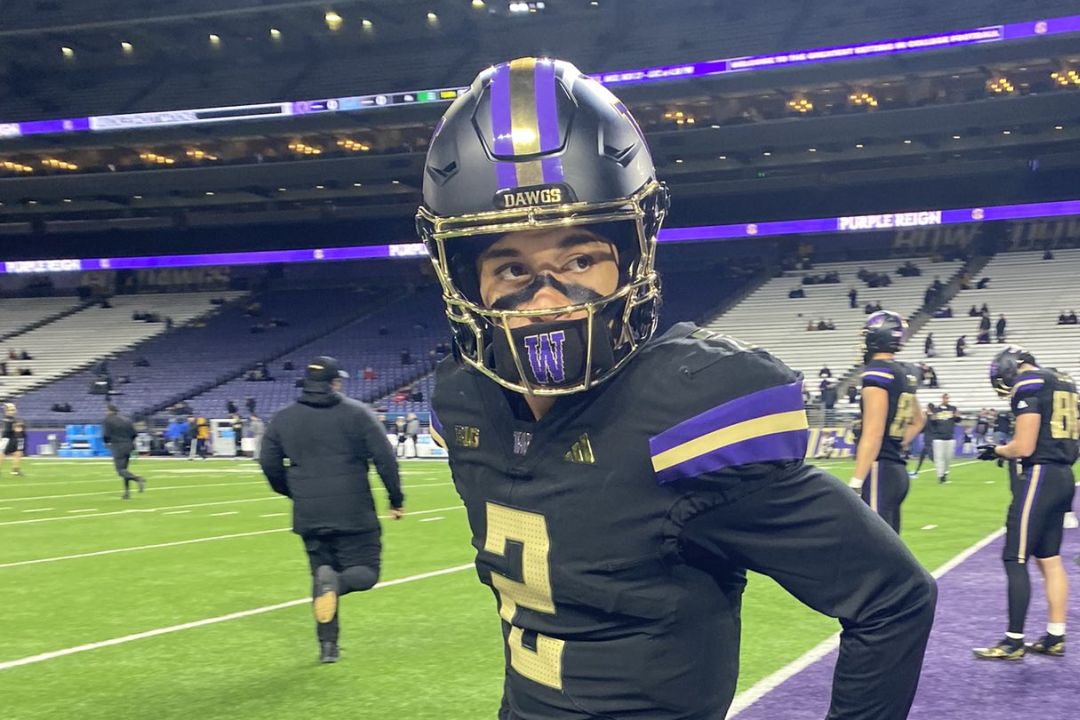
Washington quarterback Demond Williams Jr. pulled off one of the most shocking moves in college football history. Just four days after signing what sources described as a “near the top of the market” contract with the Huskies on January 2, Williams announced he’s entering the transfer portal. Rumors claim that LSU is ready to offer him around $6 million to make the jump. However, this move might end up being the biggest mistake of his career.
Watch What’s Trending Now!
The technicality that makes Demond Williams think he can walk away comes down to a pretty wild distinction in how college athletes get paid. As LSU Wire writer Will Rosenblatt pointed out, “Washington did not pay Demond Williams to play football. It’s not ‘pay for play’ because he’s not an employee. Because of that, there’s no real legal argument preventing him from playing football somewhere else.”
This is the crux of the loophole. Revenue-sharing contracts that schools are now using exist in this weird legal gray area where athletes aren’t technically employees. Since the House settlement went into effect on July 1, 2025, schools can directly compensate athletes through revenue-sharing deals. But because these deals aren’t traditional employment contracts, some believe players can still walk away without consequence.
But that loophole might not be as airtight as Williams might hope it is. Washington officials are adamant they have a “legally binding revenue-share contract” and plan to “pursue all legal avenues” to enforce it. The Big Ten Conference will be getting involved because it’s the one that drafts these revenue-sharing contracts for its member schools. This is the exhibit where Williams could really get burned financially.
Washington did not pay Demond Williams to play football. It’s not “pay for play” because he’s not an employee. Because of that, there’s no real legal argument preventing him from playing football somewhere else.
— Will Rosenblatt (@rozenwill) January 7, 2026
College athletics attorney Mitt Winter raised an important point: “It’s possible Williams signed a contract with Washington that grants the school an exclusive license to his NIL in connection with universities. Meaning he wouldn’t be able to sign an NIL contract with LSU if Washington enforces.”

If Washington cannot successfully block Williams from signing with another school, he could end up in legal limbo. He might be able to play for LSU, but having already torched his relationship with Washington, he could be barred from using his NIL brand to make money. That is because contractually, Washington would have those rights. The Wisconsin-Miami case from last year involving Xavier Lucas shows schools are willing to go to court over this stuff.
Williams reportedly signed a deal near the top of the quarterback market with Washington, and now LSU is supposedly offering around $6 million. But if Washington enforces the contract, LSU might have to pay liquidated damages on top of Williams’ new deal. But even if the Tigers are willing to eat those costs, Williams himself could face breach-of-contract penalties, wiping out a huge chunk of his LSU money. Plus, if the NCAA finds evidence of tampering (which Washington says it plans to present), the whole situation could blow up in ways we haven’t even seen yet.
Demond Williams might actually have an out
Not everyone thinks Demond Williams is completely screwed here, though. Darren Heitner, a sports attorney who represented Xavier Lucas in the Wisconsin case, had a pretty interesting take on Twitter. He pointed out that while the Big Ten’s NIL License Agreement templates do have exclusivity clauses that prevent athletes from using their NIL “in connection” with other colleges, there are “savvy drafting loopholes” that might save Williams.
If his new deal with LSU gets structured through third-party collectives that aren’t technically affiliated with the school, avoiding that “direct connection” language, he could potentially dodge the whole breach of contract issue. Heitner doesn’t think an arbitrator would actually stop Williams from enrolling at another school. As he put it, Williams is “after all, a student-athlete, right?” That student part matters legally. Courts and arbitrators are probably going to be hesitant to block someone’s ability to attend a different university, even if money is involved.
Imago
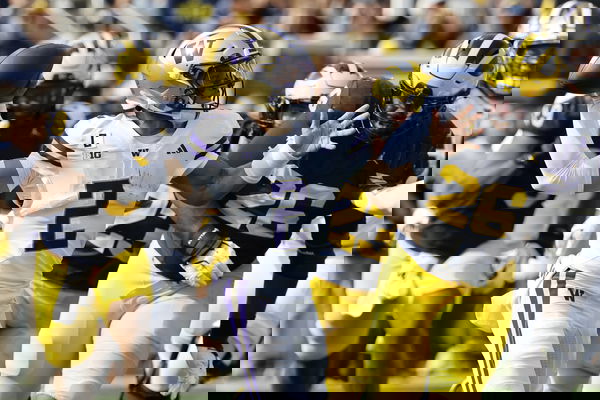
NCAA, College League, USA Football: Washington at Michigan Oct 18, 2025 Ann Arbor, Michigan, USA Washington Huskies quarterback Demond Williams Jr. 2 passes in the first half against the Michigan Wolverines at Michigan Stadium. Ann Arbor Michigan Stadium Michigan USA, EDITORIAL USE ONLY PUBLICATIONxINxGERxSUIxAUTxONLY Copyright: xRickxOsentoskix 20251018_jcd_aa1_0063
If Washington hasn’t actually paid Demond Williams any money yet under the contract he signed on January 2, this whole thing might just come down to whether the Huskies can prove actual damages. That’s a much lower-stakes fight than the apocalyptic scenario where Williams loses millions and can’t play anywhere. What do you think?
Related Newsletters