Imago
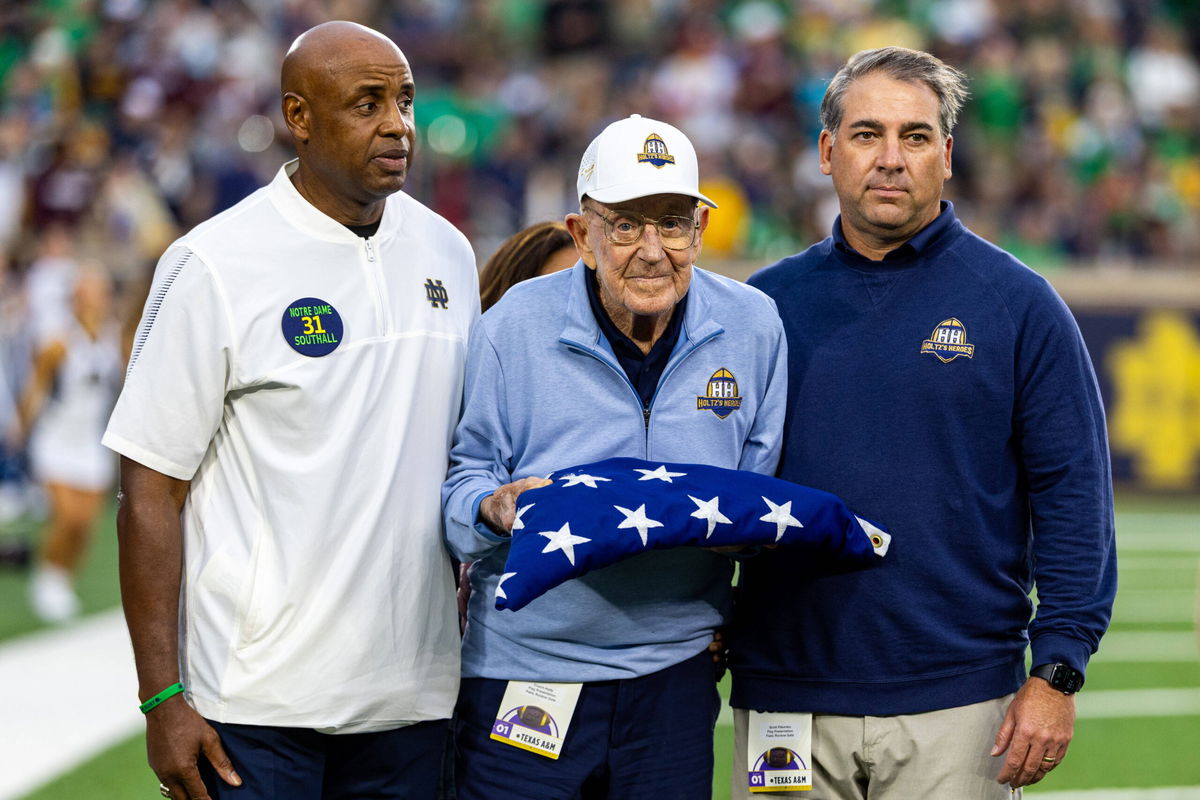
September 13, 2025: Former Notre Dame head coach Lou Holtz presents the flag prior to NCAA, College League, USA football game action between the Texas A&M Aggies and the Notre Dame Fighting Irish at Notre Dame Stadium in South Bend, Indiana. /CSM South Bend United States of America – ZUMAc04_ 20250913_zma_c04_595 Copyright: xJohnxMersitsx
Imago
September 13, 2025: Former Notre Dame head coach Lou Holtz presents the flag prior to NCAA, College League, USA football game action between the Texas A&M Aggies and the Notre Dame Fighting Irish at Notre Dame Stadium in South Bend, Indiana. /CSM South Bend United States of America – ZUMAc04_ 20250913_zma_c04_595 Copyright: xJohnxMersitsx
Lou Holtz’s historic football achievements cannot define his legacy; it goes far beyond that. Although he is no longer among us, his message aimed at welcoming fallen-away Catholics back to the Church still lives on.
On March 4, Lou Holtz passed away at 89, peacefully in Orlando, Florida, surrounded by his family. Over his nearly 45-year coaching journey, he influenced thousands of hearts and minds, but in 2013, the legendary coach appeared in a powerful campaign for Catholics Come Home.
Watch What’s Trending Now!
“For victory in life, we’ve got to keep focused on the goal, and the goal is heaven,” said Holtz. “The key to winning is choosing to do God’s will and love others with all you’ve got. Sacrifice, discipline, and prayer are essential. We gain strength through God’s word. We receive grace from the sacrament, and when we fumble due to sin, and it’s gonna happen, confession puts us back on the field. So if you haven’t been going to mass weekly, get back in the game. We’re saving your seat on the starting bench this Sunday. Welcome home.”
On Sunday, just days before Holtz’s funeral, Notre Dame writer Bruce Straughan reposted the commercial. Through this 30-second commercial, Holtz blended the language of football with the values of faith, drawing a striking parallel between commitment on the field and devotion in life. In short, Holtz used football and his public platform to encourage “inactive” or “fallen-away” Catholics back to the Church.
The ad aired during major 2013 college bowl games, including the BCS National title between Notre Dame and Alabama, reaching an estimated 70 million households. That season, Notre Dame was undefeated, just as Lou Holtz led the Irish in 1988.
Coach Lou Holtz did a commercial back in 2013 for Catholics Come Home welcoming fall away Catholics back to the Church. In the commercial he tied Faith to Football in an amazing way! RIP Lou ☘️💚🙏🏼 pic.twitter.com/UodWqoG3kB
— Bruce Straughan (@bruce_straughan) March 15, 2026
For Holtz, a 2008 College Football Hall of Fame inductee, leading the Irish was the fulfillment of a childhood dream. Growing up in the 1940s, Holtz spent countless hours listening to Notre Dame games on the radio, and his connection ran so deep that, when he later coached Minnesota, his contract reportedly included a special “Notre Dame clause” that allowed him to leave if the Irish ever came calling. That moment finally arrived after Holtz guided Minnesota to a bowl appearance in 1985.
He quickly restored the program’s glory, culminating in an unforgettable 12-0 national championship season. His team-first philosophy was so ingrained that he famously removed player names from jerseys, a culture that led to a 100-30-2 record and nine straight bowl appearances over his 11 seasons.
Still, Holtz’s contribution to the football community through his sports-themed motivational speech didn’t stop there. He was notably involved in the College Football Hall of Fame legacy brick campaign. This was a fundraising and promotional effort for the new College Football Hall of Fame being constructed in Atlanta, Georgia.
Additionally, he remained a key figure for the Notre Dame Club of Staten Island’s Bread of Life Food Drive, an annual campaign he supported for many years. Lou Holtz’s legacy extends far beyond his historic football achievements.
Lou Holtz was more than just a football coach
From stops at NC State, Arkansas, South Carolina, Minnesota, and even William & Mary, Lou Holtz left his mark everywhere he went, yet his story was never limited to wins and championships.
After being fired from an assistant coaching job in 1967, he sat down and wrote a list of 107 life goals. Over time, he astonishingly checked off 102 of them. Interestingly, they included having dinner at the White House, appearing on The Tonight Show with Johnny Carson, meeting the Pope, and even tackling a white-water rafting adventure on the Snake River.
To cap it off, Holtz had a sharp sense of humor about himself. Reflecting on his writing career, he once joked, “I’ve now written more books than I have read. Not many people can say that.” But Holtz’s influence extended well beyond coaching as he transitioned to broadcasting.
He spent nearly two decades analyzing CFB on networks like CBS Sports, ESPN, and SiriusXM. Whether through coaching, broadcasting, or even his famous “newspaper trick” that symbolized resilience and mental toughness, Holtz proved that football is connected to our lives.
Related Newsletters