
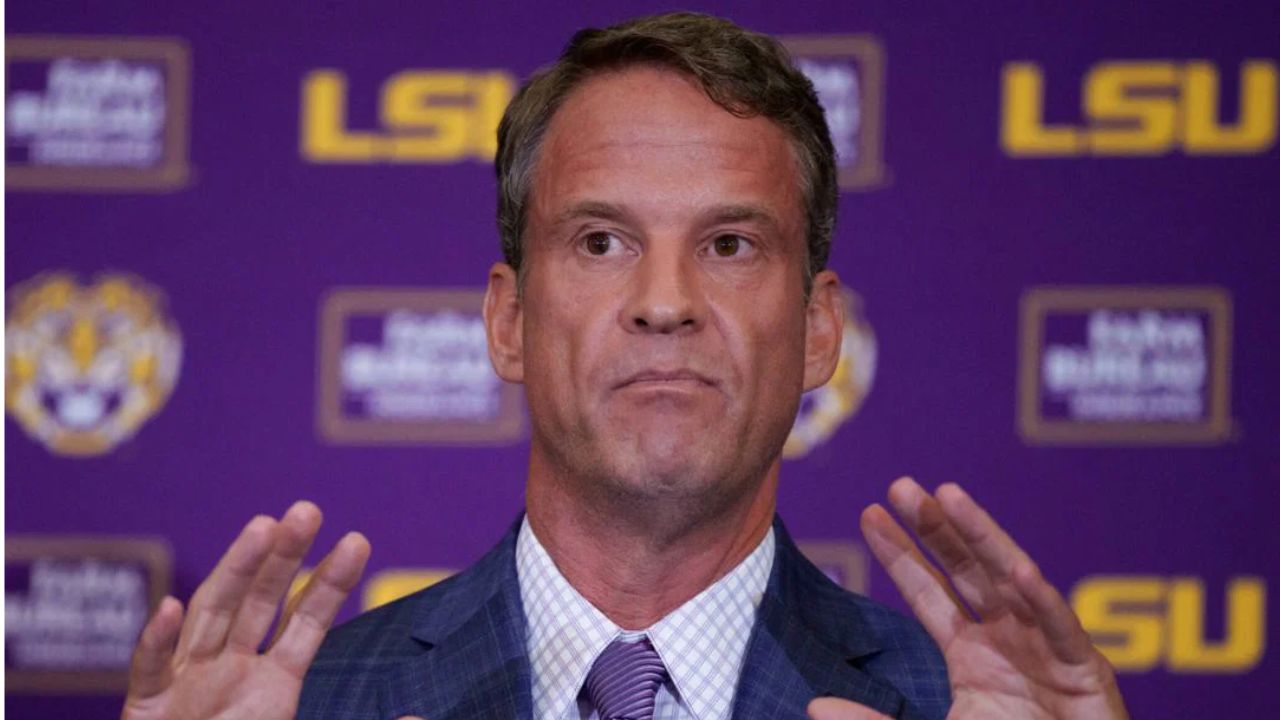
Lane Kiffin’s roster plan at LSU shifted after a late Thursday court order. A path that once looked closed the day before is now open. The school is reviewing the ruling while the roster clock keeps running. Now, the LSU president has put up an update regarding the matter.
Watch What’s Trending Now!
“LSU respects the judicial process and the court’s decision. Our responsibility is to support our programs while complying with the law and the rules governing our conference,” the statement read on X. “We will carefully review the court’s order and continue to work constructively with the SEC and NCAA as this matter moves forward. College football does not deserve this kind of ambiguity in eligibility standards, this is just another illustration that congress needs to pass a version of the Protect College Sports Act.”
LSU System President Dr. Wade Rousse put out an official statement on September 4. The official @LSUpresident account posted an image of the letter and pointed to “last night’s ruling.”
The statement on X followed a preliminary injunction issued on September 3 by East Baton Rouge Parish Judge William Jorden in the 19th Judicial District Court.
It blocks the NCAA and SEC from forcing rules that would deny those athletes a fifth season. It also blocks punishment of any school that rosters them. The ruling came after a long hearing, and SEC Commissioner Greg Sankey testified. The SEC has said it plans to appeal.
Before this ruling, the SEC had a policy that could penalize schools for rostering a player who signed a professional contract. The possible penalties included a half-season coach suspension, fines equal to 50% of the sport’s operating budget, and loss of conference voting rights.
At the heart of it all are the ‘Class of 2022’ players who did briefly enter the NFL and are now trying to return to college football after the rookie camps didn’t lead them any further.
Tight end Dae’Quan Wright played two seasons at Virginia Tech and then two at Ole Miss under Kiffin. He tore his labrum early in his senior year and kept playing. After the 2025 season, he signed as an undrafted free agent and spent time with the Philadelphia Eagles and then the Cleveland Browns.
He was available for a preseason game and was waived. Because of the Louisiana order, Wright is now practicing at LSU and says he expects to be added to the roster.
Defensive tackle Zxavian Harris also played at Ole Miss and later signed with the New Orleans Saints. He has committed to LSU with a foot injury and has said he may need a couple of weeks. He hopes to be ready for the September 19 game against Ole Miss.
The latest name is cornerback Blake Cotton. He played at Utah, went undrafted, signed with the Denver Broncos, suffered a hamstring injury, and was waived in late July or early August.
He then entered the transfer portal, and Cotton was among the players covered by the injunction. Sources told CBS Sports that LSU is working to add him and that he is already in Baton Rouge. He is being described as a priority target. Other names have also been circulated, including former Notre Dame edge Junior Tuihalamaka.
LSU can legally add the protected players to its 105-scholarship roster under the current state-court order. Friday’s roster-submission deadline to the SEC is the next checkpoint.
Wright has already been practicing. NCAA rules that require seven days of practice before competition may keep him off the field for Saturday’s opener against Clemson. Harris is quite behind because of the injury, and Cotton’s addition is still being worked out.
Why the eligibility fight could become a bigger battle for LSU and the SEC
The NCAA announced in June 2026 a shift to a “five years to play five seasons” model. The 2022 recruiting class was not given the same notice. Many of those players had already used four seasons. Others entered the NFL draft and preseason camps thinking their college eligibility was done.
Courts in several states later issued injunctions. Judges said the NCAA failed to tell those players they could have stayed for a fifth year.
Conferences then passed their own bans on former professionals, and other courts blocked those bans. Eligibility now depends on the state, the judge, and which order is treated as controlling.
The SEC filed a federal lawsuit the same day as the Louisiana ruling. It names LSU, Rousse, Athletic Director Verge Ausberry, and Kiffin. The suit seeks to stop LSU from associating the conference with players who signed professional contracts.
A later federal ruling could clash with the state order. Judge Jorden considered contempt sanctions on the SEC and NCAA but did not impose them right away.
If the Louisiana order is lifted or overridden, LSU and Kiffin could face the same penalties the SEC outlined. Other Power conferences have adopted similar “no former professionals” policies. A successful LSU addition could lead to copycat lawsuits elsewhere.
Louisiana Gov. Jeff Landry has supported the players. Wright’s agent has said an agreement with LSU was already in place once he cleared NFL waivers. Cotton was physically present for the Thursday hearing.
With LSU’s roster deadline looming, Lane Kiffin suddenly has a door that was slammed shut just days ago. Now, what LSU does next could set the tone for a much bigger eligibility fight.