
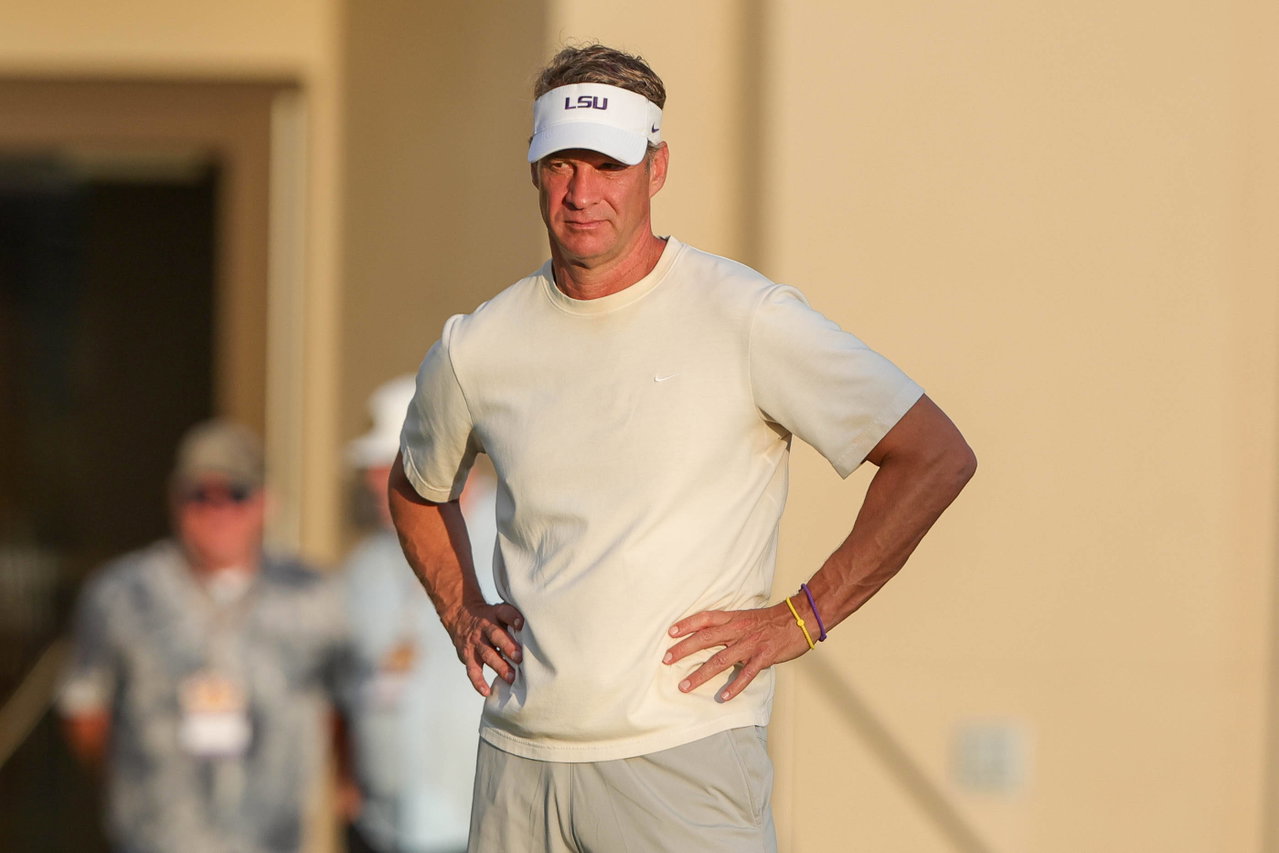
It’s rare to see a program actively move against their own head coach’s strategy of getting an edge over the competition. Kiffin is not doing anything illegal, nor is he the only one in college football who understands the positional value of playing a fifth year veteran over an untested sophomore. Yet, the hammer came down anyway.
Watch What’s Trending Now!
In a unanimous 16-0 vote, the SEC’s board of presidents, including LSU’s own university leadership, joined forces to pass an emergency ban on former professional athletes returning to college sports, instantly blocking Kiffin’s high-stakes plan.
The controversy erupted when a Louisiana state judge granted temporary legal relief to athletes from the 2022 high school class who missed out on a fifth year of eligibility under recent NCAA rules. Kiffin moved quickly, signing tight end Dae’Quan Wright after his release from the Cleveland Browns and targeting former New Orleans Saints defensive lineman Zxavian Harris. With court orders opening a brief transfer portal window, Kiffin was ready to suit them up immediately. However, conference leaders panicked at the thought of active NFL veterans flooding college rosters.
When news broke, reporting from ESPN’s Pete Thamel confirmed that SEC presidents approved the emergency restriction without a single dissenting vote. LSU’s decision to back the conference showed where the university stood. Rather than risking a battle with league officials to defend Kiffin’s aggressive transfer portal play, campus leadership fell in line to protect the school’s standing in the conference. The vote officially ruled Wright and Harris ineligible, wiping out Kiffin’s roster addition in one move.
Kiffin Lashes Out
Frustrated by the sudden turn of events, Kiffin took to The Pat McAfee Show to voice his frustration with league officials. He pointed out that college sports executives routinely accept court rulings when it suits them, but rush to rewrite the rulebook when they lose control of roster management. Kiffin emphasized that his staff did not violate any laws, noting that LSU simply acted on a legal ruling that made those players free agents in the eyes of the court.
Kiffin also revealed that LSU was far from the only school attempting to pull off these signings. According to the coach, several rival powerhouse programs were actively contacting Dae’Quan Wright’s agent, Drew Rosenhaus, offering lucrative NIL packages to secure the veteran tight end. Because LSU completed the deal first, the program became the public face of a national debate over where college sports ends and professional football begins.
LSU’s leadership didn’t vote for the ban to undermine Kiffin; they did it to protect the university from severe league penalties. Under the new policy push led by SEC Commissioner Greg Sankey, member schools face sweeping authority and financial consequences if they field ineligible former pro players. With rival leagues like the Big Ten threatening head coach suspensions for violations, LSU’s administration decided that challenging the conference was a risk they simply could not take.
Bringing Order To Chaos
Ever since Diego Pavia won his eligibility lawsuit, the court system has found itself to be an active player in college athletics, influencing it far more frequently than in previous years. The NCAA had found an unlikely enemy and the players knew that they didn’t have to toe the line every time.
While initially met with jubilation over increased player rights and freedoms, this quickly devolved into anarchy. Once everyone saw Trinidad Chambliss win his own eligibility case in state court, there was an unofficial legal war being fought in courtrooms across America.
The conferences mostly stayed away from this mess. But even they have their limits. Those limits got crossed when Brendan Sorsby was able to get a mere two game using a temporary injunction. A mere slap on the wrist for an athlete who had gambled intensively over college games.
The outrage took time to arrive, but when it did, it was enough to choke out any dissent. The college football world united, including the different conferences in isolating the Red Raiders if they continued down this “legal” path. Thankfully Texas Tech came to their senses, and dismissed Sorsby before his presence could do further harm.
It might look like betrayal, but the administration at Baton Rouge is actually doing Lane Kiffin a favor. By voting sensibly along with the rest of the programs, they come off as reasonable instead of selfish. No one blames Kiffin yet for doing what he has done since it is technically legal. But if he continues on this stubborn path, the winds could change. The message is loud and clear. The moral standard within college athletics cannot be disturbed too much in pursuit of a national championship, regardless of what a judge has said inside a courtroom.
Ultimately, the SEC chose to draw a firm line in the sand. League leaders maintained that college athletics must remain dedicated to traditional student-athletes, arguing that allowing returned pro players would take away roster spots, NIL money, and playing time from high school recruits. While the legal battles over NCAA eligibility continue in courtroom halls, the SEC’s unanimous vote made one thing clear: professional experience marks the end of the road for college eligibility.