
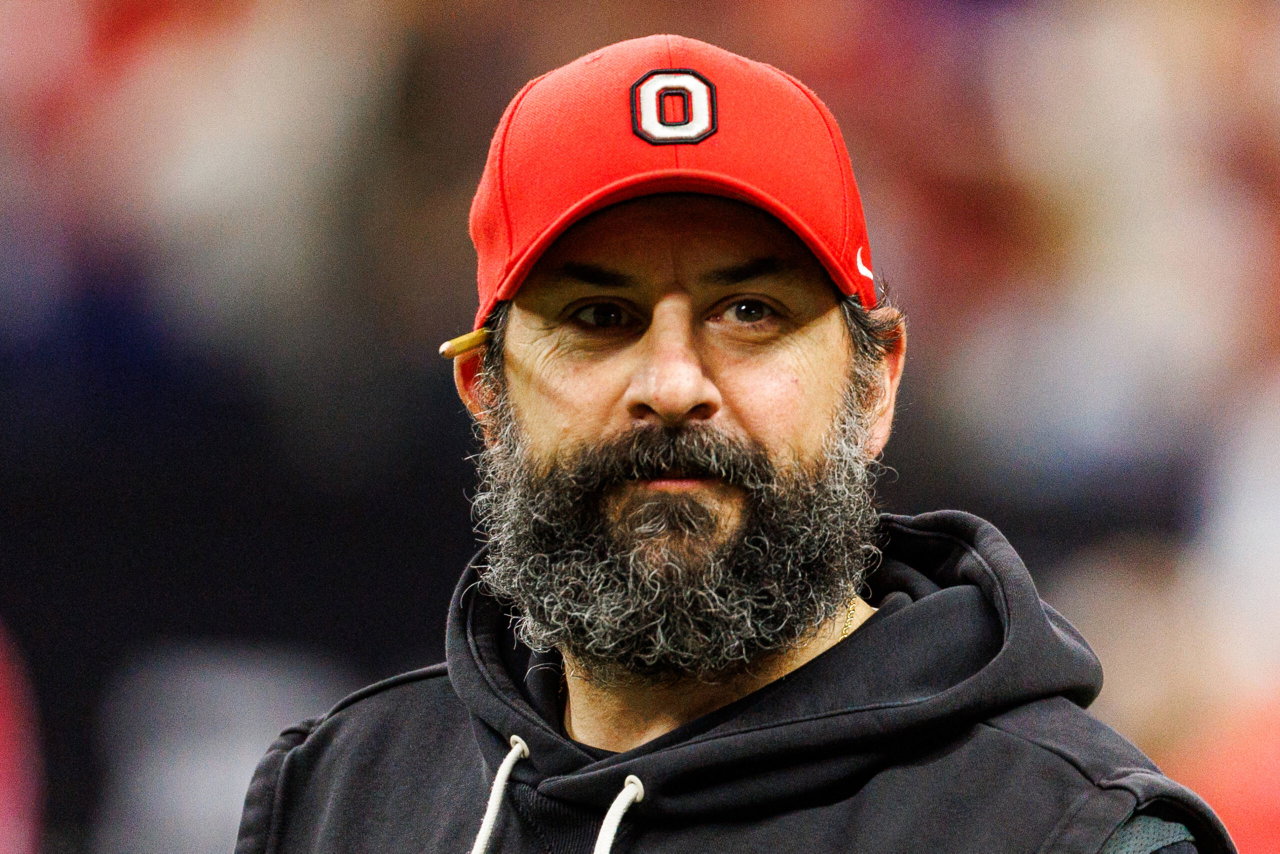
The Buckeyes lost a massive amount of defensive talent from last year’s team, including Caleb Downs, Arvell Reese, Sonny Styles, and Kayden McDonald. Eight defensive starters were gone, leaving Patricia with the difficult task of rebuilding a unit that finished No. 1 nationally in several major defensive categories in 2025. But according to Patricia, the biggest difference is not necessarily the scheme. It is the number of players he can now use within it.
Watch What’s Trending Now!
When asked how much the defense has changed compared with last season, Patricia admitted that the Buckeyes are actually ahead conceptually because of the carryover from his first year.
“I would say we’re probably maybe a little bit ahead of where we were last year from a full concept standpoint because I think there was some carryover,” Patricia said on today’s presser. “It’s more about right now for us working through the personnel and the roles that they go into.”
And that is where the Buckeyes may have a major advantage.
Last season, Ohio State leaned heavily on one primary group of defensive players. That group was loaded with talent, with Downs playing a major role in the secondary before eventually winning the Jim Thorpe Award and Big Ten Defensive Player of the Year.
This year, Patricia has more options.
“We have like more depth, so there’s more bodies to kind of like put into those roles,” he said. “So maybe it’s a little bit more by committee than it was last year at this point, and really dialing into those roles for those players.”
That approach is already showing up in Ohio State’s defensive plans. The Buckeyes have been mixing and matching personnel, particularly in the secondary, where players such as Jaylen McClain and Earl Little Jr. have the versatility to move between safety roles and potentially play nickel.
McClain is especially important because he is one of just three returning Ohio State defensive starters from last season. Little, meanwhile, transferred in and has emerged as another key piece in the secondary. Together, they are expected to help replace the production and versatility that Downs brought to the defense.
The Buckeyes also have plenty of options up front. Kenyatta Jackson Jr. and Beau Atkinson are projected to start at defensive end, while Ohio State has several players competing for snaps behind them. The linebacker room has similar depth, with multiple players pushing for meaningful roles.
That does not mean replacing Downs and the rest of last year’s stars will be easy. Ohio State’s 2025 defense was historically good, and Patricia knows this year’s group cannot simply copy what that unit did.
So, how is this depth-heavy approach actually working for the Buckeyes?
It is still far too early to make a final judgment. Ohio State has played only three games, and Patricia is still figuring out how all these pieces fit together, but there have already been some encouraging signs.
The Buckeyes are giving up just 10 points per game over three games, while allowing 85.7 rushing yards per contest. They also held Ball State and Kent State to just six combined points. Still, this defense has not looked quite like last year’s dominant unit.
The biggest test came against Texas. Ohio State held the Longhorns to just three points through the first three quarters and carried a 23-3 lead into the fourth.
But Texas suddenly found its rhythm, scoring 21 unanswered points in the final quarter to complete a stunning 24-23 comeback.
However, the encouraging part is that Patricia has more pieces to work with. He can use different players in different situations and keep experimenting until the right combinations emerge.
There is still a long way to go, but that depth could become much more valuable as the season moves along and Big Ten play gets tougher.