
Imago
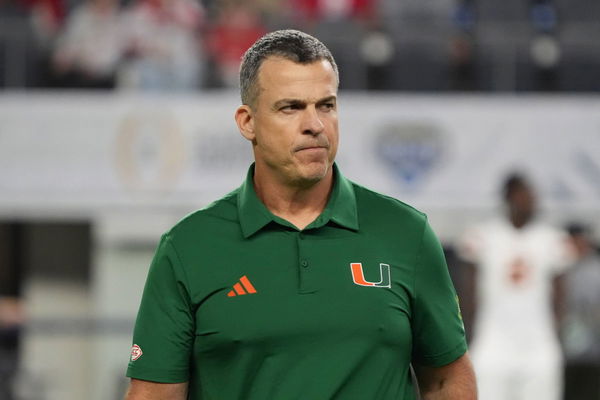
NCAA, College League, USA Football: South Florida at Miami Sep 13, 2025 Miami Gardens, Florida, USA Miami Hurricanes head coach Mario Cristobal looks on against the South Florida Bulls during the second quarter at Hard Rock Stadium. Miami Gardens Hard Rock Stadium Florida USA, EDITORIAL USE ONLY PUBLICATIONxINxGERxSUIxAUTxONLY Copyright: xSamxNavarrox 20250913_SN_na2_00080
Imago
NCAA, College League, USA Football: South Florida at Miami Sep 13, 2025 Miami Gardens, Florida, USA Miami Hurricanes head coach Mario Cristobal looks on against the South Florida Bulls during the second quarter at Hard Rock Stadium. Miami Gardens Hard Rock Stadium Florida USA, EDITORIAL USE ONLY PUBLICATIONxINxGERxSUIxAUTxONLY Copyright: xSamxNavarrox 20250913_SN_na2_00080
Back in January, right before the biggest stage of the season, Mario Cristobal slammed the targeting rule. He said it needed a serious rethink after Miami DB Xavier Lucas was flagged for targeting late in the CFP semifinal, which affected their performance in the national championship game. By late February, the NCAA proposed bold changes to the targeting penalty, and now the changes are in effect.

For the 2026 season, the DI FBS Oversight Committee has approved a one-year trial change to the targeting penalty structure. It’s a test run that could directly address the kind of situation Xavier Lucas found himself in. Under the new rule, a player flagged for targeting for the first time in a season will not have to miss any part of the next game. That’s the change Mario Cristobal has been pushing for.
Watch What’s Trending Now!
Back in that Ole Miss clash in the Fiesta Bowl, the helmet-to-helmet contact on Rebels WR Cayden Lee was reviewed and upheld. That meant Lucas not only got ejected from that game but also had to sit out the first half of the national title clash against Indiana.
Changes to penalty structure for targeting in DI football approved.https://t.co/QsuqtaKBqq
— NCAA News (@NCAA_PR) March 19, 2026
Without Lucas anchoring the secondary for the first two quarters, Miami’s defense stumbled into a 10-0 halftime hole. Mario Cristobal’s side spent the rest of the night desperately playing catch-up, and ultimately suffered a crushing 27-21 defeat to the Hoosiers that killed their championship dream.
“We feel it was unjustly administered, and now it impacts the last game of the season,” he said.
Imago
NCAA, College League, USA Football: Cotton Bowl-Miami at Ohio State Dec 31, 2025 Arlington, TX, USA Miami Hurricanes head coach Mario Cristobal looks on before the 2025 Cotton Bowl and quarterfinal game of the College Football Playoff against the Ohio State Buckeyes at AT&T Stadium. Arlington AT&T Stadium TX USA, EDITORIAL USE ONLY PUBLICATIONxINxGERxSUIxAUTxONLY Copyright: xRaymondxCarlinxIIIx 20251231_kdn_cb2_018
We’ll have to wait and see whether the changes make a meaningful impact on the field. But with this change comes a big catch. The change applies only to first-time offenders; repeat violations still carry escalating penalties. A second targeting offense will cost the first half of the next game. A third violation, and they won’t be able to play their next game. But no player went on to test the offense a third time in 2025.
Also, the conferences will have the option to appeal targeting calls, especially second and third offenses, by sending them to the NCAA’s national coordinator of football officials for video review. If overturned, the suspension disappears. But just as crucial, this is only a one-year trial for the 2026 season, meaning the NCAA is still very much in evaluation mode before making anything permanent. It has still come a long way though.
Targeting was introduced back in 2008, with automatic ejections coming in 2013. Since 2022, conferences have had limited appeal options. While the targeting adjustment grabbed the headlines, the NCAA’s rulebook overhaul didn’t stop there. Officials also tweaked several other on-field rules.
Other changes the NCAA brought
The NCAA also approved a rule that allows teams to attempt a fair-catch kick, which is like a free field goal, from the spot of a fair catch. The defense has to stay 10 yards back. If it goes through, the team wins three points. This change places college football in similar territory to the NFL and high school rules.
There were also adjustments to offensive pass interference, now reduced from 15 yards to 10. and clearer guidelines on unsportsmanlike conduct, including a deeper look into player taunts and inappropriate celebrations. But for fans waiting for dress code changes, the NCAA didn’t crack down on uniform trends, and short pants remain acceptable.
Mario Cristobal’s frustration didn’t rewrite the rulebook overnight, but it definitely echoed in the room. The NCAA heard it and is issuing a first warning without consequences for players. But the question remains if this one-year trial will be a boon or bust.
Written by

Edited by

Himanga Mahanta