
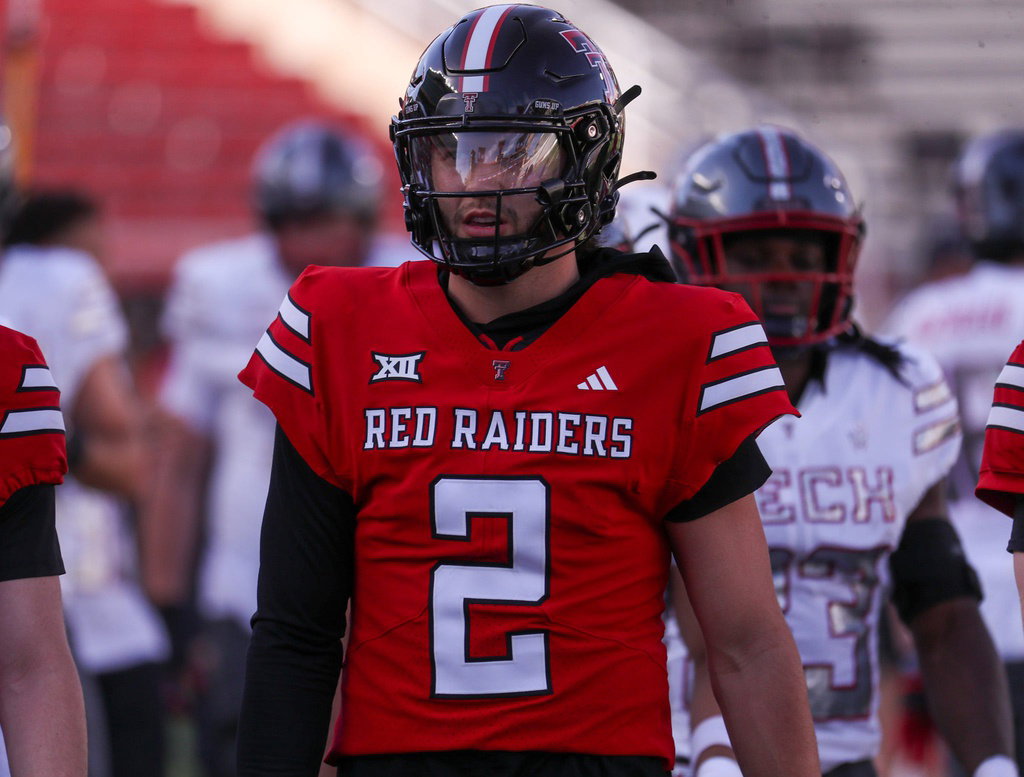
Texas Tech QB Brendan Sorsby received a lifeline when a Lubbock Court granted him a temporary injunction against the NCAA. The governing body had ruled him permanently ineligible after massive gambling violations came to light. The injunction means that he can suit up for the Red Raiders next season. However, the verdict has been widely condemned across college football.
Watch What’s Trending Now!
“I’ve covered college athletics for 34 years. I have never been more disgusted by a decision involving college sports. Texas Tech and Sorsby argued he would suffer irreparable damage by not getting to play. College sports are the entity suffering irreparably,” said Scott Rabalais, a sports columnist for The Advocate.
Sorsby will still serve a self-proposed, two-game suspension at the start of the next season. The court also mandated ongoing clinical counseling for gambling and anxiety. The verdict is another blow to NCAA authority, as wagering on one’s own school or sport has always been a cardinal sin. Sorsby placed at least 40 bets on Indiana games while he was a Hoosier.
“There really aren’t any rules. You just go to court. If it fails, go to court again until a judge says you’re all set. Want a 7th year? Sure. Broke rules? Ahhhh, it’s fine. There AREN’T any rules,” said ESPN’s Scott Van Pelt.
Before the NCAA ruling, Sorsby completed a 35-day rehabilitation program for gambling addiction. His legal team argued that the NCAA weaponized his condition without treating it as a medical issue and also stated that the organization was profiting from the very gambling ecosystem. However, sympathy for his addiction doesn’t excuse the violation; the rule exists to protect competition integrity.
“I’m about as pro-gambling as they come and think the NCAA is out of touch with its policies, but this is ridiculous. The golden rule of sports gambling is you can’t bet on the sport you’re involved with, let alone the team you’re on. Kick this guy to the curb already,” wrote beat writer for Tech Sideline, Andy Bitter.
NBC Sports lead CFB insider Nicole Auerbach echoed the same sentiment, writing, “The Sorsby ruling is truly disastrous. It will be appealed, of course, because one of the fundamental parts of watching a sporting event is believing that it’s as fair a competition as possible—and that no one directly involved has money riding on specific outcomes.”
The NCAA deemed ‘toothless’
Over the last few months, the NCAA has been involved in multiple court cases concerning eligibility. Ole Miss QB Trinidad Chambliss successfully sued the governing body and got a sixth year of college eligibility after the NCAA denied him. Diego Pavia received a similar injunction last year. However, Sorsby’s admission of gambling should have made the case open-and-shut. Yet even then, the NCAA lost.
“Once again proof in the current system the @NCAA is a toothless organization. I’m actually ok with Sorsby’s getting to play this season. Particularly since he recognized his problem and sought help. I also see why others (and include me here) it’s ludicrous to think that every time any player’s eligibility is in question, a judge in your town with an injunction can restore eligibility,” said Fox Sports’ Tim Brando.
According to Brando, such cases are why college athletics need reforms advanced by the Cruz-Cantwell bill. If passed, the legislation will give the NCAA and its conferences the power to set nationwide rules on player eligibility and transfers. More importantly, these rules are exempt from antitrust laws and can’t be overturned by local courts.