
Imago
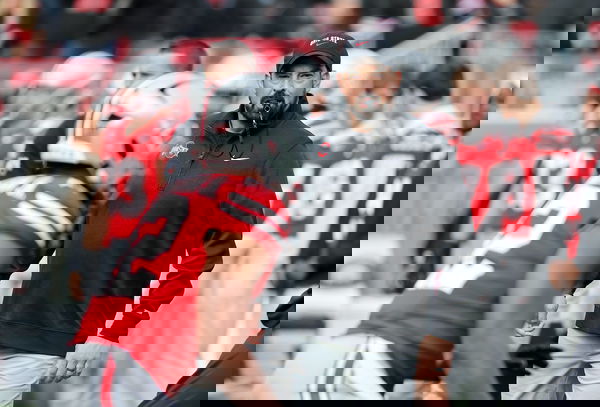
Ohio State Buckeyes head coach Ryan Day leads Sonny Styles 0, Kenyatta Jackson Jr. 97, Brandon Inniss 1 and the Buckeyes onto the field against the Rutgers Scarlet Knights in Columbus, Ohio on Saturday, November 22, 2025. PUBLICATIONxNOTxINxUSA COL20251122118 AaronxJosefczyk
Imago
Ohio State Buckeyes head coach Ryan Day leads Sonny Styles 0, Kenyatta Jackson Jr. 97, Brandon Inniss 1 and the Buckeyes onto the field against the Rutgers Scarlet Knights in Columbus, Ohio on Saturday, November 22, 2025. PUBLICATIONxNOTxINxUSA COL20251122118 AaronxJosefczyk
A physical program like Ohio State is usually more prone to one particular penalty and that’s targeting. But before the 2026 season can burn someone, the NCAA stepped in with a much-needed change. So, perhaps Ryan Day can heave a sigh of relief. The “common sense” he sought in 2023 is finally delivered and for once, the Buckeyes might not have to lose a game in the margins over a targeting call.


On Thursday, the D1 FBS Oversight Committee approved the NCAA’s new one-year trial rule for targeting in 2026. Under the change, the first targeting foul no longer follows you into the next game. Previously, when a player is called for targeting in the second half of a game, they won’t be able to play the first half of the next game. Now, whether the offense is committed in the first or second half as the automatic half-game suspension is lifted. The 15 yards penalty and ejection part remains the same.
Watch What’s Trending Now!
For years, targeting has been a storyline killer for programs with momentum. And for some including Ohio State, it’s a flat-out injustice as it’s a lived experience. Take October 2024 for instance. LB Arvell Reese got flagged for targeting against Nebraska after a hit on Jahmal Banks with a shoulder contact. Back then, he would’ve to sit out the first half against Penn State up next. Except the call got overturned on appeal.
Another similar incident happened last November with Ohio State cruising 38-14 against Penn State. Then safety Caleb Downs was hit with a targeting call against the Nittany Lions TE Khalil Dinkins. And this time, replay reversed it. But if it hadn’t, the Buckeye star would’ve missed the first half against Purdue. That’s the whole point of this new rule. It removes that “what if” from ruining the following week. And that’s where the NCAA finally seems to be catching up with the sport.
Imago
NCAA, College League, USA Football: Penn State at Ohio State Nov 1, 2025 Columbus, Ohio, USA Ohio State Buckeyes head coach Ryan Day coaches his team before the game against the Penn State Nittany Lions at Ohio Stadium. Columbus Ohio Stadium Ohio USA, EDITORIAL USE ONLY PUBLICATIONxINxGERxSUIxAUTxONLY Copyright: xJosephxMaioranax 20251101_djc_mb3_003
This new change is a defensive lifeline. Ohio State led the nation in multiple defensive categories last season. With DC Matt Patricia back in the mix, they’re expected to thrive again in 2026. And for their defense to be elite, they need aggression and that’s where it links with targeting. This updated rule acknowledges that not every targeting call deserves to bleed into the next Saturday. But it’s not a free pass.
Per the rule, that automatic half-game suspension will apply if the player gets a second targeting call. If a third follows, it’s a full-game suspension. But there’s also some relaxation. Conferences can now initiate an appeal after a second targeting call. To be clear on what targeting is, the NCAA defines it as forcible contact to the head or neck area, or leading with the crown of the helmet. The rule came in back in 2008, got updated in 2013 with automatic ejections, and since then, it’s been under fire almost every season.
Ryan Day vocal about how targeting is ruled
Ryan Day has been one of its most vocal critics. A throwback to early 2023 showed him publicly pushing back on how targeting is evaluated.
“The first thing is it has to be common sense,” he said then. “I think that’s your point. We’re getting so much into the weeds on this that we’ve lost where we started on it. And what was the reason why we did this? To protect young men.”
It’s not hard to see where that came from when you remember the Peach Bowl loss to Georgia. Marvin Harrison Jr. takes a brutal shot from Bulldogs’ safety Javon Bullard in the end zone but there was no targeting call while Ohio State loses its best weapon in a one-point game.
On the contrary, look at Miami’s Xavier Lucas, who was the latest victim of the old school targeting rules. He was ejected in the last CFP semifinal and forced to miss one half of the national title game. Head coach Mario Cristobal wasn’t pleased and believed that it was “unjustly administered.”
So, now that a change is in place, will it fix everything? No. But for teams like Ohio State built on depth, precision, and defensive dominance, it might finally prevent a Saturday mistake from becoming a next-week disaster.
