
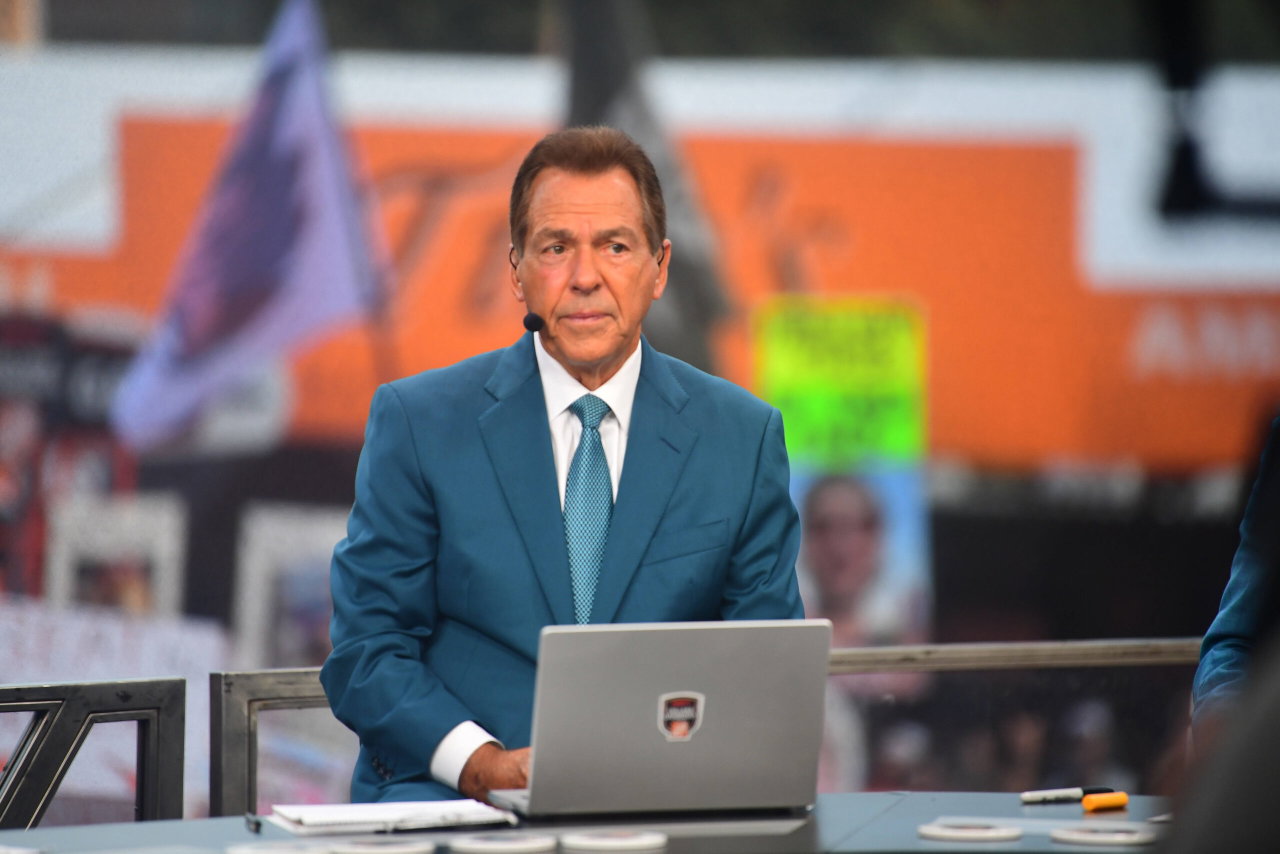
Nick Saban spent 17 seasons at Alabama answering to athletic directors, university presidents, and a board of trustees. He also spent those years building enough authority inside the football program to make most of those people comfortable letting him run it his way.
Watch What’s Trending Now!
Speaking with Biff Poggi on NewsNation on October 1, Saban was asked what the growing influence of money could mean for coaches, play-calling, hiring and firing decisions. His answer went straight to the power structure.
“I don’t think there’s any question about it,” Saban said. ” I think there’s pressure on those people now because of people who just give enough money to collectives to think they should have a say. There’s no such thing as something for nothing.”
Nick Saban and Biff Poggi were discussing Utah’s unique private equity deal and how it ushers in a whole new era for coaches. The Salt Lake City program reached a deal with New York-based private equity firm Otro Capital in June.
The deal aims to bring in an estimated $500 million for Utah’s athletic programs. As part of the agreement, Utah also created a new for-profit company called Crimson Brand Partners to oversee the revenue side of the athletic department.
By bringing in Otro Capital, Utah is taking a more pro-driven approach to running its athletic department. In fact, the firm has strong connections to professional sports and NFL franchises.
Its executives have worked with the NFL’s Cleveland Browns and Dallas Cowboys, while Otro also owns a stake in Alpine’s Formula One team. Interestingly, Utah may not be the only school exploring this kind of deal.
The Big Ten also looked at a proposed $2.4 billion private investment package, although member schools ultimately put the plan on hold. Nevertheless, Nick Saban is expecting a high influx of such deals, and that concerns him.
“Anytime somebody is giving a lot, which private equity is going to pay a lot for their portion, which will create an immediate cash pool of some kind,” Saban said. But long-term they’re going to want to have a say.
“What their investment can and can’t do or will or won’t be in the future. And when things don’t go well, it still comes down to the product on the field.”
Of course, that’s not how Saban worked for almost two decades in Tuscaloosa. When athletic director Mal Moore hired Saban in 2007, Saban wanted full control of the program.
He pushed back against the boosters and trustees who had been involved in football decisions under previous coaches, changing how Alabama ran its program. So, the former Bama HC had a say in things even when the protocol was wholly opposite.
In 2016, Alabama stars Cam Robinson and Hootie Jones were arrested in Louisiana on drug and weapons charges, which were later dropped due to lack of proof. Saban chose to handle the situation inside the program.
He didn’t let outside pressure from the university, the SEC, or the public dictate the punishment. Saban decided the players had done enough through the punishment set by the program, which included community service.
When Paul Finebaum questioned him at SEC Media Days about whether that punishment went far enough, Saban stood by his decision. He made it clear that he, not the media or university administrators, would decide how Alabama handled discipline inside the program.
Saban also changed how Alabama funded its football operation. During his tenure, athletic directors Mal Moore, Bill Battle, and Greg Byrne gave him wide room to build the staff he wanted.
One example was his use of analysts, including former head coaches such as Butch Jones, Mike Locksley, and Charlie Strong in off-field roles. The athletic department and Board of Trustees simply rubber-stamped those decisions.
During his tenure, Saban also made it clear to ADs and the Board of Trustees that he only cared about two things: developing current players and recruiting new ones
“Anything else you want to talk about? you can kiss my a–,” Saban said. “Now we got all this other stuff happening. How can I say that to a private equity group if I’m a coach? They’re going to tell me you’re fired.”
LSU head coach Lane Kiffin has also been outspoken about this shift. In an August 2022 interview with Sports Illustrated, he described how wealthy donors have started taking on responsibilities that once belonged to a general manager.
Industry experts have pointed to a problem with the donor-led model to The Athletic: boosters can get tired of putting up the money.
If a collective spends heavily to bring in a player and the coach then leaves that player on the bench, the donor may decide not to fund the next recruiting cycle. That can put coaches in a difficult spot when they make decisions about who plays.
Of course, Saban retired at 72 after the 2023 season, before the NIL era fully kicked in. That’s why it remains a question of whether Saban would have survived in the current NIL era. As we have seen, old-school coaches like Dabo Swinney are paying the cost for clinging to their philosophy.