
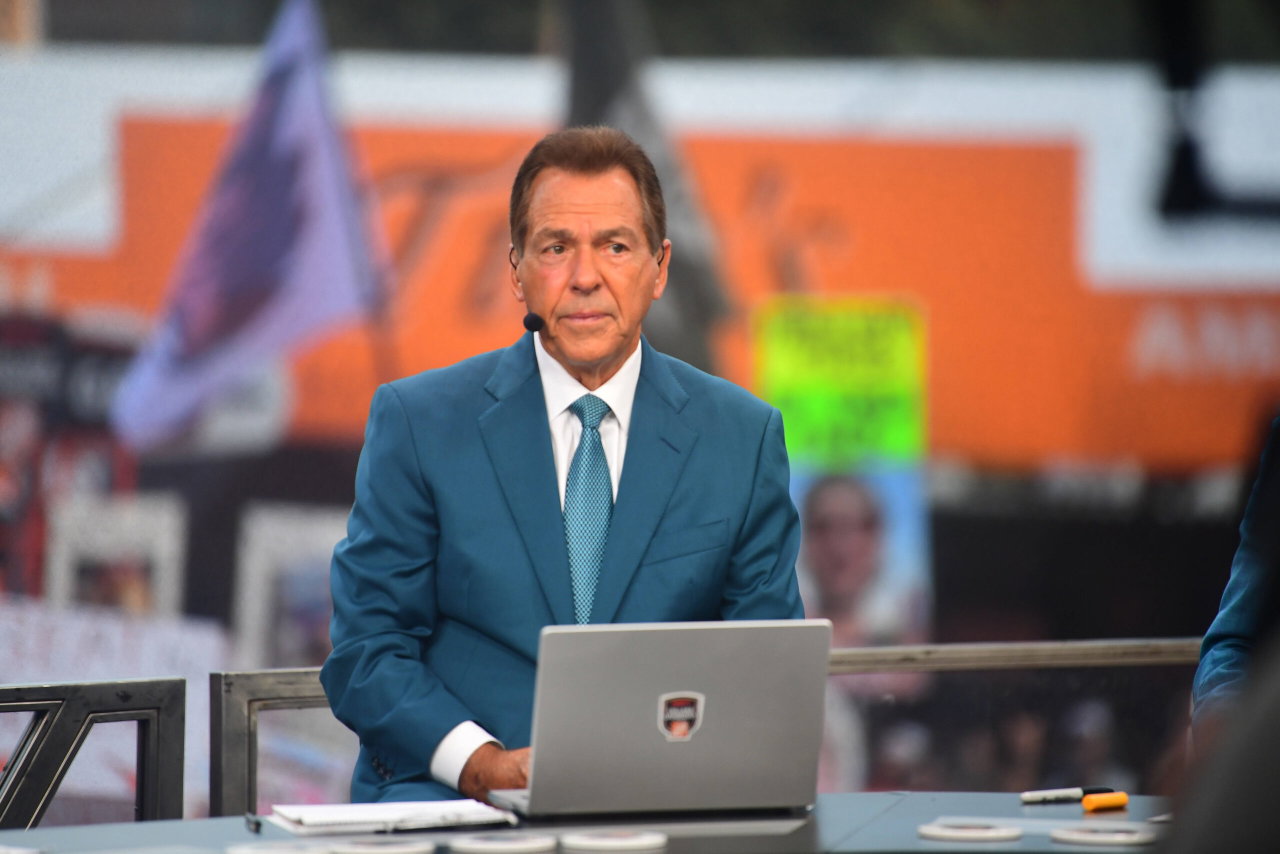
Nick Saban has watched college football go through plenty of changes during his coaching career. But the former Alabama head coach believes one of the biggest changes in the sport has also created a new problem for coaches: the people at the top paying the players may now feel they have a say in what happens next.
Watch What’s Trending Now!
That was the message Saban delivered during his appearance on Theo Von’s “This Past Weekend” podcast. While discussing NIL, player payments, and the changing recruiting landscape, Saban connected the growing role of alumni and boosters to the huge number of coaches who lost their jobs during and after the 2025 season.
“The cause and effect of paying players is we’re raising money from alumni who now think they should have a say in what happens,” Saban said on a recent appearance on This Past Weekend with Theo Von. “And that’s why 33 coaches got fired last year.”
Saban’s argument starts with the money being spent on players. With programs now raising millions to put together competitive rosters, he believes schools have to be much more careful about who receives that money.
“How do you evaluate the players? Who are you going to pay? What positions are most important?” Saban said.
The former Crimson Tide coach then warned about what can happen when those decisions go wrong.
“Because if you pay the wrong guys, and you’ve heard me say this before, you’re s*** out of luck,” Saban said. “So when you can’t evaluate the players, and don’t pay the right guys, you’re going to pay the consequences for that in the future because you’re going to spend all this money and not gonna have a very good team. And you’re not going to get the outcome everybody expects.”
Saban had 292-71-1 NCAA record as a college head coach, including going 206-29 at Alabama en route to six national titles with the team, adding to his first championship win with LSU in 2003.
Though he didn’t find succeess in the NFL with the Miami Dolphins, in today’s college football landscape, Saban believes coaches are increasingly paying the price for decisions that involve much more than what happens during a Saturday game.
The number of coaching changes shows just how much turnover there was. In February, CBS Sports counted 33 FBS head coaching changes during the 2025 cycle, while On3 reported that 13 Power Four coaches were fired outright.
Among the biggest names caught in that turnover were Penn State’s James Franklin and LSU’s Brian Kelly. Franklin’s buyout was reportedly around $49 million, while Kelly’s was around $54 million, showing just how expensive these decisions can become.
The former Alabama coach has also been vocal about the direction of college football’s new financial landscape. The House settlement allowed schools to begin sharing revenue directly with players beginning in July 2025, while Saban has backed the bipartisan Protect College Sports Act, which would establish federal limits around athlete pay and transfers.
That means coaches, athletic directors, and boosters are going to have to figure out how this new system works while dealing with the same old expectation in college football: win.
The 2025 season showed how little patience some programs had when the results did not match the money being spent. And if Saban is right about the growing influence of the people funding those player payments, coaches may continue to find themselves caught in the middle.
Saban’s outspoken views on NIL and college football’s changing landscape have kept him at the center of the debate. But ESPN’s Paul Finebaum believes the sport may need a different voice to represent where it is headed.
Has College Football Moved Past Nick Saban’s Way of Thinking?
Nick Saban’s influence on college football has hardly disappeared since his retirement, but not everyone believes he should have such a prominent voice in deciding where the sport goes next. ESPN personality Paul Finebaum recently pushed back on Saban’s involvement, arguing that the game’s future should be shaped more by the younger generation now playing it.
Speaking about Saban on Mad Dog Sports Radio, Finebaum questioned whether the former Alabama coach’s views reflect what college football has become in the NIL era.
“He does not like the way the game is. He’s 74 years old and he’s thinking like somebody who remembers the way it was when he dominated,” Finebaum said.
Finebaum also pointed to Georgia head coach Kirby Smart as an example of someone who has managed to adapt to the changing landscape. Smart, who worked under Saban at Alabama, has continued to operate at the highest level while navigating the new realities surrounding recruiting, NIL, and player movement.
That comparison made Finebaum’s larger point clear. He still has plenty of respect for Saban’s accomplishments, but believes the former coach can sometimes sound disconnected from the players driving the modern game.
“I love Saban, but he sounds like the ‘get off your lawn’ guy,” Finebaum said. “He is not a great representative of where college football is when he hang[s] around with all these other billionaires and doesn’t pay homage to the 18-year-old who is making this game go today.”
Nick Saban and Paul Finebaum may disagree on who should have the loudest voice in college football, but both are pointing to the same reality: the sport is changing faster than ever.
With players now at the center of the financial model and coaches still expected to deliver results, the next challenge may be figuring out who gets to shape the game when those two priorities collide.