
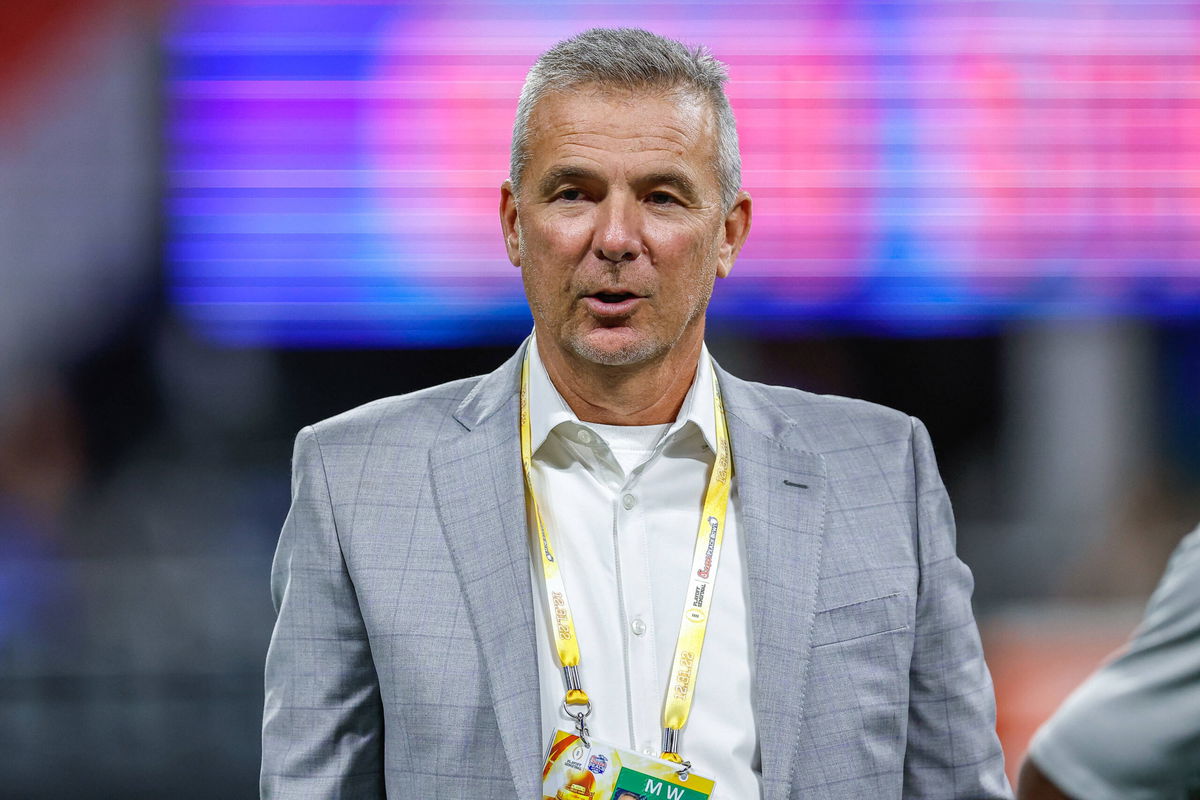
For three quarters in Austin, Ohio State looked like the team everyone expected it to be. Then came the fourth quarter, and suddenly things turned conservative. The Buckeyes led 23-3 entering the final 15 minutes and somehow walked out of Texas with a 24-23 loss. Former OSU coach Urban Meyer didn’t need much time to find the biggest problem.
This was not just a tough non-conference loss in September. In the new 12-team playoff era, a collapse like this completely reshapes the national title race. Texas needed this marquee win to prove its SEC power, while Ohio State just lost all its buffer room for top postseason seeding.
“There’s one big alarm going off when I saw this, and that’s the last three drives,” Urban Meyer said on The Triple Option. “I kept watching and saying make a play, make a play and they couldn’t. Of all the concerns, that’s number one.”
All Urban Meyer wanted was for the Buckeyes to make a play. Ohio State had spent most of the night getting after Arch Manning and holding the Longhorns to just three points through three quarters. Then, a major twist happened as Texas scored 21 straight points, with RB Hollywood Smothers scoring the winning touchdown with 25 seconds left.
One Texas drive lasted 15 plays and covered 91 yards. Arch Manning and the Longhorns kept moving, and Ohio State kept waiting for somebody to slam the door. The Buckeyes had plenty of chances. Texas converted two fourth downs during the comeback, including a 12-yard gain on fourth-and-6 from its own 32 early in the fourth quarter.
Imago
Credit: Imago
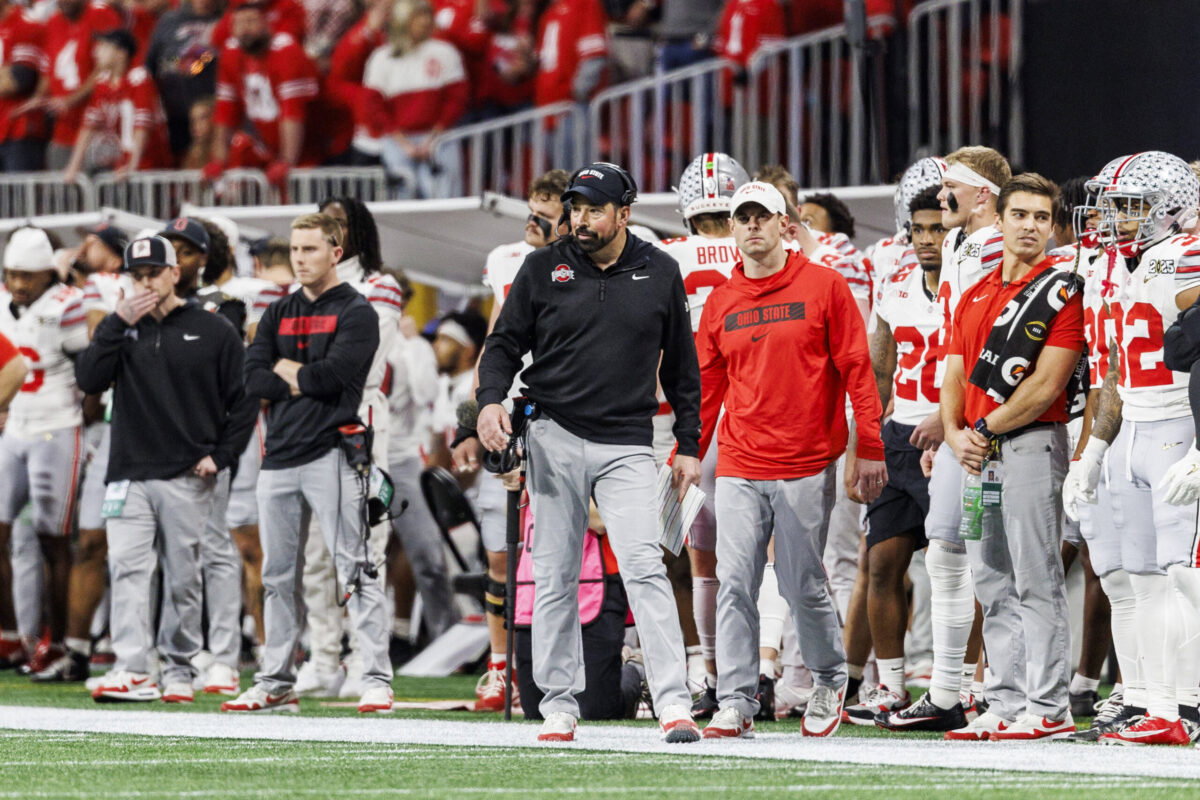
DC Matt Patricia’s defense backed off at times, and Texas found room, and Arch Manning took advantage. The first Texas touchdown made it 23-10. Smothers followed with another rushing score to cut the gap to 23-17. Then Ohio State got the ball back with a chance to settle everything. Instead, the offense went three-and-out. That shows how the game changed.
Ohio State’s offense had been aggressive early. Julian Sayin found Jeremiah Smith, pushed the ball downfield, and kept Texas on its heels. But once the lead became something to protect, the Buckeyes seemed to switch gears as the aggression disappeared. The team scored only three points in the second half and went 1-for-6 on third down. It became apparent they were more about trying not to lose the game than winning it.
That’s a dangerous way to play with 15 minutes still sitting on the clock. There was another early decision that will stay with Ryan Day. Ohio State faced fourth-and-5 from the Texas 39 while holding a 20-3 lead. Instead of keeping the offense on the field, the Buckeyes punted. Maybe the defense gets another stop, and the field-position math works out. But a first down there could have changed the ending.
Then came the final possession. Texas reached the Ohio State 1-yard line with roughly a minute remaining. The Buckeyes still had one timeout. Rather than let the Longhorns score and give Julian Sayin enough time to attempt a response, Ryan Day chose to keep defending the goal line.
Ohio State stopped Texas twice. On third-and-goal, they didn’t. Smothers jumped into the end zone, and the extra point put the Longhorns ahead 24-23. With just 25 seconds left, it was essentially game over for Ryan Day. After the game, he admitted he didn’t really have an explanation for how a 23-3 game turned into a one-point loss.
“I can’t really sit here and tell you exactly why that happened,” he said. “We all have to take accountability, and we have to get this thing fixed.”
He later put the responsibility where it belonged.
“I think we played well for three quarters, and didn’t play well enough in the fourth quarter,” Day said. “That’s the bottom line.”
Ohio State had never blown a 20-point lead under Ryan Day. Urban Meyer never did it during his OSU tenure either. The Buckeyes hadn’t surrendered a bigger lead since 2011 against Nebraska. That makes this more than another ugly loss.
That historic 2011 loss to Nebraska was a rare breakdown, but Urban Meyer built his whole OSU legacy on closing out tight fourth quarters. When games got close late, Meyer always demanded relentless aggression to put teams away. Seeing Ryan Day’s team play defensive football down the stretch is what really triggered Meyer’s alarm.