
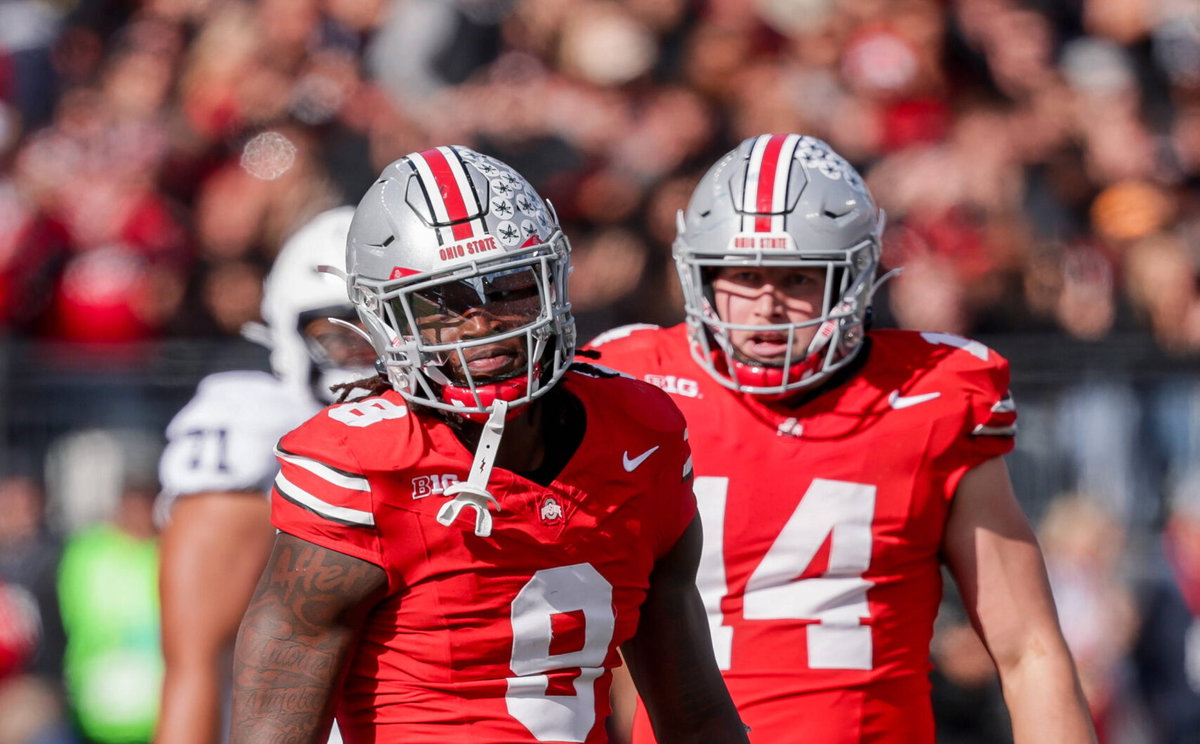
2026 would’ve been the last season for some Ohio State stars who are set to exhaust their eligibility after this year. Now, thanks to a major NCAA eligibility change, fans could see them return for the 2027 season. The NCAA Division I Council voted to adopt a new age-based eligibility model that will allow athletes to compete for five seasons in five years, beginning this fall. And while nobody expects every eligible Buckeye to stick around, several players now have the luxury of considering one more year with Ryan Day.
Watch What’s Trending Now!
The most immediate impact falls on six Ohio State seniors who were previously expected to exhaust their eligibility after the 2026 season. WRs Brandon Inniss and Devin McCuin, OL Luke Montgomery, DT James Smith, LB Christian Alliegro, and CB Jermaine Mathews Jr. would all be eligible to return in 2027 under the new rule. That doesn’t mean they’ll stay but it means they now have a choice.
WR Brandon Inniss
For much of his Ohio State career, Brandon Inniss waited his turn behind one loaded receiver room after another. The former 5-star recruit finally emerged as a captain and reliable contributor, recording 36 catches for 271 yards and three touchdowns while also handling punt-return duties. If 2026 becomes his breakout year, the NFL could come calling. But now another season remains on the table with the new NCAA eligibility rule. And the Buckeyes’ WR room may benefit more than anyone.
WR Devin McCuin
Ohio State didn’t bring in Devin McCuin just to fill a roster spot. The former UTSA receiver put up 1,696 yards and 16 touchdowns in three seasons before transferring to Columbus. With Jeremiah Smith widely expected to head to the NFL after 2026, having the option to bring back McCuin or Brandon Inniss for another year could be a big boost for the Buckeyes.
Imago
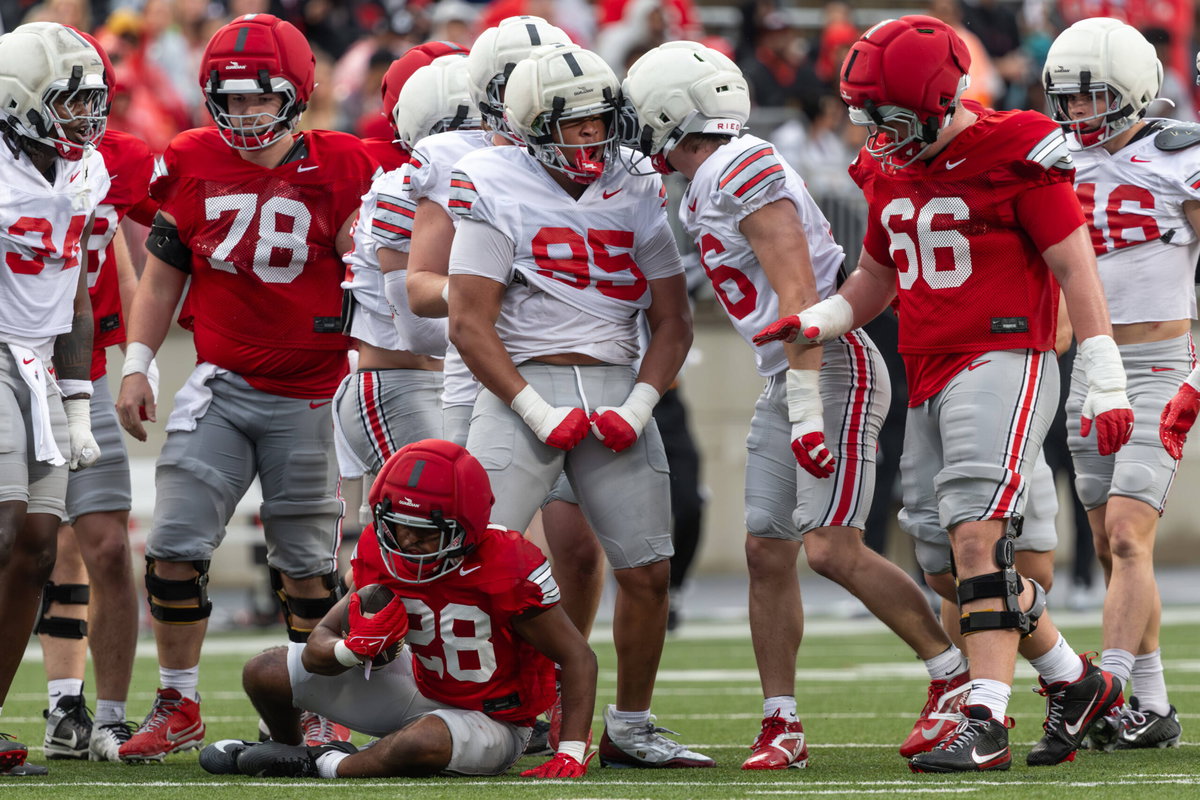
April 18, 2026, Columbus, Ohio, USA: Ohio State defensive lineman Emanuel Ruffin 95 and Ohio State defensive end Nate Riegle 56 celebrate after a tackle during the spring game between the Ohio State Buckeyes Scarlet and Ohio State Buckeyes Gray teams at Ohio Stadium, Columbus, Ohio. Columbus USA – ZUMAs304 20260418_zaf_s304_047 Copyright: xScottxStuartx
LB Christian Alliegro
Christian Alliegro gives Ohio State something every contender wants, and that’s experience. After spending three years at Wisconsin, the veteran LB heads to Columbus with more than 120 career tackles and recognition as one of the Big Ten’s dependable defenders. Before this rule change, 2026 looked like his final chapter, but he also got a choice to run it back with Ohio State in 2027.
DT James Smith
James Smith was expected to spend one season at Ohio State and then move on. The former Alabama DT arrives in Columbus after 37 career games and his most productive season yet in 2025. Thanks to the new eligibility rule, though, 2026 may not have to be the end of his college career.
OL Luke Montgomery and CB Jermaine Mathews Jr
Luke Montgomery also finds himself in a similar situation. He earned Second-Team All-Big Ten honors and has developed into one of Ohio State’s most dependable OLs. Meanwhile, Mathews has appeared in 40 games and established himself as one of the Buckeyes’ top CBs. Both could test NFL waters after 2026, but neither is being forced into that decision. The eligibility ripple effect doesn’t stop with the seniors
More Ohio State players are benefiting from the new eligibility rule
Beyond those six veterans, Ohio State finds itself with a roster loaded with players carrying extra eligibility years beginning with junior Jeremiah Smith. He could have three seasons of eligibility remaining under the new structure. But the chances of him returning after 2026 are slim to none. That’s why some are even projecting as the No. 1 overall pick in the 2027 NFL Draft. Then there are other fellow juniors with the same advantage, including LB Payton Pierce, safety Jaylen McClain, and DT Eddrick Houston.
Then there are sophomores with four years left. This younger group includes CB Devin Sanchez, RBs Bo Jackson and Isaiah West, TE Nate Roberts, LBs Riley Pettijohn and TJ Alford, CB Dominick Kelly, and DE Zion Grady, who all burned redshirts early in their careers. The transition phase also protects players who previously received waivers, including TE Hunter Welcing, who transferred from Northwestern and is entering his seventh collegiate season.
The new rule is meant to simplify eligibility and reduce the growing number of extra-year exceptions. Going forward, an athlete’s clock will start after high school graduation or when they turn 19. For Ohio State, that means several players who seemed set to leave after 2026 could now have the option of returning for another season. Whether they take it is another question.