Imago
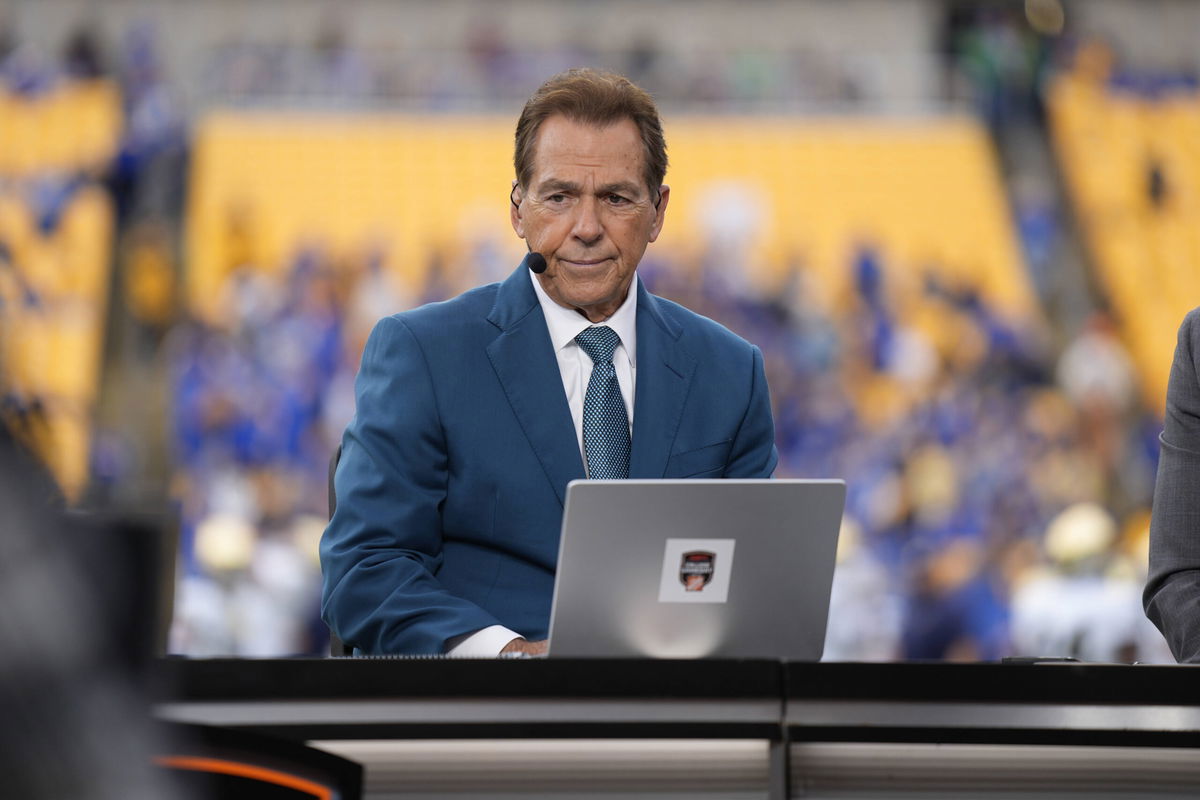
November 15, 2025, Pittsburgh, Pennsylvania, USA: November 15, 2025: Nick Saban on ESPN College Game Day during the University of Pittsburgh Panthers vs. Notre Dame Fighting Irish at Acrisure Stadium in Pittsburgh PA. Brook Ward / Apparent Media Group Pittsburgh USA – ZUMAa234 20251115_zsa_a234_351 Copyright: xAMGx
Imago
November 15, 2025, Pittsburgh, Pennsylvania, USA: November 15, 2025: Nick Saban on ESPN College Game Day during the University of Pittsburgh Panthers vs. Notre Dame Fighting Irish at Acrisure Stadium in Pittsburgh PA. Brook Ward / Apparent Media Group Pittsburgh USA – ZUMAa234 20251115_zsa_a234_351 Copyright: xAMGx
Former Alabama head coach Nick Saban has been the biggest proponent of President Donald Trump’s agenda of fixing college sports. On March 6, around 40 people gathered for a roundtable discussion, and the sharpest rebuke of the status quo came from Saban and Urban Meyer. However, for people who have witnessed how Alabama operated under Saban, the latest criticisms appear hollow, to say the least. An Ole Miss alum, Charles Stackhouse, even doubted the former’s intentions.
Watch What’s Trending Now!
“Saban just wants Bama and LSU to be able to cheat and be elite again,” wrote Stackhouse on Friday. “Those days of being the big Teams bc they illegally spend big dollars are long gone. Welcome to mediocrity!”
Despite the Tide winning six national championships under Saban, it’s not a secret that the program hasn’t enjoyed the same success since its last natty in 2020. Things have worsened since Saban retired from his job, and the program hired Kalen DeBoer as his replacement. This period is also marked by an overhaul of the existing order due to NIL.
The proponents of the new order see an increased parity among college teams. More than any other conference, the SEC has been on the receiving end of the changes. The last three national champions have all come from the Big Ten, and in the 2025 season, none of the SEC powerhouses even reached the playoff semifinals. Even within the SEC, the rise of the likes of Ole Miss and Vanderbilt supports the parity argument and the fact that the big teams can no longer buy their way to the top of the conference.
While Stackhouse, a former Ole Miss tri-captain, points to a history of alleged cheating, Saban himself has tried to reframe the conversation, clarifying that while he supports player compensation, he finds the current NIL system ‘unsustainable.’
Saban just wants Bama and LSU to be able to cheat and be elite again. Those days of being the big Teams bc they illegally spend big dollars are long gone. Welcome to mediocrity!
— Charles Stackhouse (@RealStackhouse) March 7, 2026
“Players need to get compensated, no doubt,” said Saban during Friday’s roundtable. “But it has to be done in a way where [we] have competitive balance and that every school has the same thing. One school can’t spend $30 million for players while another school spends $3 million. All I’m saying? The people out there need to know this model is unsustainable. It’s not good for players.”
“People, instead of making decisions about creating value in their future, started making decisions about how much money they could make at whichever school they could go to or transfer to,” added the legendary coach.
Saban’s critique focuses less on the principle of payment and more on the current system’s perceived flaws, such as its impact on talent retention. That was also one of the reason why he decides to leave his job at Tuscaloosa.
The secret behind Nick Saban’s retirement
At the time of his retirement, Nick Saban cited age and the natural end of a long coaching journey as reasons behind his decision. But President Trump suggested that the evolving world of NIL deals may have quietly influenced Saban’s decision. In fact, during the discussion of the future of collegiate athletics, President Trump revealed a recent conversation with Saban that hinted at that.
“I was with Nick Saban the other day, and his timing is exquisite. He played, and he won, and he won and won, and when he saw this thing [NIL], he said, I’m gonna get out—I’m not around this anymore,” said President Trump.
After spending nearly two decades in Tuscaloosa, Saban stepped down in January 2024. Surely, he built one of the most dominant dynasties the sport has ever seen. Now, with this latest secret reveal, one might think he was opposed to NIL. But he wasn’t opposed to NIL entirely.
“It’s really different. Not in a good way from a developmental standpoint. A good way from a quality-of-life standpoint [for players],” said Saban. “But we need to find a system that improves the quality of life of players but still focuses on the right stuff: development, getting an education, all those kinds of [things].”
Ultimately, Saban’s stance suggests a desire to reform, not eliminate, NIL, as he seeks a balance between player compensation and the developmental structure he believes is essential to college football.