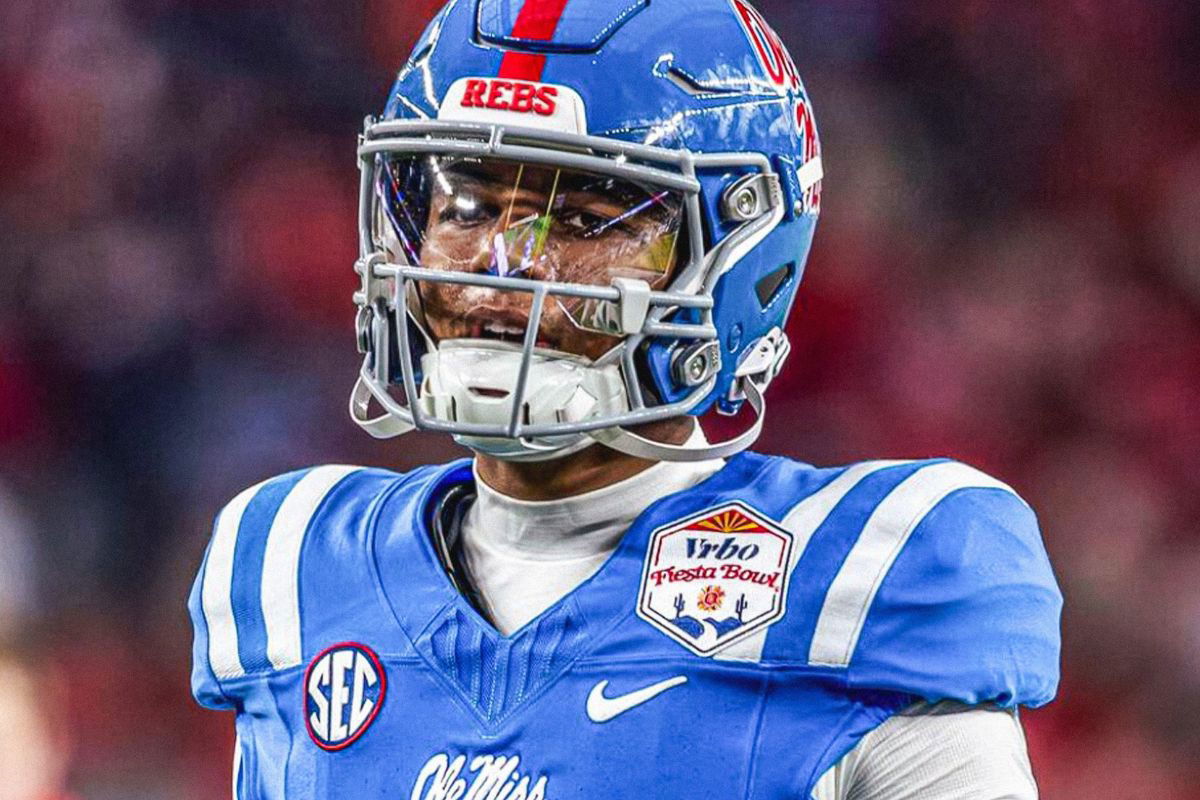
The legal battle between Ole Miss’ Trinidad Chambliss and the NCAA is heading into another round, as his legal team has formally responded to the governing body’s appeal of his recent eligibility victory. The Ole Miss quarterback and his attorney are now pushing back against the NCAA’s ruling.
“Trinidad Chambliss’ lawyers have filed a response to the NCAA’s appeal of Chambliss’s eligibility ruling in Mississippi State Supreme Court,” ESPN’s Pete Thamel said on X. “It’s fairly straightforward and argues the NCAA hasn’t met the standard for the appeal and an expedited review isn’t warranted.”
Watch What’s Trending Now!
Chambliss’s lawyers filed a response in the Mississippi Supreme Court saying the NCAA has not met the legal requirements for the court to review the case. They cited Mississippi Rule of Appellate Procedure 5(a) and argued that the decision made by Judge Robert Whitwell in Lafayette Chancery Court was a matter of discretion and should not be reviewed.
“‘Common sense suggests’ that ‘acts of discretion,’ such as the discretion afforded chancellors in granting preliminary injunctions, are the ‘least eligible (matters) for interlocutory review,'” the filing said.
NEWS: Trinidad Chambliss’ lawyers have filed a response to the NCAA’s appeal of Chambliss’s eligibility ruling in Mississippi State Supreme Court. It’s fairly straight-forward and argues the NCAA hasn’t met the standard for the appeal and an expedited review isn’t warranted. https://t.co/3Sf5ouMeW0
— Pete Thamel (@PeteThamel) March 16, 2026
The chaos didn’t stop at that, as the NCAA also asked the court for a quick decision because the 2026 college football season is getting closer. But Chambliss’s lawyers said the court cannot make a fast decision because it first needs to review all the case documents, motions, written arguments, evidence, and especially the transcript from the preliminary injunction hearing.
“Respectfully, it is not possible for this Court to determine whether the Chancellor erred without consideration of the lower court’s entire record, including all pleadings, motions, briefing, exhibits, and, most importantly, the transcript of the preliminary injunction hearing,” the filing said.
Trinidad Chambliss’ legal team isn’t just defending his decision for an extra year of eligibility. Instead, they’re actively tackling the NCAA into a procedural corner. By demanding that the Supreme Court review the entire transcript of the lower court, Chambliss’s attorneys are trying to force the governing body to fight a slow, uphill battle on state procedural grounds.
It all started when Trinidad Chambliss filed a 34-page lawsuit on Jan. 16, saying he should receive a medical redshirt for the 2022 season at Ferris State because health problems kept him from playing. He testified that after getting infectious mononucleosis in 2020, he had repeated throat infections, poor sleep, constant tiredness, and discomfort while exercising. Chambliss said he only recovered after doctors removed his tonsils in 2024.
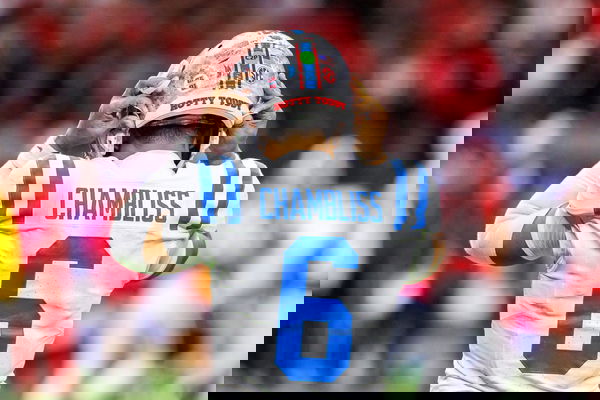
Imago
January 01, 2026: Mississippi quarterback Trinidad Chambliss 6 listens for the play call during NCAA, College League, USA football game action between the Ole Miss Rebels and the Georgia Bulldogs at Caesars Superdome in New Orleans, Louisiana. /CSM New Orleans United States of America – ZUMAc04_ 20260101_zma_c04_446 Copyright: xJohnxMersitsx
But the NCAA denied his plea, saying they failed to provide proper documents. Now, Chambliss’ lawyers are fighting back against the NCAA, which is responsible for the time pressure in this case. They said the NCAA took too long to decide his eligibility, which stopped Chambliss from filing the lawsuit earlier. Because of this delay, he did not get enough time to properly prepare for the 2026 NFL Draft.
The draft starts on April 23, and the NFL Combine has already taken place, which makes the situation more urgent. On top of that, Ole Miss will begin its 2026 football season on Sept. 6 in Nashville against Louisville, so a quick decision in the case is important for both Chambliss and the team.
The defense’s firm stance hinges on the NCAA’s own bureaucratic dragging throughout his eligibility process. Chambliss’s camp has argued that it was the governing body that created a compressed timeline and insisted that the NCAA should not be granted the power to take judicial shortcuts to fix a delay that they originally caused. However, what makes the NCAA rule court’s filing?
Why is the NCAA against Trinidad Chambliss’ plea?
This is not the first time someone has challenged the NCAA. It was Diego Pavia first who fought against them, getting an extra year of eligibility for himself and also imposing the JOCO rule on all athletes. But what makes Trinidad Chambliss’s case different is the court taking away the NCAA’s power completely. That’s when the NCAA told the Mississippi Supreme Court that it has the power to decide and apply its own eligibility rules. It said it should be the final authority when it comes to decisions about whether a player is eligible to compete.
They also asked the court to allow an interlocutory appeal, which means they want to challenge the judge’s decision even though the case is not finished yet. In its 658-page filing, the NCAA argued that the court’s order allowing Chambliss to play could cause serious harm to the organization.
The NCAA also said the ruling could make it harder to enforce its rules fairly. It argued that if courts start changing eligibility decisions for certain players, it could affect fairness in college sports and make it difficult to ensure that all athletes follow the same rules.
In recent years, with all the cases the NCAA has lost, its credibility has already taken a hit, and now, if the court overturns their decision, they might not hold much power, as players can directly go to the court and win. So, now with Trinidad Chambliss’s plea, it remains to be seen if Ole Miss gets their QB back on the field or not.
Related Newsletters